

66 years after Kenyan liberation icon Dedan Kimathi was executed by the British colonial rulers, calls for unequivocal apology still echo.
Kenyan police on Wednesday (Nov. 1) blocked a group known as the Social Justice network, from holding demonstrations in Nairobi to protest King Charles visit.
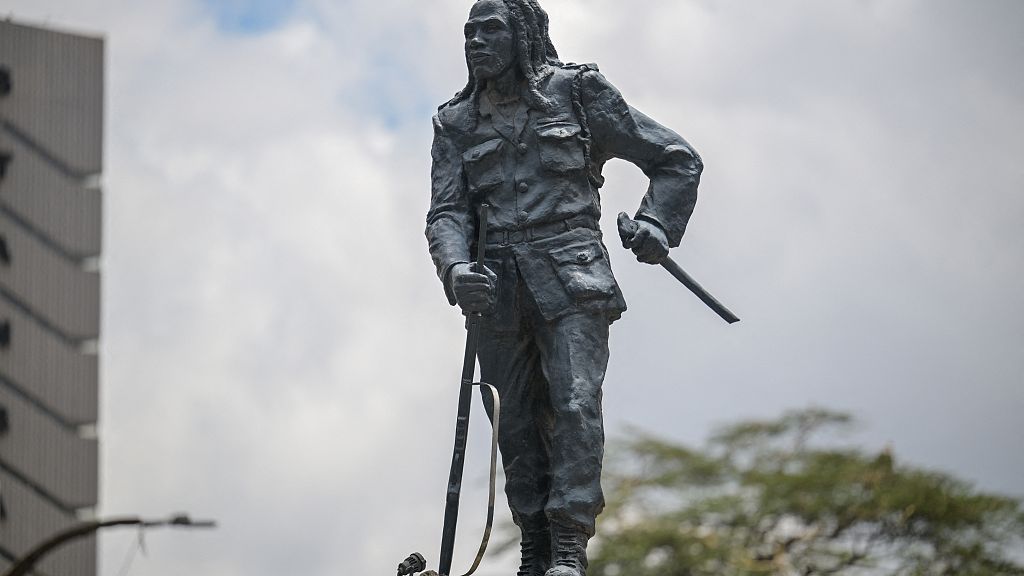
Around 30 members of the group chanted songs and threw red roses at the foot of the monument of Mau Mau veteran Dedan Kimathi in the Central Business District, but a contingent of uniformed and plain clothed police officers dispersed the protesters and confiscated their banner.
“All the land under British should be given back to the Kenyan people and we also want BATUK (British Army Training Unit Kenya) to leave our land. BATUK has to go. The Kenyan people in Laikipia cordially welcomed them and then they subjugate them, they dominate them, they treat them as though they are second class citizens in their own country?”
Kenya has had a close and at times challenging relationship with Britain in 60 years of independence.
Political analyst and journalism and communications professor Herman Manyora says African leaders have had a say in their relationship with their former colonial rulers.
“I don’t blame the British. I blame African leaders who are subservient to the British and the French. Why are they subservient to them? Because they ravage their own countries, they rape their own countries, they steal from their own countries. So they seek recognition and protection. If you did not relate to the British and the French in that kind of manner, you are able to tell them off, you are a sovereign state. But because you relate from a subservient point of view, you see them as Gods.”
Britain’s monarch visited a war cemetery on Wednesday (Nov. 01). On the roads leading there, at a walking distance from the central business district, authorities deployed heavy security including army, an anti-terror police unit, elite units and regular police. Traders and passersby were allowed to use only one side of the road.
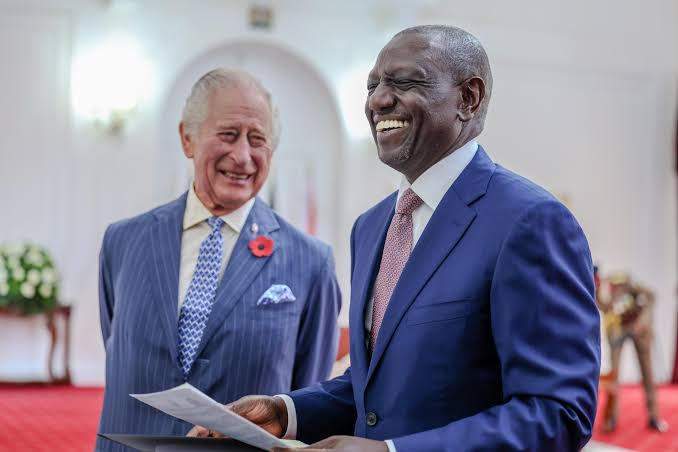
At a state banquet on Tuesday (Oct. 31) Charles III said there was ‘no excuse for wrongdoings of the past’ but did not apologize.

King Charles III on Wednesday held a private meeting with the family of the executed leader of the Kenyan rebellion against British colonial rule.
The family of Dedan Kimathi, who was hanged by the British administration, and relatives of other well-known Kenyan freedom fighters didn’t immediately comment.
In the past, they have called for an apology and compensation from Britain, along with any information on the whereabouts of Kimathi’s body.
The British High Commission said only that the meeting was an “opportunity for the king to hear firsthand about the violence committed against Kenyans during their struggle for independence.” Attendees included the chair of the Mau Mau War Veterans Association.
The issue remains painful for many Kenyans, and police dispersed a couple dozen people protesting at the foot of a monument to Kimathi in Kenya’s capital, Nairobi. “All the land under British should be given back to the Kenyan people,” said Juliet Wanjira with the Mathare Social Justice Center, calling also for the British military training mission in Kenya to leave.
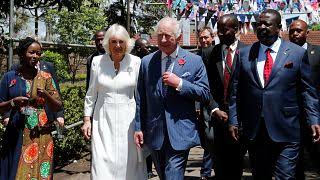
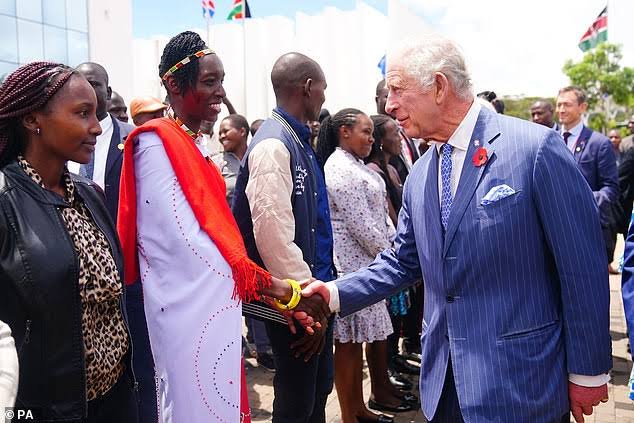
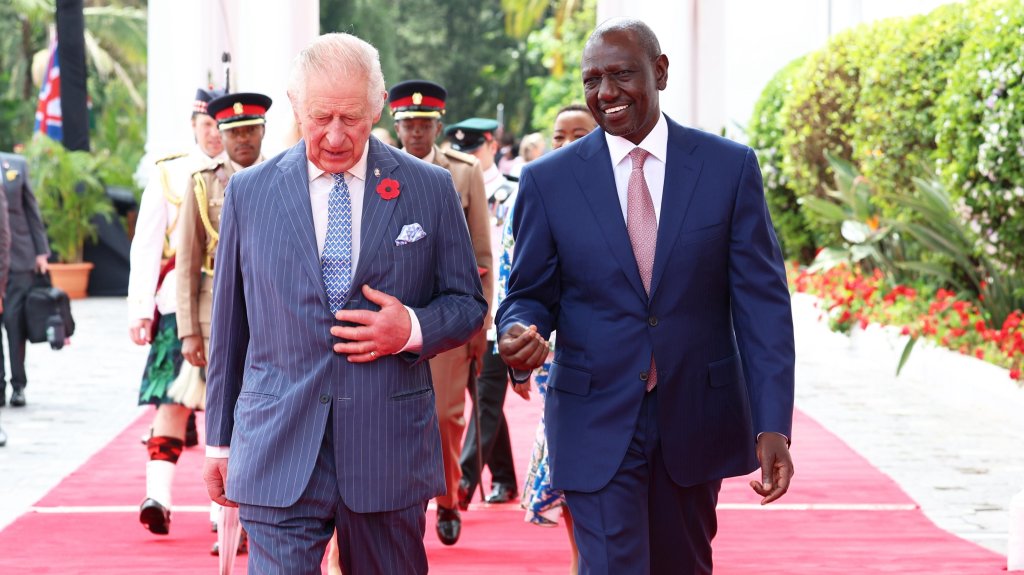
Charles, who with Queen Camilla arrived on Monday (Oct. 31) in what is his first state visit to a Commonwealth country as monarch, on Tuesday cited the “abhorrent and unjustifiable acts of violence” committed against Kenyans as they sought independence. However, he didn’t explicitly apologize for Britain’s actions in its former colony as many Kenyans wanted.
Charles on Wednesday (Nov. 01) also visited a war cemetery, laying a wreath in honor of those who fought alongside the British in the two world wars.
He handed replacement medals to four war veterans who had lost theirs. Among the four was Cpl. Samwel Nthigai Mburia, who claims to be 117. The other three are privates John Kavai, Kefa Chagira and Ezekiel Nyanjom Anyange.
The cemetery has 59 graves and is next to Kariokor market, previously the site of Nairobi’s Carrier Corps Depot, the administrative center through which soldiers heading to the front passed through. Charles also met with the Commonwealth War Graves Commission members and communities living near the cemetery.
On the roads leading to the war cemetery, at a walking distance from the central business district, authorities deployed heavy security including army, an anti-terror police unit, elite units and regular police.
Kenya is celebrating the 60th anniversary of its independence this year. It has had a close but at times challenging relationship with Britain after the prolonged struggle against colonial rule, sometimes known as the Mau Mau Rebellion, in which thousands of Kenyans were killed.
Colonial authorities executed and detained many without trial as they tried to put down the insurrection, and thousands of Kenyans said they were beaten and sexually assaulted by agents of the administration.
 HICGI News Agency