
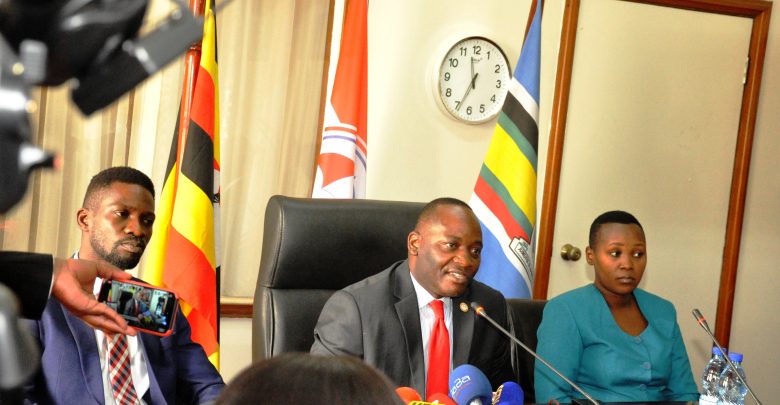
On the notable date of December 22, 2023, Robert Kyagulanyi Ssentamu, a prominent figure in Ugandan politics and the leader of the National Unity Platform (NUP), made a significant decision that caught the attention of many. He replaced Mathias Mpuuga, the previous Leader of Opposition in Parliament, with himself, indicating a major shift in the political landscape. As the new Leader of Opposition, Bobi Wine is now responsible for leading the opposition party in Parliament and holding the government accountable for its actions. This move has stirred up both excitement and controversy, with some hailing it as a bold move towards change while others criticize it as a power grab. Nonetheless, it is clear that this development has set the stage for a new era in Ugandan politics and has cemented Bobi Wine’s position as a key player in shaping the country’s future.

The decision made was a crucial turning point in the previously subdued conflict between the two party leaders, which has now escalated into an open confrontation. Mpuuga, who serves as the deputy president of the National Unity Platform (NUP) for the Buganda region, has come under increasing scrutiny due to a growing disagreement with some of the party’s key figures.
There were tensions within a political party that surfaced around two weeks ago, particularly in the greater Masaka region. A local leader named Mpuuga, who had the support of some other leaders, opposed a campaign called ‘Kkunga.’ This campaign was spearheaded by the party’s influential Secretary for Mobilization, Fred Nyanzi Ssentamu, who also happens to be Kyagulanyi’s brother. The campaign received criticism for its objectives and approach.
Mpuuga has expressed doubts about the goals of the campaign, describing them as confusing. He has raised concerns about the campaign’s direction, questioning why ‘Kkunga,’ which should be a beneficial project, appears to be specifically targeting members of the NUP. Mpuuga’s position reveals underlying tensions within the NUP and highlights the complexities of internal party dynamics. The stance also underscores the challenges faced by opposition parties in navigating their political and strategic objectives.
Last week, Mpuuga emphasized the need for unity and clear objectives within the National Unity Platform (NUP) party during a meeting with leaders from his Nyendo-Mukungwe constituency.
“We all should have one objective. It’s confusing when someone claims to be mobilizing people but then only invites supporters of a specific political party. How can you declare to be the best mobilizer and yet your actions suggest otherwise? That’s why we have called for Kkunga to halt until we receive further guidance on the way forward,” clarified Mpuuga.
It’s understandable that Mpuuga holds concerns about the current mobilization strategy, particularly the ‘Kkunga’ campaign. His recent ouster as the leader of opposition (LoP) must be a difficult time for him. It’s important to acknowledge that the situation is tied to deeper issues within the party. We hope that Mpuuga and the party can work through these challenges together and come to a resolution that benefits everyone involved.
According to sources who wished to remain anonymous, Robert Kyagulanyi’s team claims that Mathias Mpuuga, former Leader of Opposition (LoP), did not support party mobilization efforts in the greater Masaka area during his tenure. The sources allege that Mpuuga never organized an event where Kyagulanyi was invited as the guest of honor. This lack of support is believed to be a contributing factor to his removal from the position of LoP.
– The writing could benefit from providing more context to help readers understand the ‘Kkunga’ campaign and its significance. This could involve explaining the goals of the campaign, who is involved in it, and why it is important in the context of the political landscape in Uganda.
– The writing could also be improved by providing more detailed information about the specific resources that local leaders are expected to mobilize to support the campaign’s activities. This could help readers better understand the extent to which Mpuuga’s alleged resistance to this practice was significant.
– Finally, the writing could benefit from incorporating quotes or perspectives from other individuals involved in the ‘Kkunga’ campaign or from Mpuuga’s constituency to help provide a more well-rounded perspective on the situation and its implications.
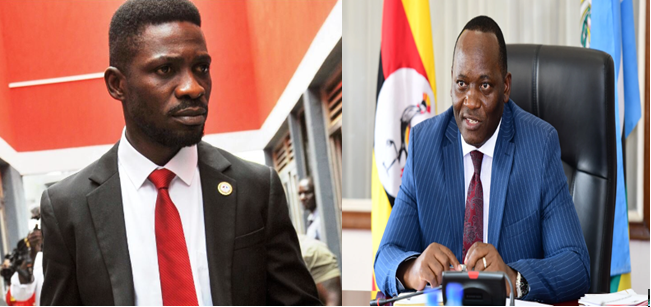
It has been reported that he has influenced other leaders in Masaka to take a similar position against the mobilization efforts. These revelations indicate internal disagreements within the NUP, exposing conflicts over resource allocation and mobilization strategies. This situation presents challenges to the party’s unity and effectiveness in achieving its political objectives.
Mathias Mpuuga’s actions and the responses of party members demonstrate the complex dynamics of political leadership and resource management within Uganda’s opposition parties. A leader of the National Unity Platform (NUP) has suggested that Mpuuga’s actions are driven by his ambition to minimize the influence of the party’s headquarters in his area and build a strong local political base.
The leader has made it clear that their aim is to eliminate the headquarters’ influence in their area. It is my belief that his intentions are to establish a local base from which he can launch his political ambitions, which are reportedly set for 2031. These ambitions played a significant role in the decision to remove Mpuuga as the leader of the opposition (LoP).
A member of Robert Kyagulanyi’s inner circle, also known as Bobi, recently voiced concerns about the nationwide tours of the Leader of Opposition, Mathias Mpuuga. Mpuuga’s tours, a first for a LoP, involve monitoring government programs to ensure accountability. However, these tours often included public rallies that attracted large crowds and were conducted without any involvement or even a briefing to the party headquarters.
According to reports, Kyagulanyi viewed Mpuuga’s actions as a form of disobedience and an attempt to form a political alliance to back up his own presidential ambitions. The connection between Kyagulanyi and Mpuuga seems to have deteriorated more because of Mpuuga’s perceived ungratefulness.
 HICGI News Agency