
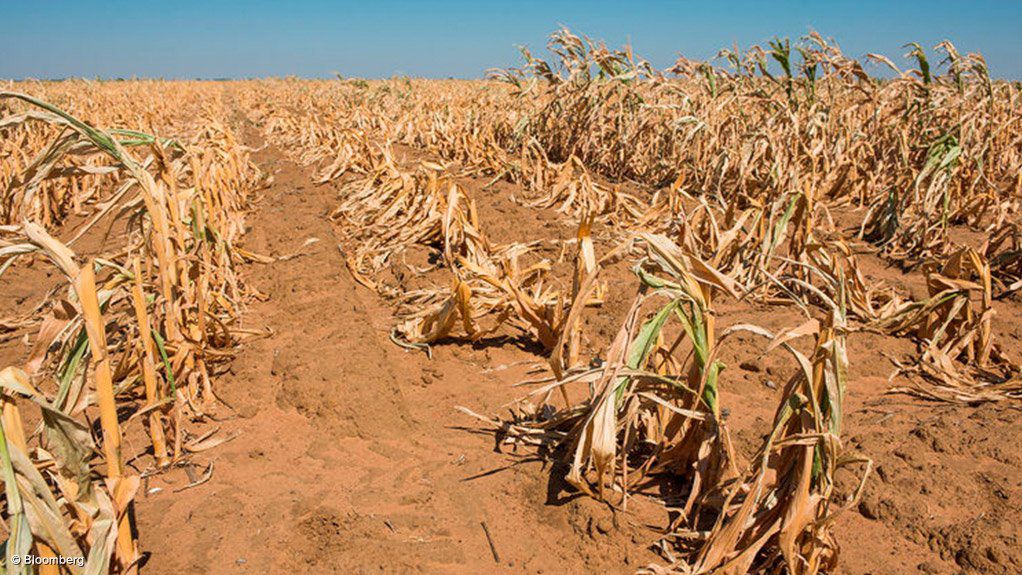
An estimated 20 million people in southern Africa are facing what the United Nations calls”acute hunger” as one of the worst droughts in more than four decades shrivels crops, decimates livestock and, after years of rising food prices brought on by pandemic and war, spikes the price of corn, the region’s staple crop.
Malawi, Zambia and Zimbabwe have all declared national emergencies.
It is a bitter foretaste of what a warming climate is projected to bring to a region that’s likely to be acutely affected by climate change, though scientists said on Thursday that the current drought is more driven by the natural weather cycle known as El Niño than by global warming.
Its effects are all the more punishing because in the past few years the region had been hit by cyclones, unusually heavy rains and a widening outbreak of cholera.

That’s devastating for these largely agrarian countries, where farmers rely entirely on the rains.
In southern Malawi, in a district called Chikwawa, some residents were wading into a river rife with crocodiles to collect a wild tuber known as nyika to curb their hunger. “My area needs urgent help,” the local leader, who identified himself as Chief Chimombo, said.
Elsewhere, cattle in search of water walked into fields still muddy from last year’s heavy rains, only to get stuck, said Chikondi Chabvuta, a Malawi-based aid worker with CARE, the international relief organization. Thousands of cattle deaths have been reported in the region, according to the group.
The first few months of every year, just before the harvest begins in late April and May, are usually a lean season. This year, because harvests are projected to be significantly lower, the lean season is likely to last longer. “The food security situation is very bad and is expected to get worse,” Ms. Chabvuta said.
Local corn prices have risen sharply. In Zambia, the price more than doubled between January 2022 and January of this year, according to the United Nation for food and agriculture Organisation. In Malawi, it rose fourfold.
The F.A.O. pointed out that, in addition to low yields, grain prices have been abnormally high because of the war in Ukraine, one of the world’s biggest grain exporters, as well as weak currencies in several southern African countries, making it expensive to buy imported food, fuel and fertilizers.
According to an analysis published Thursday by World Weather Attribution, an international coalition of scientists that focuses on rapid assessment of extreme weather events, the driving force behind the current drought is El Niño, a natural weather phenomenon that heats parts of the Pacific Ocean every few years and tweaks the weather in different ways in different parts of the world. In Southern Africa, El Niños tend to bring below-average rainfall.
El Niño made this drought twice as likely, the study concluded. That weather pattern is now weakening, but a repeat is expected soon.
Invest or Donate towards HICGI New Agency Global Media Establishment – Watch video here
Email: editorial@hicginewsagency.com TalkBusiness@hicginewsagency.com WhatsApp +256713137566
Follow us on all social media, type “HICGI News Agency” .
 HICGI News Agency