
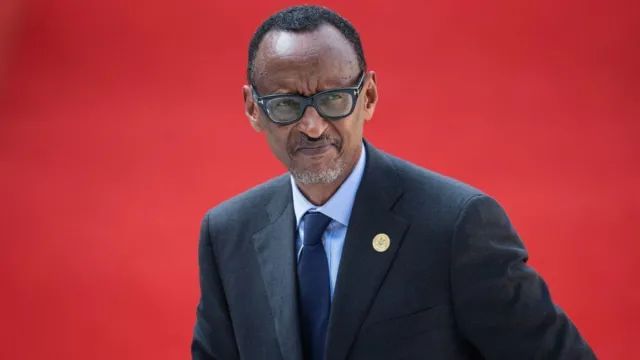
KIGALI, RWANDA – President Paul Kagame of Rwanda has officially announced his candidacy for a fourth term in office, a move that has sparked both anticipation and scrutiny in the East African nation. Kagame, who has been in power since 2000, is widely credited with overseeing Rwanda’s transformation from the devastation of the 1994 genocide into a stable and economically vibrant country.
In a televised address to the nation, President Kagame, 66, expressed his commitment to continuing the socio-economic development and stability that Rwanda has experienced under his leadership. “I accept your request to lead you once again,” Kagame declared, addressing Rwandans directly. “Together, we will continue the journey to build a strong, unified, and prosperous Rwanda.”

The announcement comes amidst a backdrop of mixed reactions within Rwandan society. Supporters of Kagame point to his track record of economic growth, infrastructure development, and reconciliation efforts following the genocide. During his tenure, Rwanda has consistently ranked among the fastest-growing economies in Africa, with significant investments in education, healthcare, and technology.
However, critics argue that Kagame’s extended tenure challenges democratic principles, citing concerns over political freedoms and human rights. International observers and human rights organizations have previously raised alarms about restrictions on opposition parties, freedom of expression, and media independence in Rwanda.
The upcoming election, scheduled for later this year, will be closely watched both domestically and internationally. Kagame’s Rwanda Patriotic Front (RPF) party enjoys widespread support across the country, but opposition figures have faced challenges in mounting credible campaigns.
Under Rwandan law, Kagame’s decision to seek a fourth term is permissible following a 2015 referendum that amended the constitution, allowing him to potentially stay in power until 2034. The referendum was reportedly supported by a large majority of Rwandans, citing stability and continuity as reasons for the amendment.
As the election campaign unfolds, analysts predict that economic development, security, and Rwanda’s role in regional diplomacy will dominate the political discourse. Kagame, a prominent figure in African politics, has been influential in regional affairs, including peacekeeping efforts and economic integration initiatives.
For many Rwandans, the decision to support Kagame’s candidacy reflects a complex balance between stability and democratic aspirations. With the campaign officially underway, the nation prepares for a pivotal moment in its political landscape, one that will shape Rwanda’s trajectory in the years to come.
 HICGI News Agency