
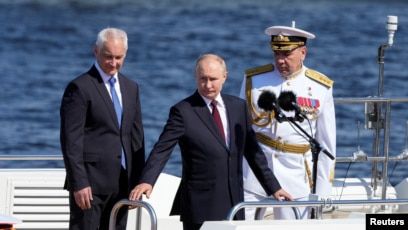
Russian leader threatens to restart production of intermediate-range nuclear weapons if the United States deploys missiles to Germany.
In a recent and sharply worded statement, Russian President Vladimir Putin has issued a stern warning to the United States regarding potential missile deployments to Germany. Putin’s remarks come amid rising tensions between Washington and Moscow and reflect concerns that such a move could trigger a crisis reminiscent of Cold War-era conflicts.
Addressing the issue in a televised speech, Putin criticized the U.S. for its increasing military presence in Europe, particularly focusing on the possibility of stationing advanced missile systems in Germany. He argued that such actions would represent a significant escalation and could destabilize the region, echoing the geopolitical anxieties of the Cold War when both superpowers maintained large arsenals and competed for influence across Europe.

Putin’s warning underscores the sensitive nature of U.S.-Russia relations, which have been strained over various issues, including conflicts in Ukraine, Syria, and cybersecurity disputes. The Russian leader asserted that the deployment of American missiles in Germany would be a direct threat to Russia’s national security and could lead to a new arms race, reminiscent of the decades-long Cold War standoff between the U.S. and the Soviet Union.
The potential missile deployment has been a topic of discussion among NATO allies as part of their broader strategy to counter perceived threats from Russia. However, Putin’s comments suggest a readiness to respond strongly to such developments, further heightening the tension between the two nations.
In response to Putin’s statement, U.S. officials have reiterated their commitment to strengthening NATO’s defensive capabilities and maintaining strategic deterrence. They have emphasized that any military deployments are intended to ensure the security of NATO member states and are not aimed at provoking Russia.
The situation remains fluid, with ongoing diplomatic efforts to address the underlying issues and prevent further escalation. The international community is closely monitoring the developments, as the prospect of renewed Cold War-style tensions could have significant implications for global stability and security.
Putin’s comments also reflect broader concerns within Russia about the shifting balance of power in Europe. He highlighted that the U.S. missile systems in Germany could alter the strategic landscape by placing advanced weaponry closer to Russian borders, potentially undermining existing arms control agreements. Additionally, Putin’s warning is seen as part of a broader strategy to leverage Russian military might and influence in negotiations with the West. By evoking Cold War imagery, he aims to remind both European and American leaders of the high stakes involved, potentially influencing policy decisions and public opinion. The deployment of missiles could also intensify military exercises and countermeasures by Russia, leading to a dangerous cycle of escalation. As diplomatic channels remain open, both sides are expected to engage in high-stakes negotiations to mitigate risks and avoid a repeat of past confrontations that defined the Cold War era.
 HICGI News Agency