
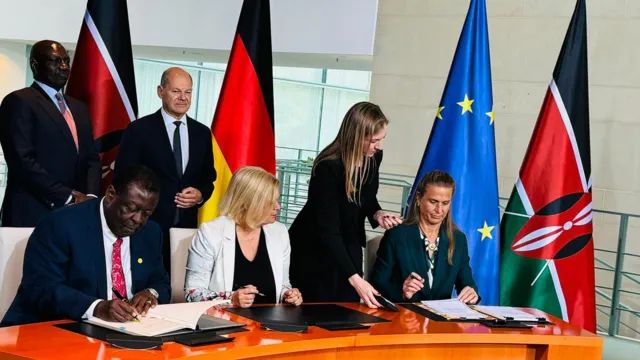
Germany and Kenya have reached a deal to allow 250,000 skilled and semi-skilled Kenyan workers to migrate to Germany. This arrangement aims to address Kenya’s challenges in providing employment for its young professionals while helping Germany tackle its shortage of skilled labor.
The initiative has already seen five Kenyan bus drivers arrive in Flensburg, Germany, as part of a pilot project. This agreement is a key component of Germany’s strategy to manage immigration, particularly in light of rising anti-immigration sentiments from the far-right party Alternative for Germany (AfD).

In recent years, Germany has accepted large numbers of asylum seekers, including over one million during the 2015-2016 migrant crisis and 1.2 million Ukrainians since the start of Russia’s full-scale invasion in February 2022.
The labor agreement, signed in Berlin by Chancellor Olaf Scholz and President William Ruto, includes provisions to ease some immigration restrictions for Kenyan workers. Those who secure jobs will have the opportunity to extend their temporary residence permits. Additionally, Kenyans will be eligible for long-term visas for study or vocational training, which can be extended if their goals have not yet been met but are attainable within a reasonable timeframe.
IT specialists from Kenya will be allowed to work in Germany even without formal qualifications, while other skilled workers with recognized vocational or academic credentials will also be supported. The agreement includes measures for the safe return and readmission of citizens between the two countries, and aims to prevent labor exploitation, forced labor, and human trafficking.
The initial group of Kenyan drivers will be trained by the Aktiv bus company, with further roles for doctors, nurses, and teachers anticipated in the program. The International Labour Organisation (ILO) has praised the deal, noting that it will improve access to quality jobs for Kenyan workers in Germany and help address Germany’s labor shortages.
However, concerns have been raised about the potential brain drain from Kenya, with professionals leaving for opportunities abroad and creating shortages domestically. Kenyan lawyer and politician Ekuru Aukot expressed concerns about servicing other countries at the expense of Kenya’s needs. In response, senior foreign affairs official Roseline Njogu highlighted the challenges Kenya faces in creating sufficient job opportunities for its growing youth population.
 HICGI News Agency