
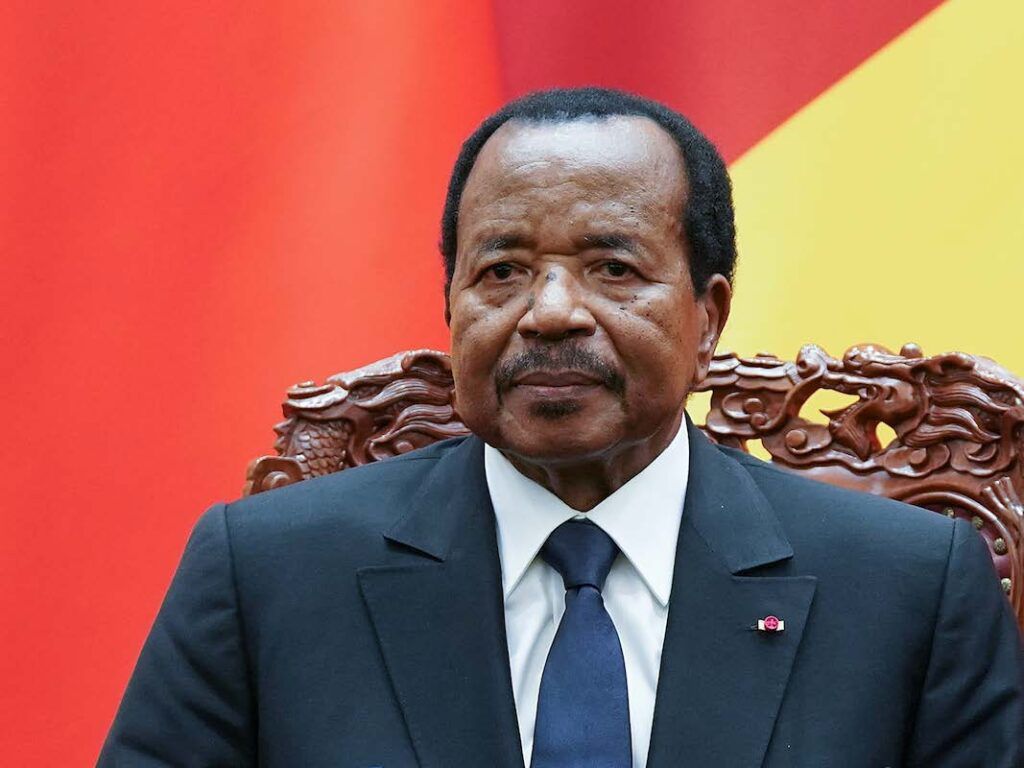
Speculation over the wellbeing of Cameroon’s 91-year-old President, Paul Biya, has once again gripped Africa, fueled by his absence from several key diplomatic events.
Biya, Africa’s oldest head of state and the world’s second-longest-serving president, remains a subject of intrigue, with rumors about his health dominating discussions in media and political circles.

After attending the China-Africa summit in Beijing in early September, it was expected that Biya might skip the United Nations General Assembly in New York. However, his failure to attend the recent La Francophonie summit in Viller-Cotterêts, France, heightened speculation. His month-long absence from public view only added to the intrigue, with many questioning whether the president was facing serious health issues.
Official Denials
In response to the swirling rumors, Cameroon’s ambassador in France assured the public that Biya was “in good health” and staying in Geneva, his preferred destination when abroad. Officials suggested he was resting after a heavy diplomatic schedule during July and August. Meanwhile, government spokesperson René Sadi dismissed the rumors, adding that the president would return to Cameroon “in the next few days.” The head of Biya’s private office, also in Geneva, confirmed that the president was in “excellent health.”
A Strategic Nation Facing Multiple Challenges
Cameroon holds a key geopolitical position as a gateway to landlocked nations like Chad and the Central African Republic (CAR). However, it faces numerous challenges, including ongoing jihadist violence around Lake Chad and a complex crisis in its English-speaking regions. While these issues require strong leadership, Biya’s governing style has been characterized by a deliberate distance from day-to-day political engagements, often delegating responsibilities to his prime ministers.
A Legacy of Power and Control
Biya’s political career is marked by a careful balancing act between maintaining control and allowing enough reforms to suppress opposition. After becoming president in 1982, Biya consolidated power by sidelining his predecessor, Ahmadou Ahidjo. Though he initially promised democratic reforms, Biya entrenched his rule, managing to survive the wave of democratization that swept through Africa in the 1990s.
The president narrowly won a contentious election in 1992, and since then, he has fended off political challenges, aided by divided opposition parties and allegations of election manipulation. His measured public appearances, combined with periods of unexplained absences, have long been a hallmark of his leadership.
A Question of Succession
As Biya’s current seven-year term approaches its end in November 2025, the debate about Cameroon’s political future has intensified. Despite his advanced age, some supporters have urged him to run for re-election, prompting critics to argue that it is time for younger leaders to take charge. They believe new leadership could address the country’s challenges more effectively and foster development with greater urgency.
For now, Biya’s return to Cameroon is awaited, but his enigmatic leadership style ensures that speculation about his health—and his political future—will continue.
 HICGI News Agency