
Updated by Earnest Kivumbi Benjamin at 1750 EAT on Tuesday 12th November 2024
BAKU- AZERBAIJAN

Several influential world leaders won’t be attending an action summit this week at the center of climate talks in Azerbaijan. High on the agenda is a deal to boost climate funding for developing countries.
The two-day World Leaders Action Summit at COP29 got under way on Tuesday in Baku, Azerbaijan, with around 100 leaders taking part, although there are some noticeable absentees.
The top priority at this year’s summit is expected to be landing a deal to boost funding for climate action in developing countries.
Some are pushing for the current pledge of $100 billion (€93 billion) a year to be raised by ten times that amount at COP29 to cover the future cost of shifting to clean energy and adapting to climate shocks.
Without adequate finance, developing nations have warned that they will struggle to offer ambitious updates to their climate goals, which countries are required to submit by early next year.
Presidents of China and US among those absent
The leaders of the 13 biggest emitters of carbon — countries responsible for more than 70% of 2023’s heat-trapping gases — will not appear at this year’s gathering.
Chinese President Xi Jinping, US President Joe Biden, and also India’s Narendra Modi and France’s Emmanuel Macron are among G20 leaders skipping the event.
“It’s symptomatic of the lack of political will to act. There’s no sense of urgency,” climate scientist Bill Hare told the Associated Press.
Nevertheless, Azerbaijan’s President and COP2 host Ilham Aliyev, UK Prime Minister Keir Starmer and Turkey’s President Recep Tayyip Erdogan are among the nearly 50 leaders set to speak on Tuesday.
UN warns time is running out to fight climate change
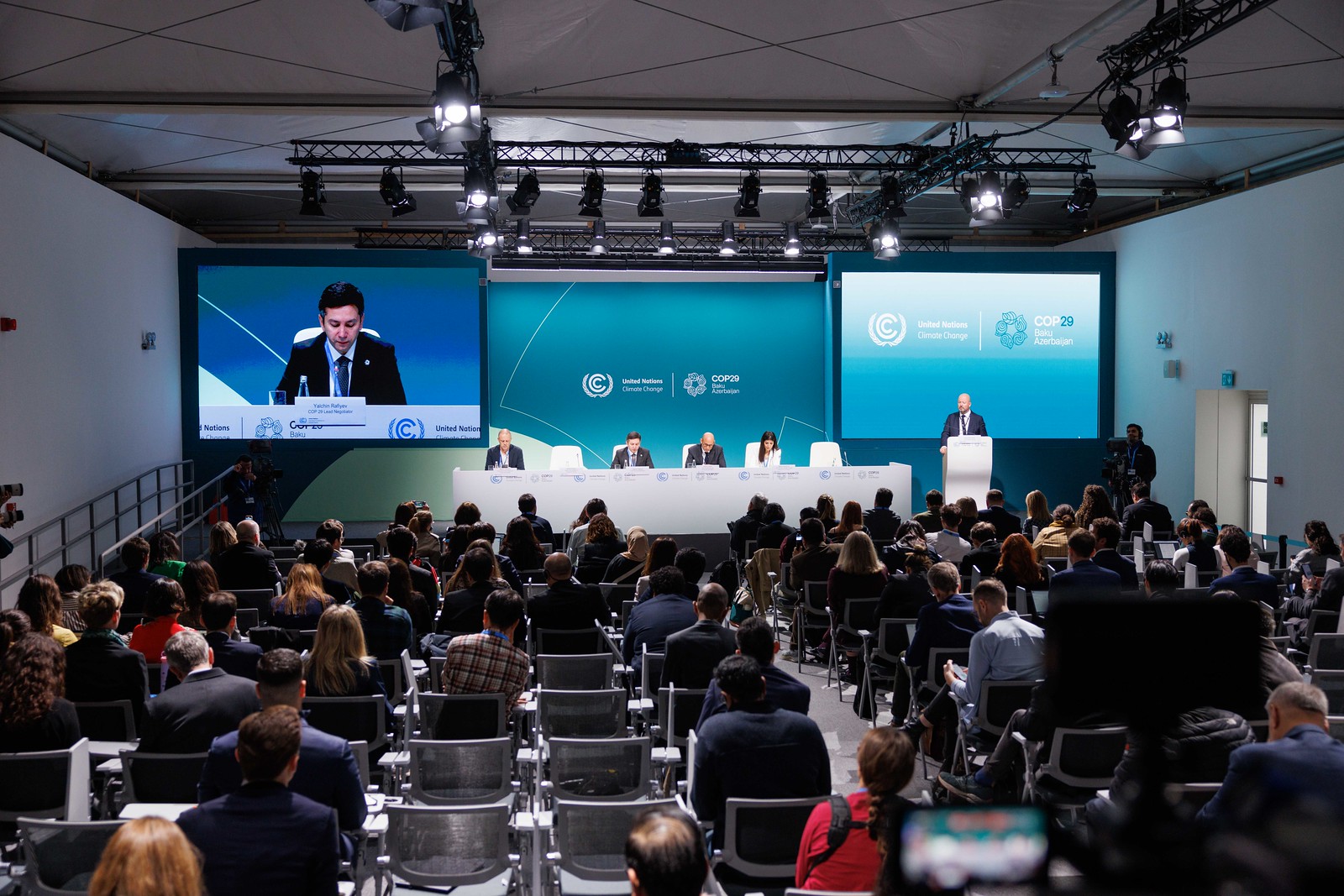
COP29 lead negotiator, Azerbaijan’s deputy Foreign Minister, Yalchin Rafiyev, emphasized at a press conference on Tuesday that “success doesn’t depend on one country alone.”
“Unless all countries can slash emissions deeply, every country and household will be hammered harder than they currently are. We will be living in a nightmare,” he said.
Azerbaijan president calls oil ‘gift of God’
In an address on Tuesday, Azerbaijan President Aliyev repeated a controversial quote that oil, gas and other natural resources are a “gift of the God” and said nations should not be judged by their natural resources and how they use them.
“Quote me that I said that this is a gift of the God, and I want to repeat it today here at this audience,” he told delegates.
Azerbaijan has seven billion barrels of oil reserves and was one of the first places in the world to start commercial oil production.
UK commits to 81% reduction of greenhouse gas emissions by 2035
British Prime Minister Keir Starmer said the UK would would cut greenhouse gas emissions by 81% by 2035.
“At this COP, I was pleased to announce that we’re building on our reputation as a climate leader, with the UK’s 2035 NDC (nationally determined contributions) target to reduce all greenhouse gas emissions by at least 81% on 1990 levels,” Starmer told a press conference on Baku.
The previous government committed in 2021 to curb these emissions by 78 percent over the same period.
Ilham Aliyev, Azerbaijani president
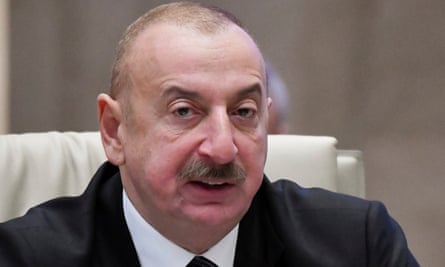
The autocratic president of Azerbaijan since 2003, Ilham Aliyev has used Azerbaijan’s oil wealth to gain international influence for his small country, as well as to enrich his own family. Aliyev is the son of Heydar Aliyev, a national leader when the country was part of the Soviet bloc, who regained power in a 1993 after the country’s first free post-Soviet elections the year before.
Mukhtar Babayev, Cop29 president-designate
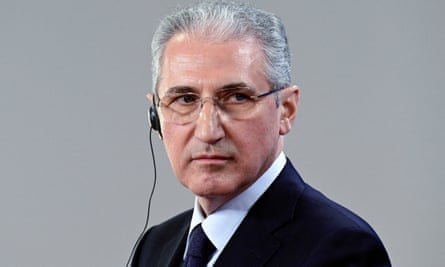
The president-designate of Cop29 is Azerbaijan’s minister for ecology and natural resources. Like his predecessor, Sultan Al Jaber, who presided over last year’s Cop28 in Dubai, Babayev has a background in the oil industry. He worked for Socar, the country’s national oil company, from 1994 to 2018, before his ministerial appointment.
Babayev, an affable and competent figure, is well regarded among developing and developed countries at the talks, though he was little known before Azerbaijan’s surprise decision to take on the hosting of Cop29. Choosing the host nation was a troubled process, only resolved at the last moment during last year’s Cop28.
This year is the turn of the post-Soviet bloc to host, and several eastern European EU members including Romania, Bulgaria and Poland had expressed an interest. All were vetoed by Russia’s president Vladimir Putin, angered by the EU’s response to his invasion of Ukraine. Azerbaijan was regarded as an outside possibility because of the conflict with Armenia that has rumbled on through two decades, flaring into outright war last September before subsiding into an uneasy de facto truce.
But just as the organisers were preparing emergency plans to host the Cop at one of the UN’s campuses, Putin indicated he would allow the choice and Armenia supported the bid, leaving Azerbaijan’s president to make Babayev the obvious appointment.
He will be assisted by Yalchin Rafijev, the deputy foreign minister with a background in diplomacy, who is chief negotiator and the key point of contact for delegations.
Sultan Al Jaber, Cop 29 president
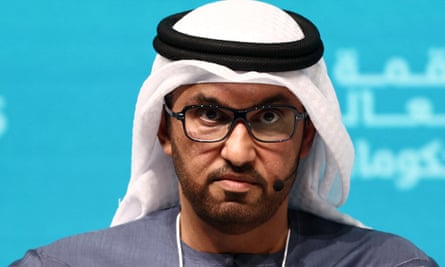
At last year’s Cop28 summit in Dubai, nations made a historic agreement to “transition away” from fossil fuels. It was a weaker commitment than the full-blooded “phase-out” of fossil fuels that many countries and activists wanted, but – astonishingly – it represented the first time that these three decades of talks have produced a commitment to tackle the root cause of the climate crisis.
The promise was largely the work of the Cop28 president, the United Arab Emirates minister Sultan Al Jaber. A charismatic figure who is also chief of the UAE’s national oil company, Adnoc, Al Jaber dominated the Dubai conference and helped bring Saudi Arabia to the table.
That will not be the last of his influence. After Cop28, Al Jaber also masterminded continued influence over the process by helping to institute a new “troika” system for Cops, whereby the current Cop presidency is joined by the immediate past presidency and the designated next presidency to provide a degree of continuity that should safeguard progress made at previous Cops and strengthen future commitments.
Marina Silva, Brazil environment minister
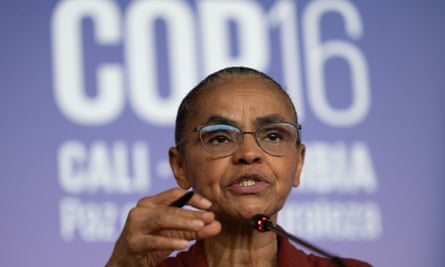
There were high hopes that Cop29 would be galvanised by the presence of Luiz Inácio Lula da Silva, whose outspoken espousal of a billionaire tax has endeared him to activists and vulnerable countries. But he is unlikely to make it, so his place is most likely to be taken by environment and climate minister, Marina Silva.
Brazil occupies at key position at Cop29 as the prospective president of Cop30. Next year, at Belem in the Amazon, countries must arrive with fresh national plans – known as nationally determined contributions (NDCs) – enforcing more stringent cuts to greenhouse gas emissions than they have yet promised. These must be in line with the globally accepted aim of limiting temperature rises to 1.5C above preindustrial levels.

Brazil, as the third member of the troika, will want to use Cop29 to chivvy laggard governments to present their NDCs as early as possible. Technically the deadline is February, but many countries are likely to see Cop30 itself as the de facto deadline.
António Guterres, UN secretary general
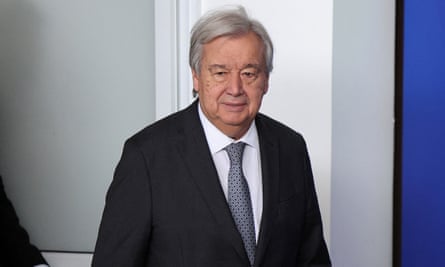
Guterres will champion developing nations at Cop29, encouraging and berating rich countries into providing more climate finance. He is likely to be equally outspoken to leaders of countries with high emissions and inadequate reduction plans and, most of all, to the fossil fuel executives who are expected to turn up in large numbers as many multinational oil and gas companies, including BP and Shell, have strong interests in Azerbaijan.
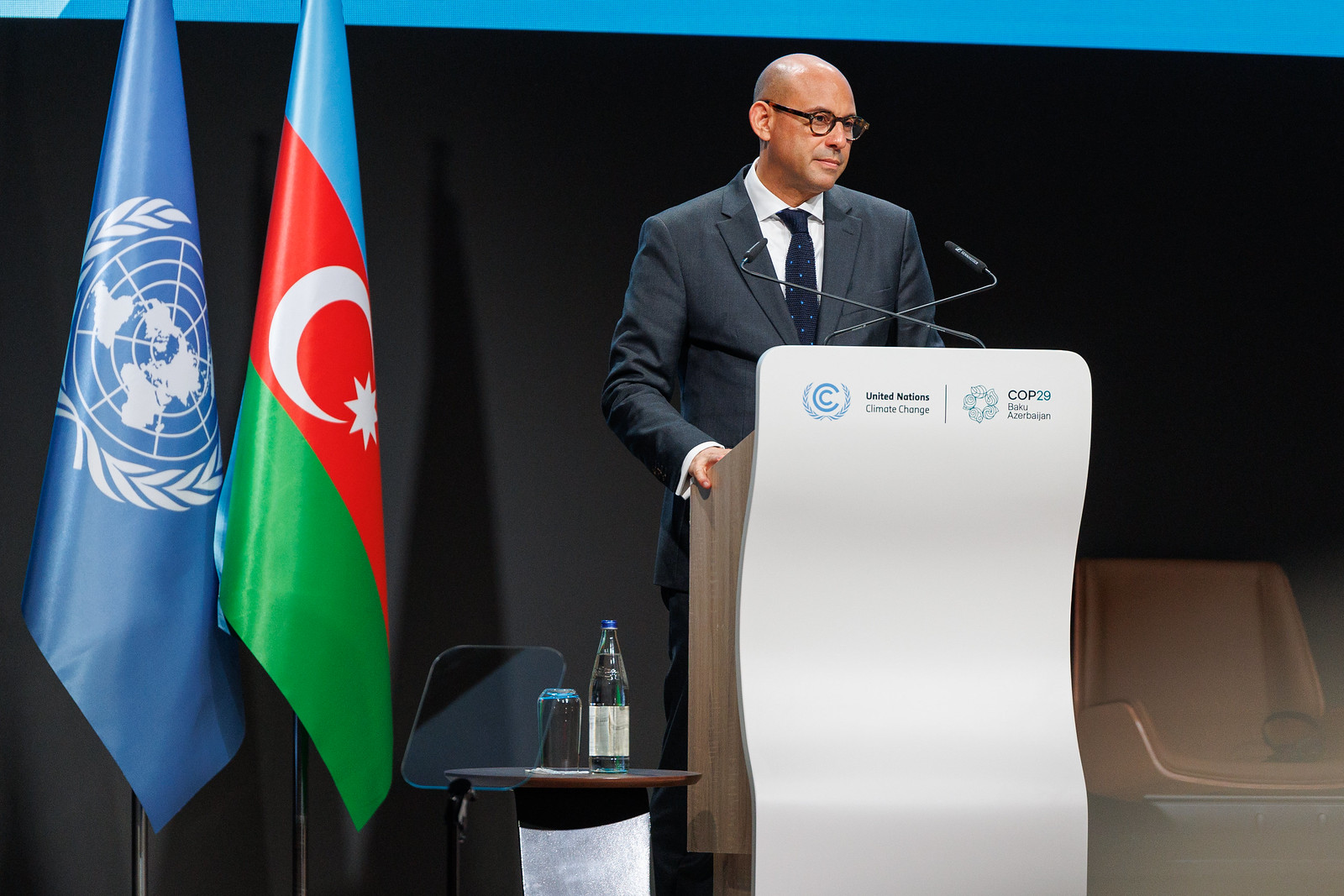
Simon Stiell, executive secretary of the UN Framework Convention on Climate Change
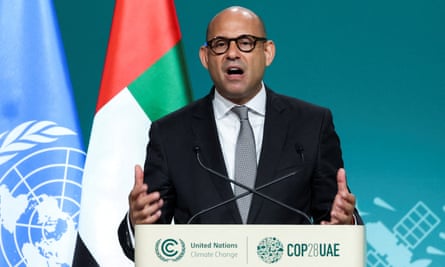
Climate-related disaster struck close to home this year for the UN’s climate chief. Simon Stiell is executive secretary of the UN Framework Convention on Climate Change – the treaty under which this “conference of the parties” (Cop) is held – and comes from the island of Carriacou, in Grenada. It was hit by Hurricane Beryl in July.
Stiell spoke movingly from the site of his grandmother’s house, utterly destroyed in the disaster. “What I’m seeing on my home island, Carriacou, must not become humanity’s new normal,” he said. “If governments everywhere don’t step up, 8 billion people will be facing this blunt force trauma head-on, on a continuous basis. We need climate action back at the top of political agendas.”
Stiell’s job at Cop29 will be to work closely with the Azerbaijani presidency, acting as an honest broker to all 198 parties, and guiding an agreement through the complexities of the UNFCCC process.
Mia Mottley, prime minister of Barbados
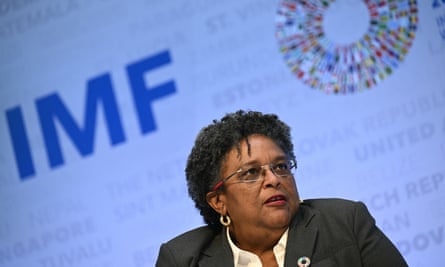
The prime minister of Barbados, under whom the country removed the British crown as head of state to become a fully fledged republic, has been an electrifying presence at recent Cops, and her mission to force the restructuring of international financial institutions has already borne fruit, with the new World Bank president, Ajay Banga, promising to take a more active role in climate finance.
Mottley wants to go much further and secure the flow of trillions of dollars of investment each year to the developing world, to transform the global economy and provide protection for those most at risk of climate disaster. She has forged close ties with the French president, Emmanuel Macron, who held a climate finance summit last year, and with the Kenyan president, William Ruto.
With Cop29 focused on climate finance, she will be a linchpin for developing countries seeking climate justice in the face of inaction by the worst greenhouse gas emitters.
Ajay Banga, World Bank president
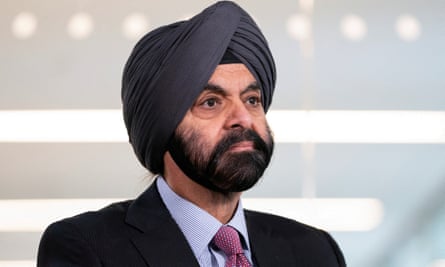
With climate finance top of the Cop29 agenda, the World Bank president Ajay Banga is in pole position to make a difference. But will he order the sweeping reforms to the bank’s practices that developing countries say are needed?
The World Bank held its annual autumn meetings last month, but there was little progress on climate finance. The group is awaiting a pledging conference next month, where developed countries must increase the amount of money they are prepared to put towards developing country finance. Focusing on that may mean that Banga has little to offer at Cop29, but that will not satisfy his critics.
The Americans
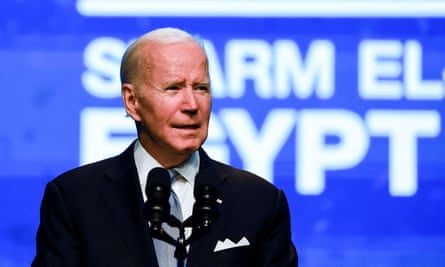
Joe Biden is not expected to attend Cop29, nor will his successor Donald Trump. During his last presidency, Trump withdrew the US from the Paris agreement, and he is likely to do so again. However, the delegation for the US at Cop29 will be from the Biden White House, as Trump will not take office until January. The “lame duck” delegation can still participate in the negotiations, and though they will not be able to bind the US government to clear future financial commitments, they are unlikely to stand in the way of agreement by other countries, meaning that the core decisions expected to made at Cop29 on finance can still go ahead.
Wopke Hoekstra, EU climate commissioner
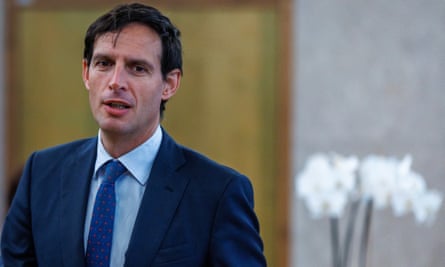
The EU delegation to Cop29 will be rather a skeleton staff this year, as key figures – such as Teresa Ribera, the former Spanish environment minister who has played a galvanising role in recent Cops and is relishing the prospect of a new role as vice-president of the European Commission, and Dan Jorgensen, former Danish environment minister and another Cop veteran who will be the new EU energy and housing chief – are undergoing their confirmation processes, which will not be completed until a vote in the EU parliament on 1 December.
Hoekstra, who served as climate commissioner in the last iteration of the commission and keeps the job for this one, is a confirmed participant, leading the EU negotiations for the second week of the talks. He faces a big challenge – the EU is the biggest provider of climate finance around the world, but a rightward slant to the new parliament and among some member state governments may cut down on the bloc’s freedom to manoeuvre at the talks.
Liu Zhenmin, China’s climate spokesperson
Cop29 will be the first proper outing for the new Chinese climate envoy. His predecessor, Xie Zhenhua, was a key figure at Cops for two decades and enjoyed a cordial relationship with John Kerry, the US special presidential envoy for climate. Both retired earlier this year.
Liu and his US counterpart, Kerry’s successor John Podesta, have enjoyed some warm meetings this year, including one at Podesta’s home. But even cosy dinners cannot disguise the real tensions between the two powers. China is the world’s biggest emitter of greenhouse gases by a long way, responsible for close to a third of global emissions, and is also the world’s second-biggest economy, after the US. Yet China clings to its status as a developing country, under the 1992 UNFCCC treaty, and has refused to take on obligations to provide finance to the poor world, though it does provide such assistance on a voluntary level and under its own terms.
China will come under fierce pressure from the EU and the US to make commitments on climate finance and to demonstrate that its emissions will peak soon and fall sharply in the next iteration of its NDC. China and the US will also hold a methane summit during Cop29, at which activists will be hoping for concrete new measures to curb the powerful greenhouse gas, rather than the good intentions that have been the only outcomes of previous talks.
Ed Miliband, UK secretary of state for energy security and net zero
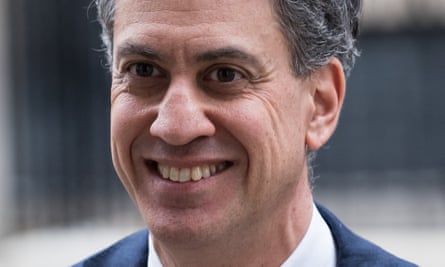
Cop29 will mark a resonant return to the world stage for Ed Miliband, the UK’s energy and net zero secretary, who played a significant role in salvaging a partial deal from the tumultuous Copenhagen Cop in 2009. In recent years, he has attended Cops as an opposition minister, well-respected and listened to, with a wide network of international contacts among delegations and Cop veterans.
In stark contrast to his Tory predecessors, who tended to send junior ministers – and not always for the key moments – Miliband will take charge of the negotiations himself throughout the conference, he will be assisted by Rachel Kyte, the newly appointed climate envoy, a post that had been scrapped by Rishi Sunak.
Keir Starmer, prime minister of the UK
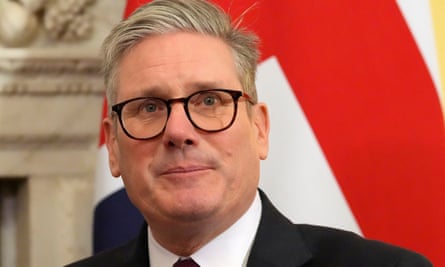
At last year’s Cop in Dubai, Starmer got his first taste of what leading on the world stage might be like, and it clearly had an impact. He used his first speech to his fellow world leaders, at the UN general assembly in September, to declare the climate crisis a key priority. “We are returning the UK to responsible global leadership,” he said. “Because it is right – yes, absolutely. But also because it is plainly in our self-interest … the threat of climate change is existential and it is happening in the here and now. So we have reset Britain’s approach.”
He will come to Cop29 armoured with action: he will unveil the UK’s NDC, expected to promise deep cuts in emissions, in an attempt to rally other nations to make similarly bold pledges. A key question he must also answer is how the UK intends to make good on the pledge made under Boris Johnson to spend £11.6bn on climate aid to developing countries by 2026. By the last days of Sunak’s government, only 45% of the total had been disbursed, leaving a heavier burden on Labour to make up the shortfall.
Strongmen surprises in store?
Vladimir Putin visited Azerbaijan in August for meetings with Aliyev, to underscore the resumption of a relationship that has been tested in the last three years, after the Cop host took over the supply of gas to the EU as the bloc tried to cut its dependence on Russia after the invasion of Ukraine. Azerbaijan also has its own links to Ukraine.
But Azerbaijan only managed to supply the EU so fruitfully by importing Russian gas for its own needs, demonstrating the relationship that still exists between the former Soviet pair.
Putin’s August visit was the first in six years. He is still unlikely to make an appearance at Cop29, but the Russian delegation is likely to have more behind-the-scenes involvement than it usually enjoys.
Narendra Modi, prime minister of India, received a warm personal invitation to the talks by Aliyev. Modi has skipped recent Cops and is viewed as unlikely to attend this one, but there is still an outside chance that Aliyev’s urging might tempt him. India has taken a trenchant line on climate finance, blasting developed countries for failing to do enough and demanding £1tn a year. The country also continues to depend heavily on coal, despite a burgeoning renewable energy sector.
Other strongmen of the world have also been mooted as potential visitors, but few are likely to be among the 100 world leaders coming. Syria’s Bashar al-Assad was invited to Cop28 in Dubai, but did not attend. Nicolás Maduro, in Venezuela is also expected.
UN CHIEF FULL SPEECH AT COP29 WORLD LEADERS’ CLIMATE ACTION SUMMIT OPENING CEREMONY
President Aliyev, I thank you, the COP President, Mukhtar Babayev, and the Government of Azerbaijan for your welcome and hospitality.
Excellencies, friends,
The sound you hear is the ticking clock.
We are in the final countdown to limit global temperature rise to 1.5 degrees Celsius.
And time is not on our side.
With the hottest day on record …and the hottest months on record …this is almost certain to be the hottest year on record.
And a masterclass in climate destruction:
Families running for their lives before the next hurricane strikes;
Biodiversity destroyed in sweltering seas;
Workers and pilgrims collapsing in insufferable heat;
Floods tearing through communities, and tearing down infrastructure;
Children going to bed hungry as droughts ravage crops.
All these disasters, and more, are being supercharged by human-made climate change.
And no country is spared.
In our global economy, supply chain shocks raise costs – everywhere.
Decimated harvests push up food prices – everywhere.
Destroyed homes increase insurance premiums – everywhere.
This is a story of avoidable injustice.
The rich cause the problem, the poor pay the highest price.
Oxfam finds the richest billionaires emit more carbon in an hour and a half than the average person does in a lifetime.
Unless emissions plummet and adaptation soars, every economy will face far greater fury.
But there is every reason to hope.
Excellencies,
At COP28, all of you agreed to move away from fossil fuels;
To accelerate net zero energy systems, setting milestones to get there;
To boost climate adaptation;
And to align the next round of economy-wide national climate plans – or NDCs – with the 1.5 degree limit.
It’s time to deliver.
Humanity is behind you: a poll by the University of Oxford and the United Nations Development Programme finds that eighty percent of people around the world want more climate action.
Scientists, activists, and young people are demanding change – they must be heard, not silenced.
And the economic imperative is clearer and more compelling – with every renewables roll out, every innovation, and every price drop.
Last year – for the first time – the amount invested in grids and renewables overtook the amount spent on fossil fuels.
Almost everywhere, solar and wind are the cheapest source of new electricity.
Doubling down on fossil fuels is absurd.
The clean energy revolution is here. No group, no business, and no government can stop it.
But you can and must ensure it is fair, and fast enough to limit global temperature rise to 1.5 degrees Celsius.

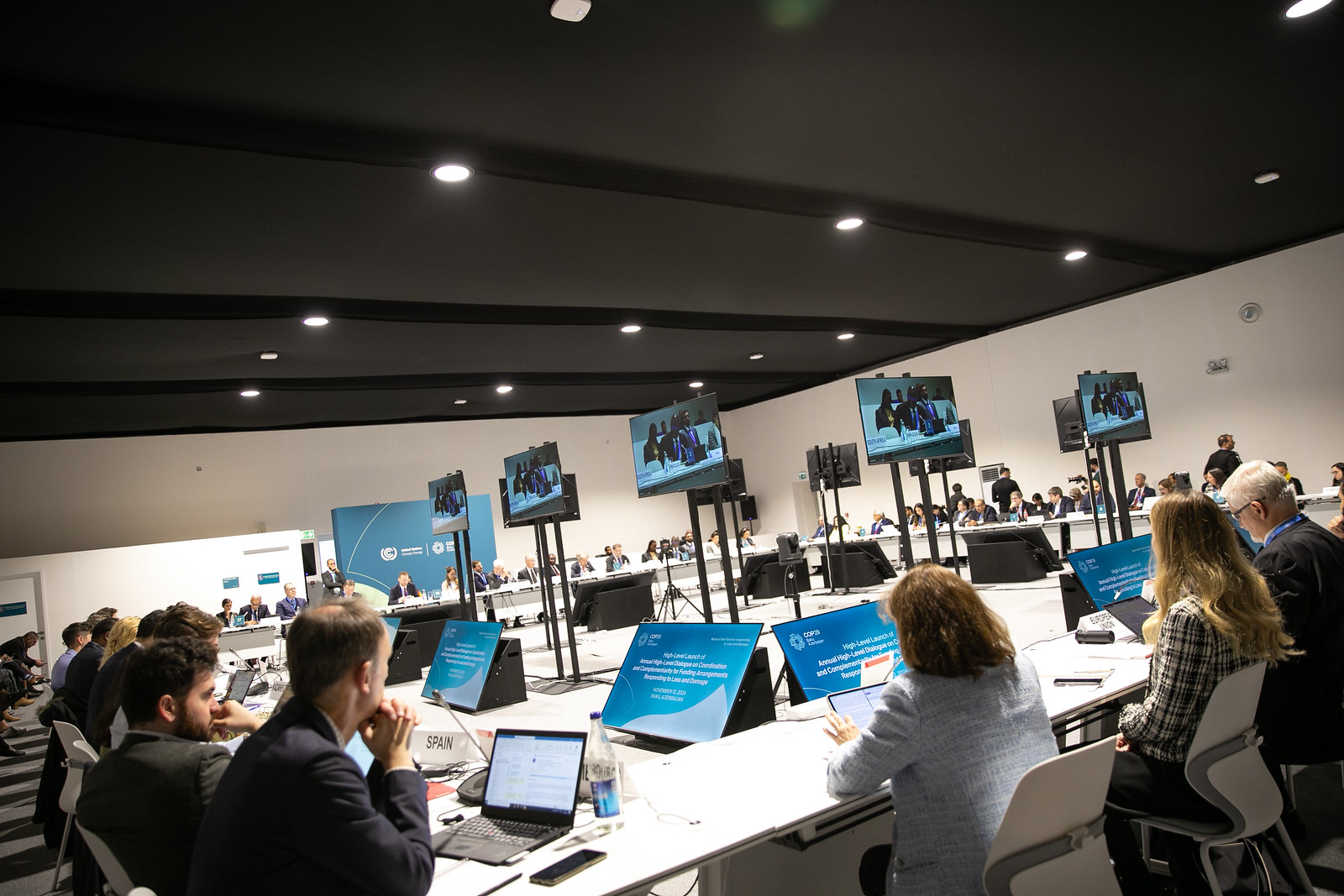
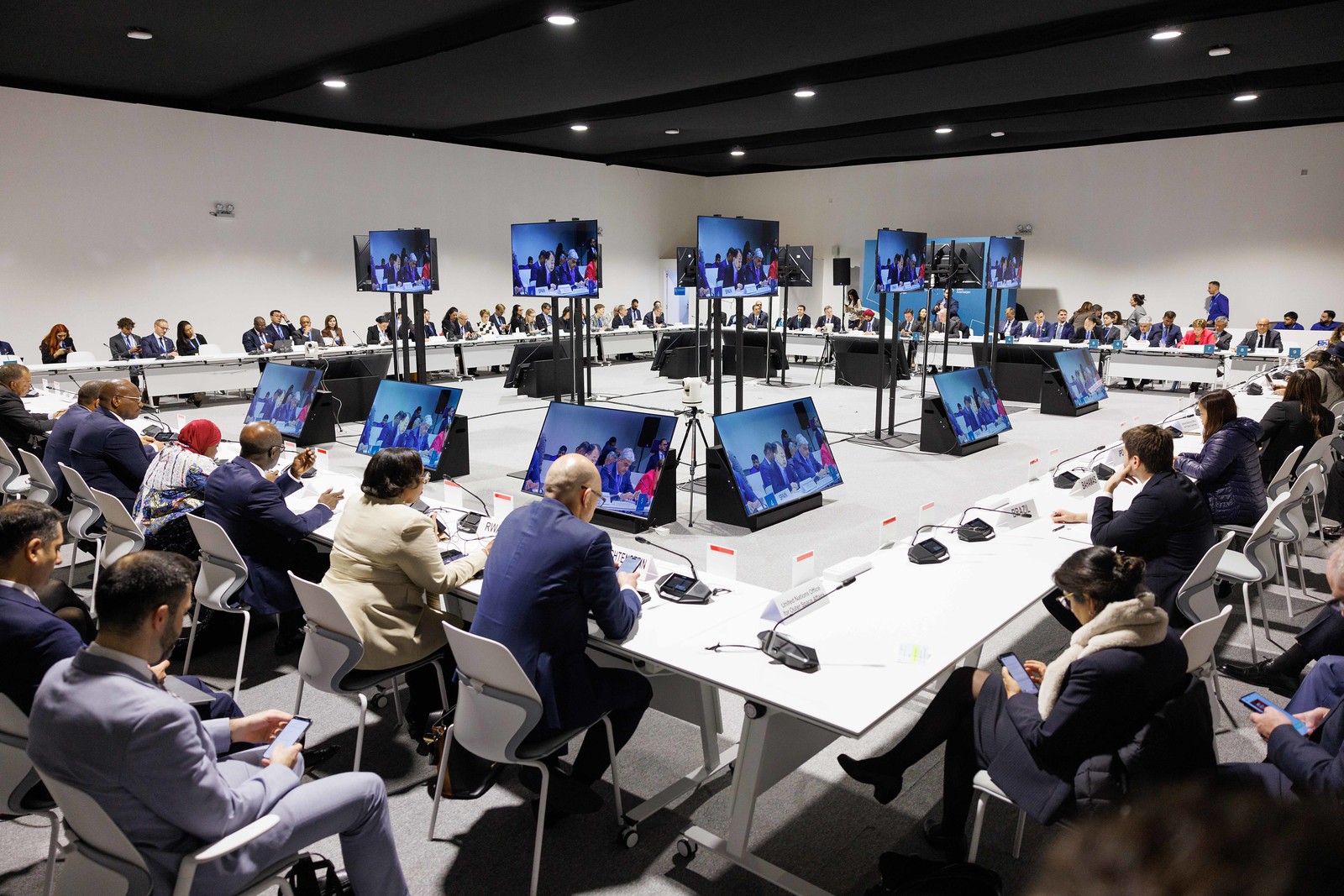

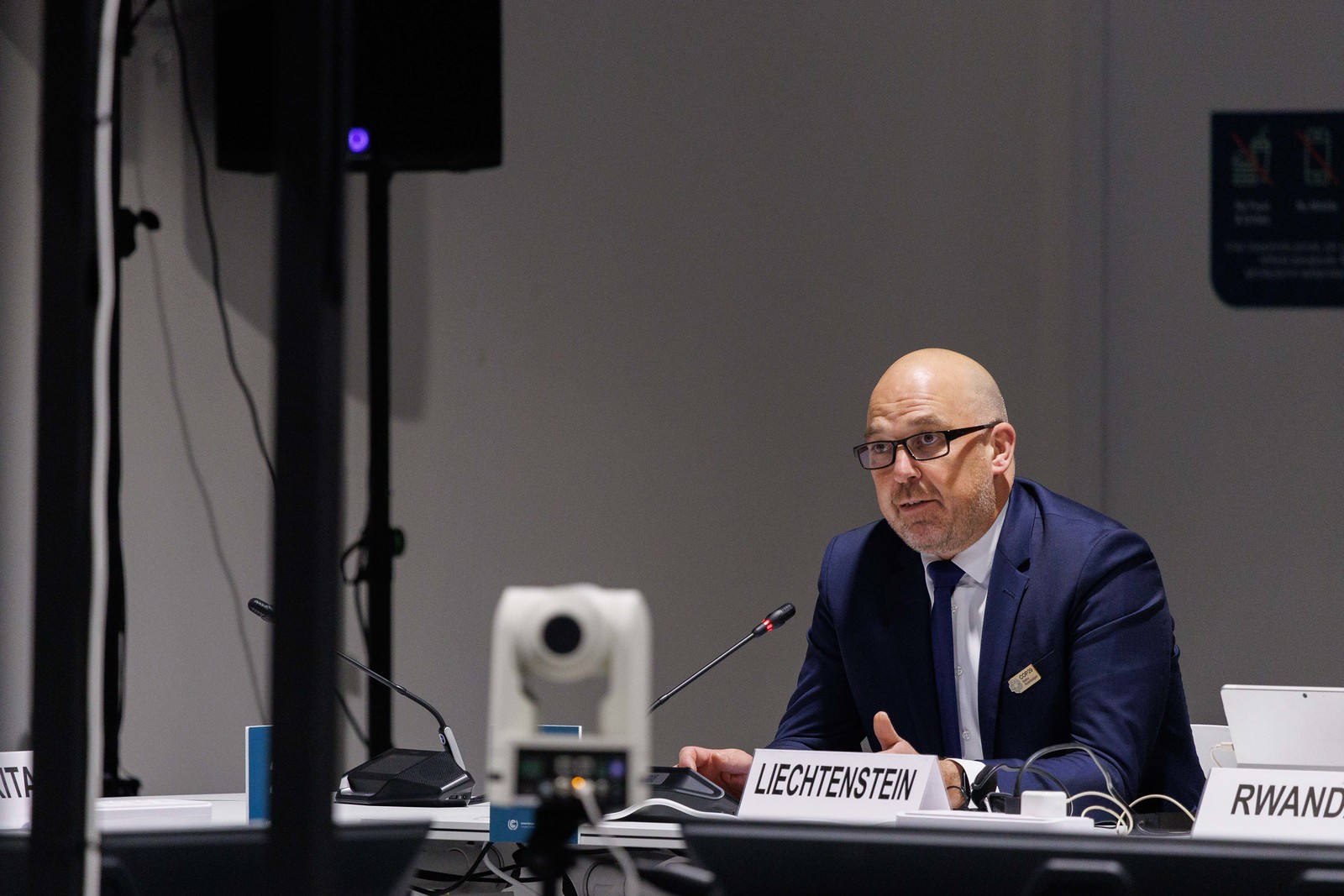


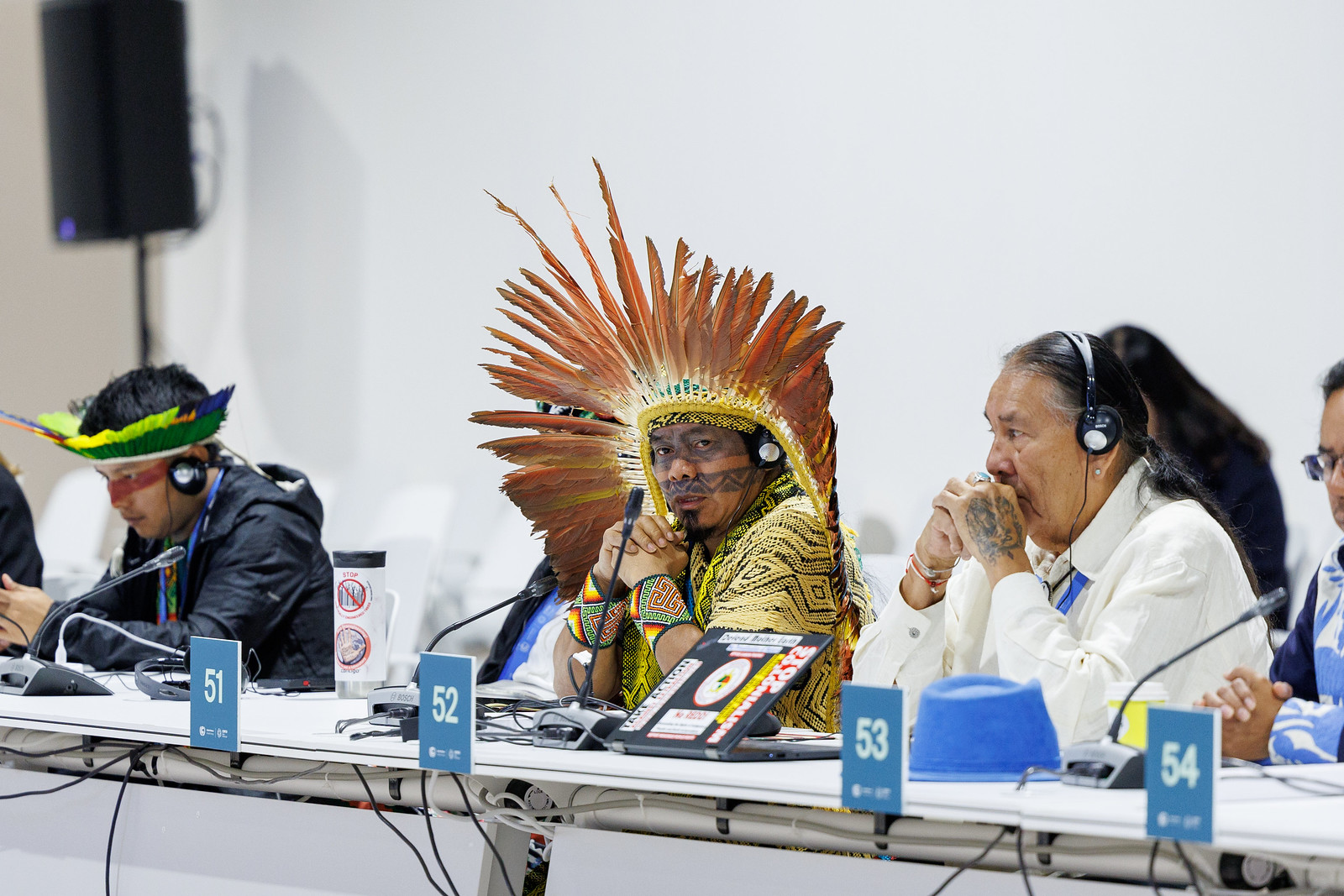
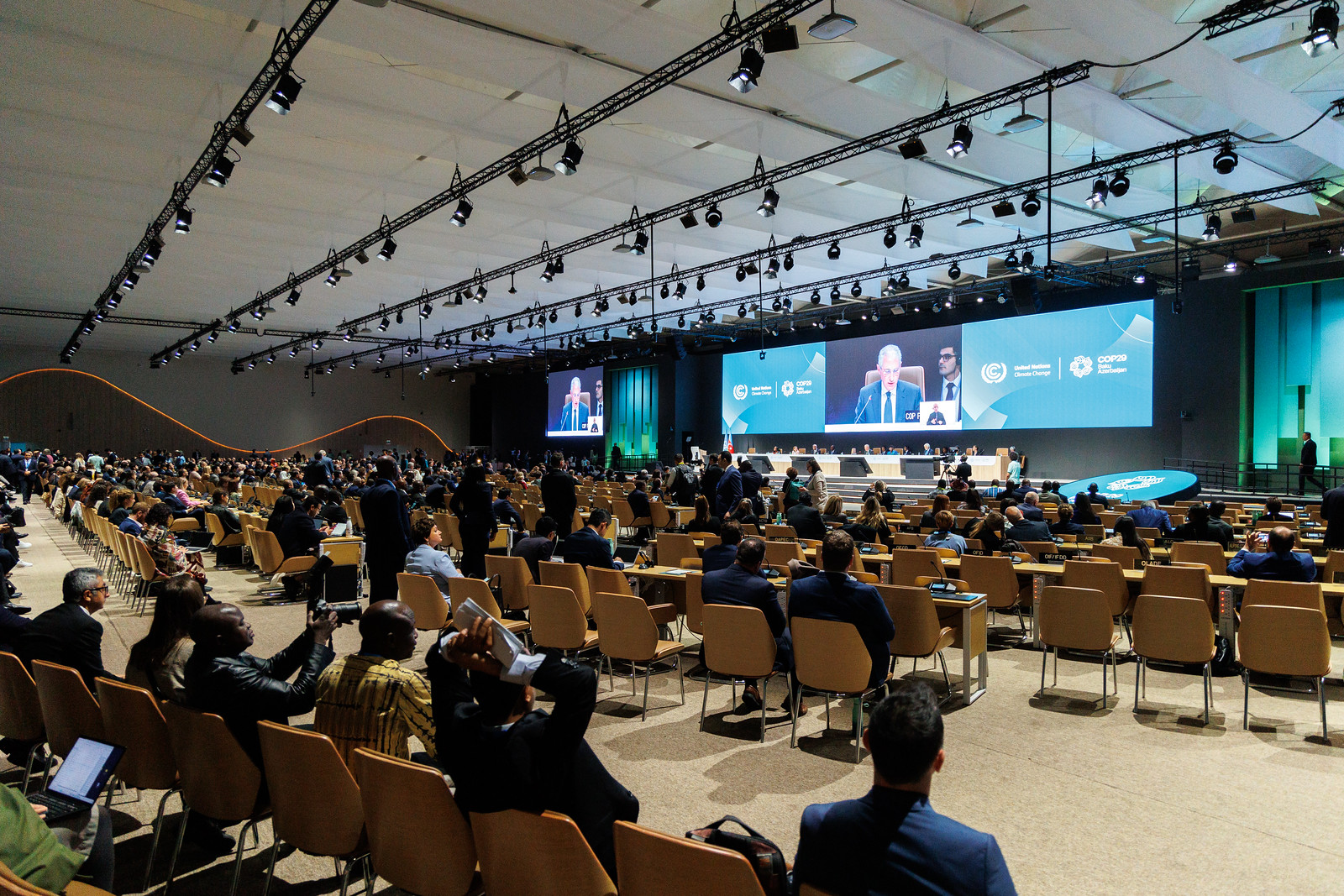
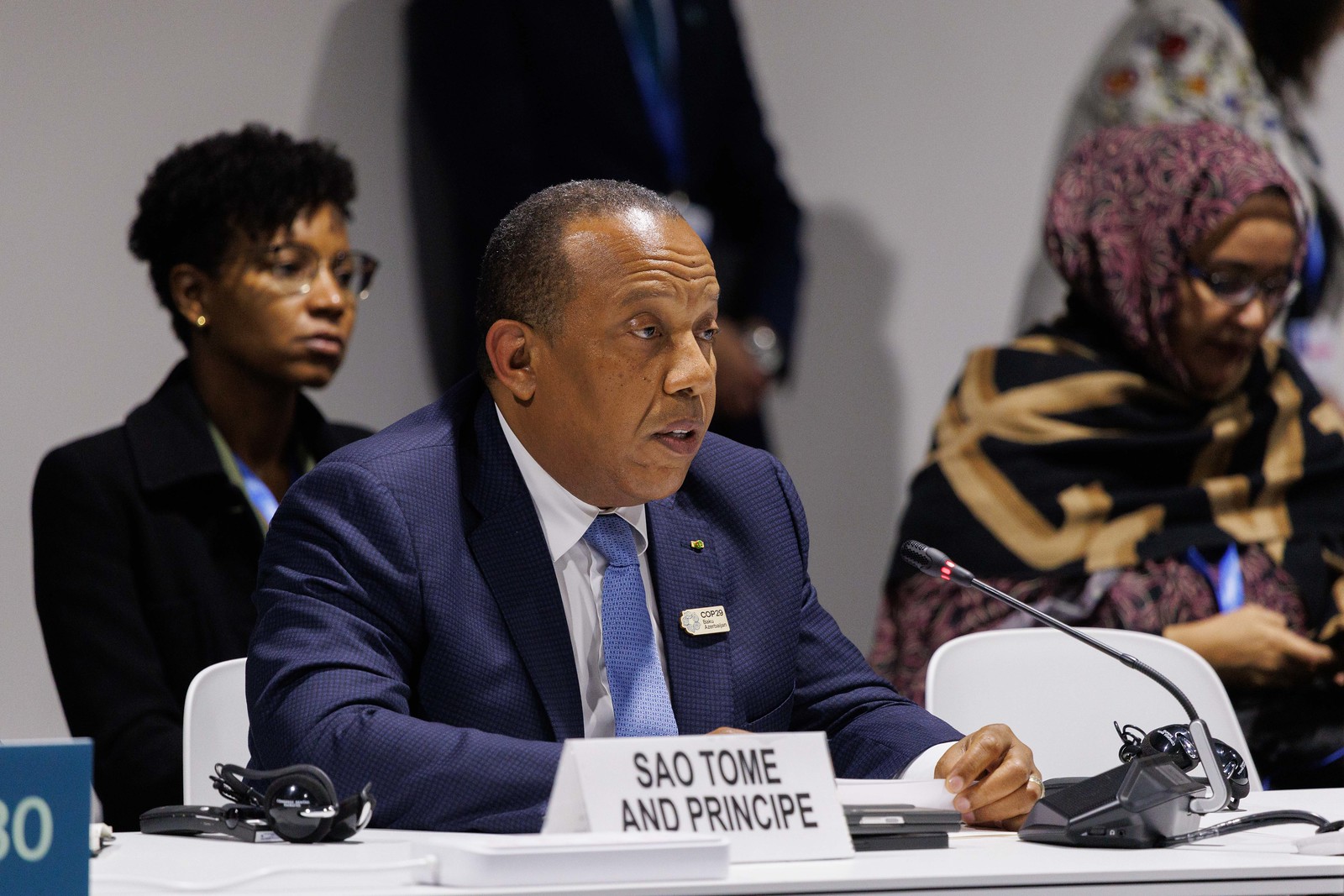
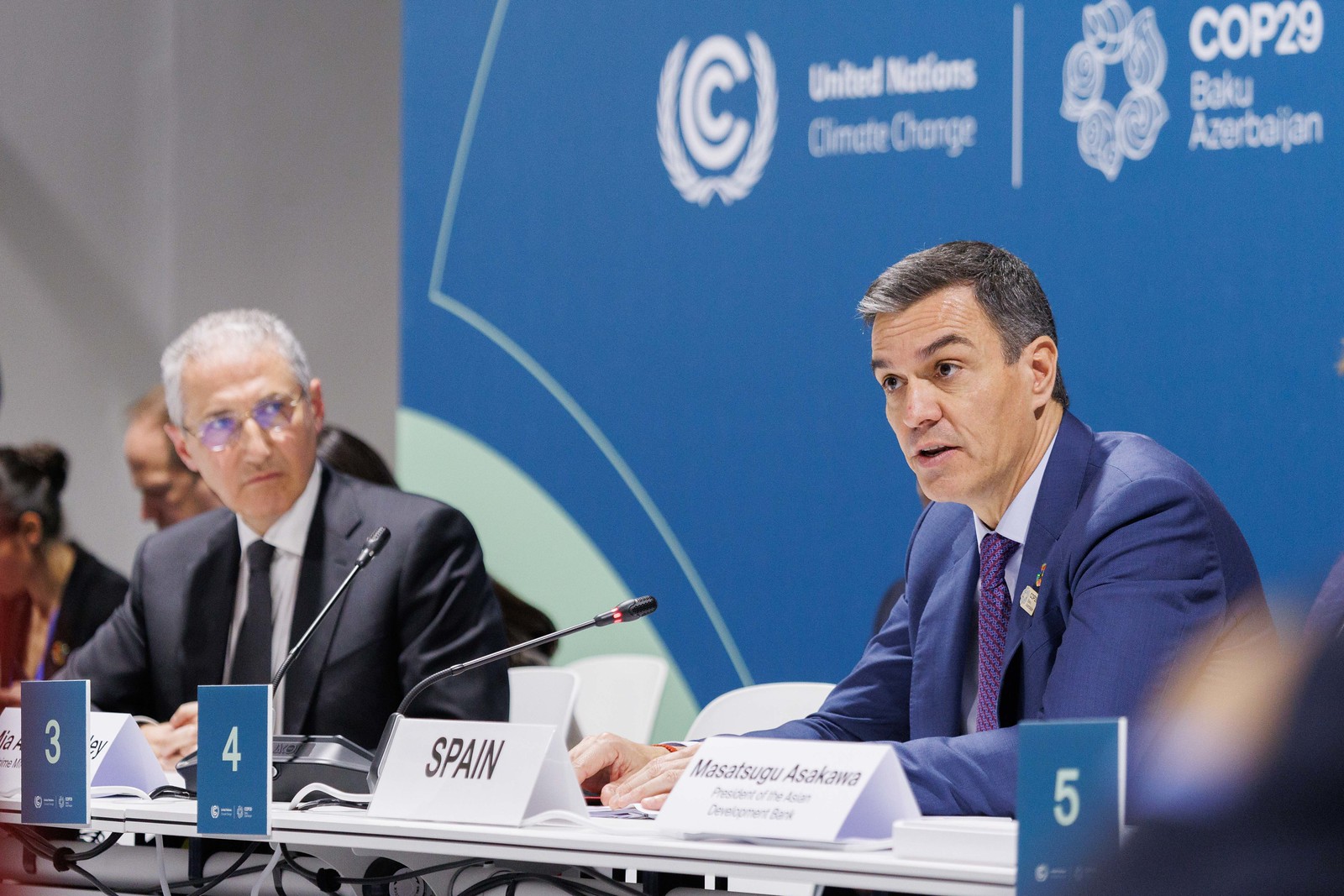
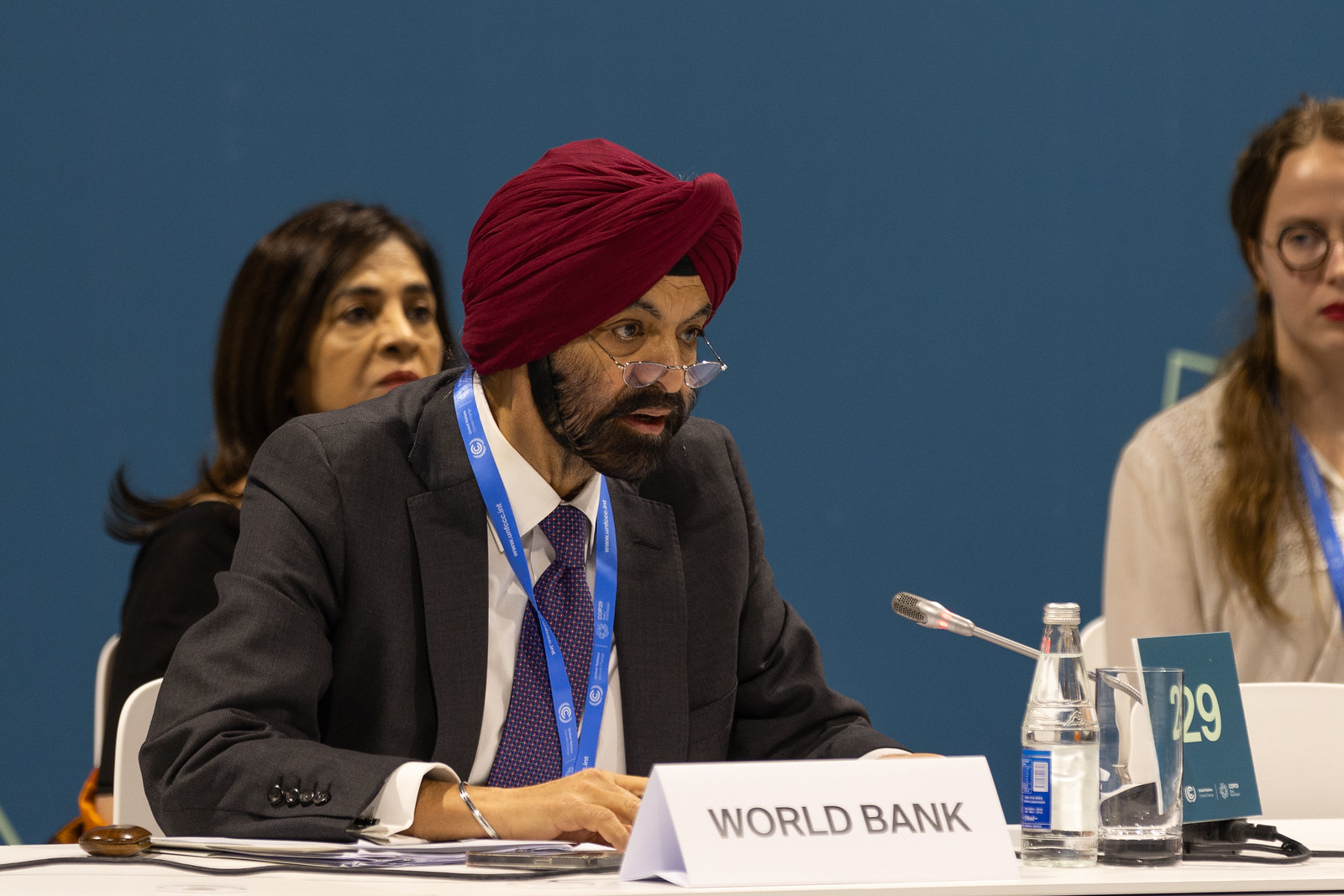
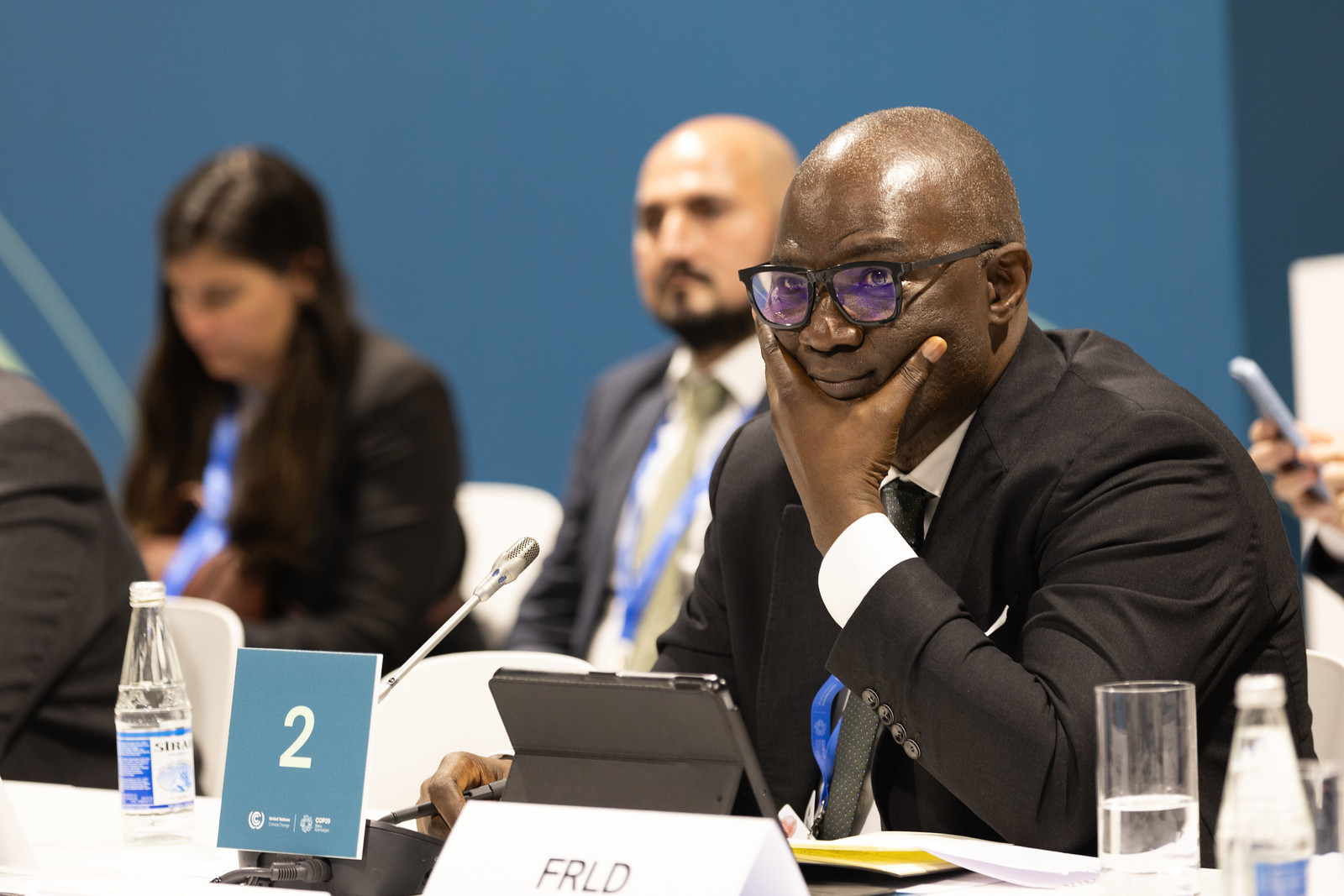
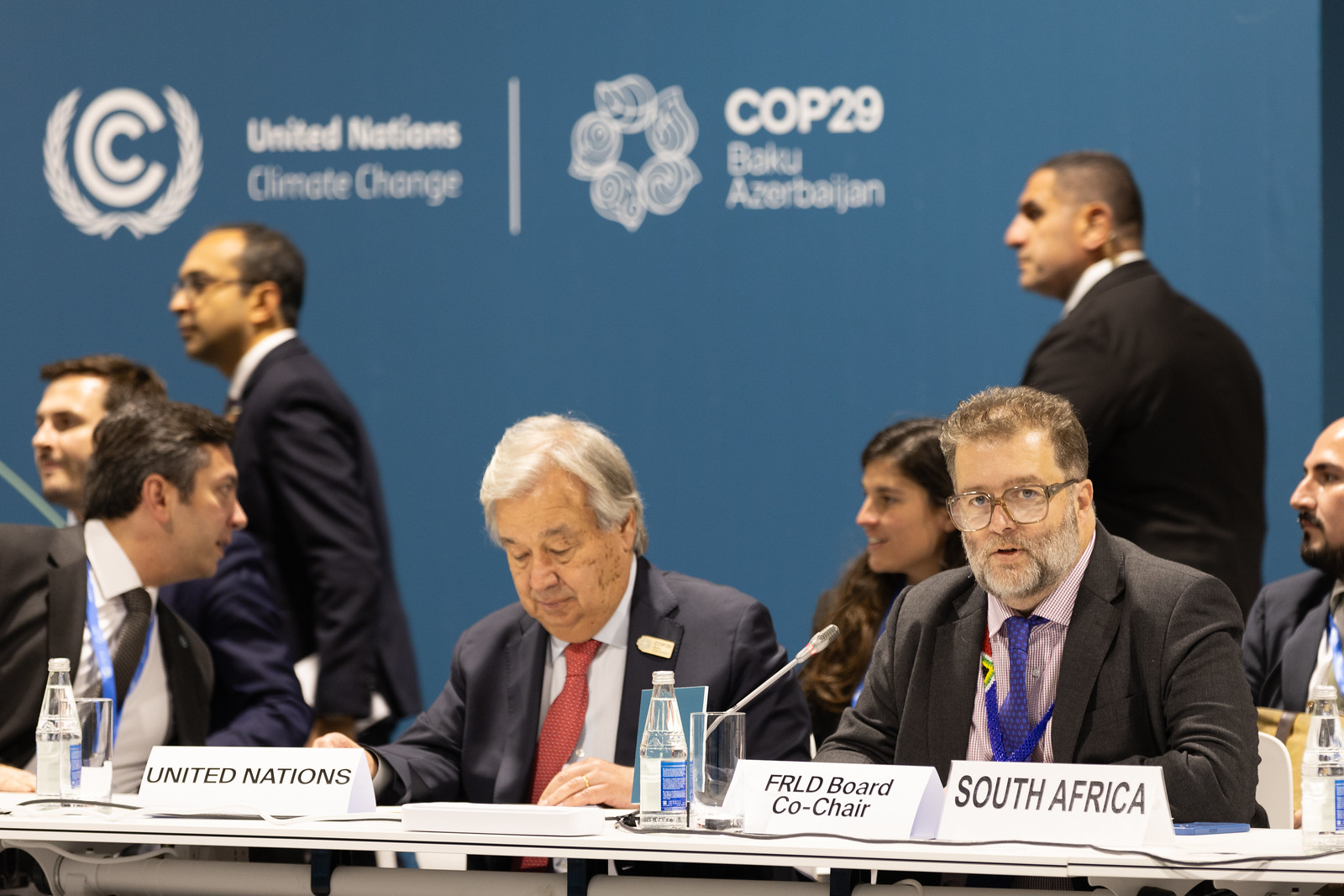
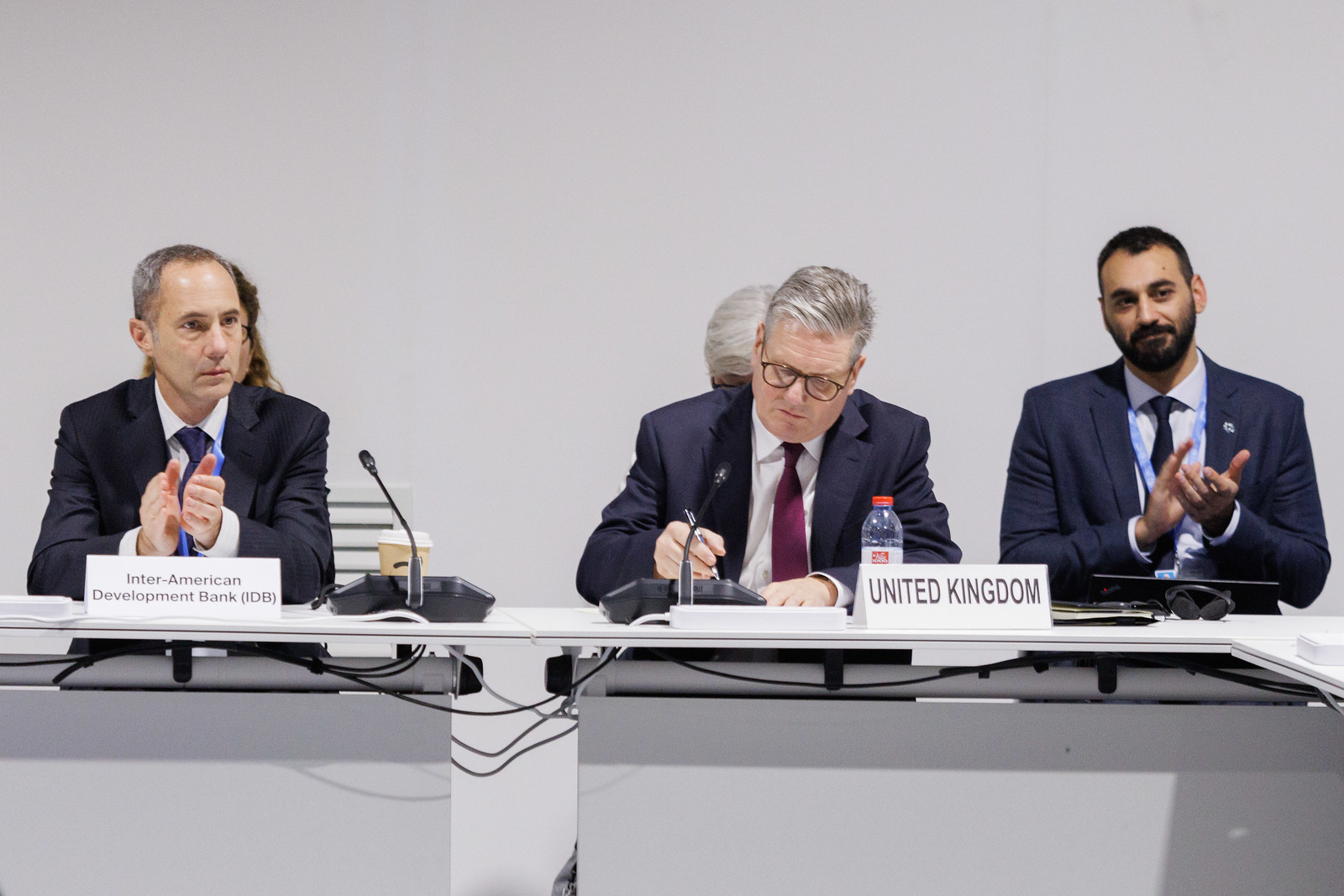
UNFCC Copyrighted Photos
I urge you to focus on three priorities.
First, emergency emissions reductions.
To limit global temperature rise to 1.5 degrees Celsius, we must cut global emissions nine percent every year. By 2030, they must fall 43 percent on 2019 levels.
At this COP, you must agree to rules for fair, effective carbon markets that support that fight;
Markets that respect the rights of local communities, and leave no space for greenwashing or land-grabbing.
By next COP, you must deliver new economy-wide national climate action plans.
You’ve agreed that your new plans will align with 1.5 degrees.
That means they must cover all emissions and the whole economy;
Advance global goals to triple renewables capacity, double energy efficiency, and halt deforestation by 2030;
Slash global fossil fuel production and consumption thirty percent by the same date;
And align national energy transition strategies and sustainable development priorities with climate action – to attract needed investment.
All this must be achieved in line with the principle of common but differentiated responsibilities and respective capabilities, in the light of different national circumstances.
All countries must do their part.
But the G20 must lead.
They are the largest emitters, with the greatest capacities and responsibilities.
They must bring their technological know-how together – with developed countries supporting emerging economies.
Every nation must have the tools and resources for climate action.
And the United Nations will support that effort every step of the way:
We’re supporting developing countries with new NDCs through the Climate Promise initiative;
And striving for justice in the renewables revolution through our Panel on Critical Energy Transition Minerals.
But ultimately, only you can deliver, on national ambition and action.
Only you can beat the clock on 1.5 degrees.
Excellencies,
Second, you must do more to protect your people from the ravages of the climate crisis.
The most vulnerable are being abandoned to climate extremes.
The gap between adaptation needs and finance could reach up to $359 billion a year by 2030.
These missing dollars are not abstractions on a balance sheet: they are lives taken, harvests lost, and development denied.
Now more than ever finance promises must be kept. Developed countries must race the clock to double adaptation finance to at least $40 billion a year by 2025.
Adaptation investments can transform economies, driving progress across the sustainable development goals.
We need countries’ new climate action plans to set out adaptation financing needs.
We need every person on earth to be protected by an alert system by 2027, in line with our Early
Warnings for All initiative.
And we need climate justice:
Particularly, a surge in pledges to the new Loss and Damage Fund. And commitments turning into cash – with finance pouring into the Fund’s coffers.
But we also need a fundamental step-change across the board.
And so, Excellencies,
The third priority is finance.
Developing countries eager to act are facing many obstacles: scant public finance; raging cost of capital; crushing climate disasters; and debt servicing that soaks up funds.
The result: adaptation denied. And a tale of two transitions.
Last year, developing and emerging markets outside China received just fifteen cents for everydollar invested in clean energy globally.
COP29 must tear down the walls to climate finance.
Developing countries must not leave Baku empty-handed. A deal is a must.
We need a new finance goal that meets the moment.
Five elements are critical to success.
First, a significant increase in concessional public finance.
Second, a clear indication of how public finance will mobilise the trillions of dollars developing countries need.
Third, tapping innovative sources, particularly levies on shipping, aviation, and fossil fuel extraction. Polluters must pay.
Fourth, a framework for greater accessibility, transparency, and accountability – giving developing countries confidence that the money will materialise.
Fifth, boosting lending capacity for bigger and bolder Multilateral Development Banks. This requires a major recapitalisation. And it requires reforms of their business models, including so that they can leverage far more private finance.
The resources available may seem insufficient. But they can be multiplied with a meaningful change in how the multilateral system works.
Big sums require big change.
The COP29 outcome must build on the Pact for the Future – agreed by consensus in New York in September – and drive progress.
I urge the major MDB shareholders to use your position to push for change.
There is no time to lose.
On climate finance, the world must pay up, or humanity will pay the price.
Excellencies,
In this crucial period, you and your governments must be guided by a clear truth:
Climate finance is not charity, it’s an investment.
Climate action is not optional, it’s imperative.
Both are indispensable: to a liveable world for all humanity. And a prosperous future for every nation on Earth.
The clock is ticking.
Thank you
Invest or Donate towards HICGI New Agency Global Media Establishment – Watch video here
Email: editorial@hicginewsagency.com TalkBusiness@hicginewsagency.com WhatsApp +256713137566
Invest or Donate towards HICGI New Agency Global Media Estab lishment – Watch video here
Follow us on Social Media , just type “HICGI News Agency”
B
FIRST PART OF THE HIGH-LEVEL SEGMENT
(For Heads of State and Government)
12 – 13 November 2024
- Albania
- Algeria
- Angola
- Antigua and Barbuda
- Bahamas
- Bangladesh
- Barbados
- Belarus
- Belgium
- Benin
- Bhutan
- Bolivia (Plurinational State of)
- Bosnia and Herzegovina
- Botswana
- Brazil
- Bulgaria
- Burundi
- Central African Republic
- Chad
- Colombia
- Comoros
- Congo
- Côte d’Ivoire
- Croatia
- Cyprus
- Czechia
- Democratic Republic of the Congo
- Djibouti
- Equatorial Guinea
- Estonia
- Ethiopia
- European Union
- Finland
- Gabon
- Gambia
- Georgia
- Germany
- Ghana
- Greece
- Grenada
- Guinea-Bissau
- Guyana
- Holy See
- Hungary
- Iraq
- Ireland
- Italy
- Japan
- Jordan
- Kazakhstan
- Kenya
- Kuwait
- Kyrgyzstan
- Latvia
- Lesotho
- Libya
- Liechtenstein
- Lithuania
- Madagascar
- Malawi
- Maldives
- Malta
- Marshall Islands
- Mauritania
- Micronesia (Federated States of)
- Moldova
- Mongolia
- Montenegro
Page 4 - Mozambique
- Nepal
- Netherlands
- Nigeria
- Niue
- North Macedonia
- Pakistan
- Palau
- Poland
- Qatar
- Russia
- Rwanda
- Saint Lucia
- San Marino
- Sao Tome and Principe
- Saudi Arabia
- Serbia
- Seychelles
- Sierra Leone
- Slovakia
- Slovenia
- Somalia
- Spain
- State of Palestine
- Suriname
- Tajikistan
- Timor-Leste
- Togo
- Tonga
- Türkiye
- Tuvalu
- Ukraine
- United Kingdom
- United Republic of Tanzania
- Uzbekistan
- Yemen
- Zambia
- Zimbabwe
 HICGI News Agency