
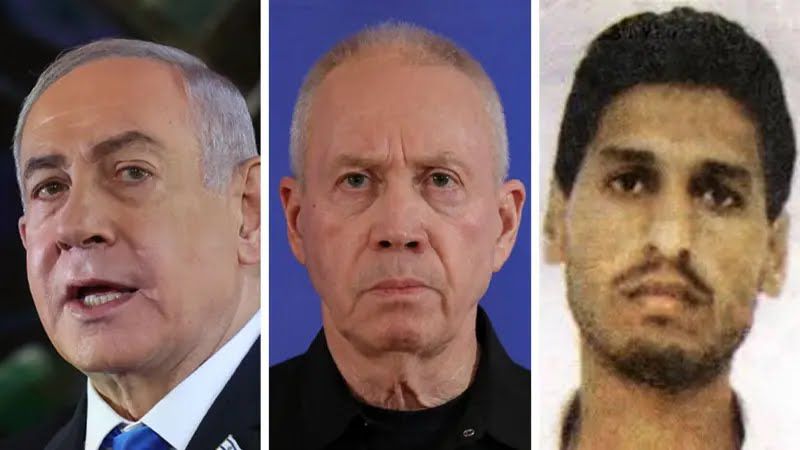
Judges at the International Criminal Court (ICC) have issued arrest warrants for three high-profile figures: Israeli Prime Minister Benjamin Netanyahu, former Israeli Defense Minister Yoav Gallant, and Hamas military commander Mohammed Deif.
This decision follows a ruling by the ICC’s pre-trial chamber, which rejected Israel’s legal challenges to the court’s jurisdiction.

The court stated there were “reasonable grounds” to believe that Netanyahu, Gallant, and Deif bear “criminal responsibility” for war crimes and crimes against humanity committed during the ongoing conflict between Israel and Hamas. The charges pertain to the brutal military operations and violence that have characterized the war, which has left thousands dead and caused widespread devastation.
The arrest warrants come amid escalating tensions in the Middle East and after a lengthy investigation by the ICC into both Israeli and Hamas military actions. The charges against Netanyahu and Gallant focus on alleged violations by Israeli forces during military operations in Gaza, while Deif is accused of leading Hamas operations that have resulted in attacks against Israeli civilians.
While the ICC’s ruling has drawn attention internationally, both Israel and Hamas have rejected the allegations. Israeli officials have maintained that they are operating within the bounds of international law in their military campaigns against Hamas, while Hamas has similarly denied accusations of committing war crimes.
The case is significant not only for the individuals named but also for the broader context of international law and accountability in conflict zones. The ICC’s jurisdiction over actions in the Israeli-Palestinian conflict has been a contentious issue for years, with Israel not being a signatory to the Rome Statute, which governs the court. However, the court’s decision to proceed with the investigation has sparked further debates over its legitimacy and impact on the ongoing conflict.
The arrest warrants for Netanyahu, Gallant, and Deif are likely to heighten international scrutiny of the war, as well as the roles of both state and non-state actors in the ongoing violence. The court’s decision is expected to have far-reaching implications, both legally and politically, as the international community grapples with how to address the alleged war crimes committed by all parties involved.
Invest or Donate towards HICGI New Agency Global Media Establishment – Watch video here
Email: editorial@hicginewsagency.com TalkBusiness@hicginewsagency.com WhatsApp +256713137566
Follow us on all social media, type “HICGI News Agency” .
 HICGI News Agency