
By Earnest Kivumbi Benjamin
Updated at 0919 EAT on Sunday 24th Nov 2024
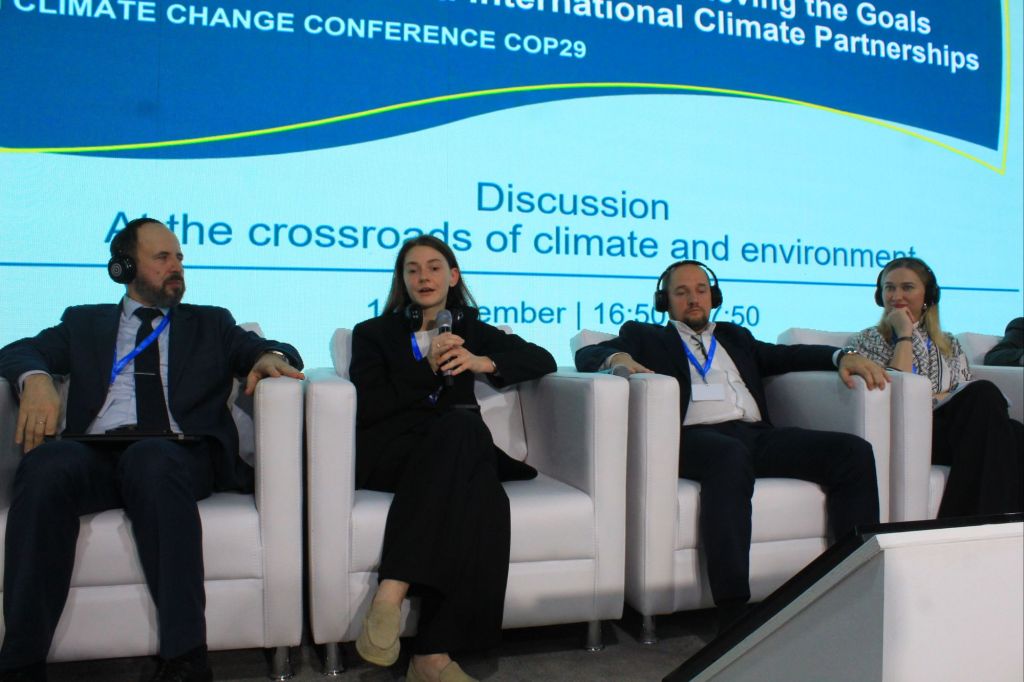
BAKU – AZERBAIJAN – The European Union teamed up with 11 countries in announcing a commitment to “ambitious” new climate plans — but the U.S., an architect of the initiative, did not join them.
Each of the governments said they would soon set new targets to cut greenhouse gas pollution by 2035 that are aligned with stopping the climate from warming more than 1.5 degrees Celsius.
Besides the EU, the coalition included Canada, Mexico, the U.K. and Norway that the United States had dropped its participation in the coalition, an action that appeared to reflect the new political realities in Washington given Donald Trump’s victory in the presidential election.
Senior U.S. climate adviser John Podesta said the Biden administration welcomed the leadership displayed by the countries in the coalition, but did not respond to a question about why the United States was not included.
“We continue to work with countries to set ambitious climate targets with rapid emissions reductions that are required to secure a safer, cleaner planet for ourselves and our children,” Podesta said , adding that the U.S. is “hard at work” to set its own 2035 target.
Asked at a press conference on Thursday why the U.S. was not part of the coalition, EU climate chief Wopke Hoekstra said: “There is a larger group of countries looking into joining us. … Having said that, we would really plead particularly with the largest economies and those emitting the most to do something that is similar to what we’re doing.”
The UN Climate Change Conference (COP29) closed Sunday with a new finance goal to help countries to protect their people and economies against climate disasters, and share in the vast benefits of the clean energy boom.
With a central focus on climate finance, COP29 brought together nearly 200 countries in Baku, Azerbaijan, and reached a breakthrough agreement that will:
Triple public finance to developing countries, from the previous goal of USD 100 billion annually, to USD 300 billion annually by 2035.
Secure efforts of all actors to work together to scale up finance to developing countries, from public and private sources, to the amount of USD 1.3 trillion per year by 2035.
Known formally as the New Collective Quantified on Climate Finance (NCQG), it was agreed after two weeks of intensive negotiations and several years of preparatory work, in a process that requires all nations to unanimously agree on every word of the agreement.
“This new finance goal is an insurance policy for humanity, amid worsening climate impacts hitting every country,” said Simon Stiell, Executive Secretary of UN Climate Change. “But like any insurance policy – it only works – if premiums are paid in full, and on time. Promises must be kept, to protect billions of lives.”
“It will keep the clean energy boom growing, helping all countries to share in its huge benefits: more jobs, stronger growth, cheaper and cleaner energy for all.”
The International Energy Agency expects global clean energy investment is set to exceed USD 2 trillion for the first time in 2024.
The new finance goal at COP29 builds on significant strides forward on global climate action at COP27, which agreed an historic Loss and Damage Fund, and COP28, which delivered a global agreement to transition away from all fossil fuels in energy systems swiftly and fairly, triple renewable energy and boost climate resilience.
COP29 also reached agreement on carbon markets – which several previous COPs had not been able to achieve. These agreements will help countries deliver their climate plans more quickly and make faster progress in halving global emissions this decade, as required by science.
Important agreements were also reached on transparent climate reporting and adaptation as summarized below.
Stiell also acknowledged that the agreement reached in Baku did not meet all Parties’ expectations, and substantially more work is still needed next year on several crucial issues.
“No country got everything they wanted, and we leave Baku with a mountain of work to do,” said Stiell. “The many other issues we need to progress may not be headlines but they are lifelines for billions of people. So this is no time for victory laps, we need to set our sights and redouble our efforts on the road to Belem.”
The finance agreement at COP29 comes as stronger national climate plans (Nationally Determined Contributions, or NDCs) become due from all countries next year. These new climate plans must cover all greenhouse gases and all sectors, to keep the 1.5°C warming limit within reach. COP29 saw two G20 countries – the UK and Brazil – signal clearly that they plan to ramp up climate action in their NDCs 3.0, because they are entirely in the interests of their economies and peoples.
“We still have a very long road ahead, but here in Baku we took another important step forward,” said Stiell. “The UN Paris Agreement is humanity’s life-raft; there is nothing else. So here in Baku and all of the countries represented in this room we’re taking that journey forward together.”
A brief summary of other key achievements at COP29 follows below.
Article 6 of the Paris Agreement
A notable achievement during the past two weeks was the progress made on carbon markets. After nearly a decade of work, countries have agreed on the final building blocks that set out how carbon markets will operate under the Paris Agreement, making country-to-country trading and a carbon crediting mechanism fully operational.
On country-to-country trading (Article 6.2), the decision out of COP29 provides clarity on how countries will authorize the trade of carbon credits and how registries tracking this will operate. And there is now reassurance that environmental integrity will be ensured up front through technical reviews in a transparent process.
On day one of COP29, countries agreed standards for a centralized carbon market under the UN (Article 6.4 mechanism). This is good news for developing countries, who will benefit from new flows of finance. And it is particularly good news for least developed countries, who will get the capacity-building support they need to get a foothold in the market.
This mechanism, known as the Paris Agreement Crediting Mechanism, is underpinned by mandatory checks for projects against strong environmental and human rights protections, including safeguards that ensure a project can’t go ahead without explicit, informed agreement from Indigenous Peoples. It also allows anyone affected by a project to appeal a decision or file a complaint.
Under the text agreed on Article 6.4, there is a clear mandate for the UN carbon market to align with science. It tasks the Body getting this market up and running to consider the best available science across all work going forward.
The work on carbon markets doesn’t stop in Baku. The Supervisory Body setting up the new carbon crediting mechanism has been handed a long 2025 to-do list by Parties and will continue to be accountable to them.
Transparency
Transparent climate reporting made big strides forward in Baku, building a stronger evidence base to strengthen climate policies over time, and helping to identify financing needs and opportunities. To date, 13 Parties have now submitted their first Biennial Transparency Reports (BTR) – due from all Parties by the end of the year. Andorra, Azerbaijan, the European Union, Germany, Guyana, Japan, Kazakhstan, Maldives, Netherlands, Panama, Singapore, Spain, and Türkiye have led the way on transparent climate reporting, and set an example for others to follow.
In addition, all transparency negotiating items concluded successfully at COP29, with Parties expressing their appreciation for the timely completion of the Enhanced Transparency Framework (ETF) reporting tools, the technical trainings, and the support provided to developing countries for reporting under the ETF that took place in 2024.
A total of 42 events were organized under #Together4Transparency, a UNFCCC collaborative initiative that promotes climate transparency with Parties and non-Party stakeholders. These events emphasized the vital role of transparency in preparing NDCs and net-zero pathways, as well as in recognizing climate action from non-Party stakeholders. Events included high-level sessions, mandated events and training sessions to prepare countries for their BTRs, as well as to equip technical experts for the upcoming review process.
The critical role of REDD+ was recognized through a £3 million pledge by the UK International Forest Unit to support UN Climate Change’s work over four years. This funding will bolster REDD+ activities in many countries, enabling the secretariat to create dedicated spaces for REDD+ experts to engage in technical dialogue. These efforts are expected to enhance the transparency and implementation of REDD+, in line with the Global Stocktake objective to halt and reverse deforestation and forest degradation by 2030.
Adaptation
COP29 was an important moment for adaptation, with the delivery of several key outcomes. The COP decision on matters relating to the least developed countries (LDCs) contains a provision for the establishment of a support programme for the implementation of National Adaptation Plans (NAPs) for the LDCs. Parties extensively discussed the second five-year assessment of progress to formulate and implement NAPs, and will continue that in June 2025.
A High-Level Dialogue on National Adaptation Plans convened ministers from least developed countries and small island developing States, financial experts and international donors to address the growing urgency of climate adaptation. Their discussions focused on innovative financing, technical support, and accelerated action to meet the 2025 submission deadline for NAPs. The event concluded with a strong call to action to expedite NAPs and translate plans into tangible outcomes.
The outcome on the global goal on adaptation sets a clear path forward on the road to COP30 for the indicators work programme, providing a process for experts to continue their technical work before passing the baton to Parties. COP29 also launched the Baku Adaptation Road Map and Baku high-level dialogue on adaptation to enhance the implementation of the UAE Framework. Finally, the outcome raises ambition by agreeing to continue unpacking transformational adaptation moving forward.
COP29 took a decisive step forward to elevate the voices of Indigenous Peoples and local communities in climate action, adopting the Baku Workplan and renewing the mandate of the Facilitative Working Group (FWG) of the Local Communities and Indigenous Peoples Platform (LCIPP). The adopted decision acknowledges the progress made by the FWG in fostering collaboration among Parties, Indigenous Peoples and local communities, and underscores the leadership of Indigenous Peoples and local communities in addressing the climate crisis.
Gender and climate change
Countries agreed a decision on gender and climate change, extending the enhanced Lima Work Programme on Gender and Climate Change for another 10 years, reaffirming the importance of gender equality and advancing gender mainstreaming throughout the convention.
They also agreed to develop a new gender action plan for adoption at COP30, which will set the direction for concrete implementation.
Civil society participation, children and youth
World leaders at COP29 were joined by civil society, subnationals, business, Indigenous Peoples, youth, philanthropy, and international organizations. More than 55,000 people attended COP29 to share ideas, solutions, and build partnerships and coalitions.
The decisions taken at COP29 also reemphasize the critical importance of empowering all stakeholders to engage in climate action; in particular under Action for Climate Empowerment (ACE). Parties recalled the importance of integrating ACE elements into national climate change policies, plans, strategies and action, and noted the secretariat’s compendium of good practices for integrating ACE elements into NDCs.
COP29 marked a significant milestone as dedicated spaces were created to ensure the meaningful participation of children within the Youth-led Climate Forum for the first time. Four children, including the youngest at just 10 years old, took on roles as moderators and speakers, engaging directly with Parties and observer organizations.Their participation highlighted the importance of inclusivity and intergenerational collaboration in driving climate action.
In parallel with the formal negotiations, the Global Climate Action space at COP29 provided a platform for governments, businesses and civil society to collaborate and showcase their real-world climate solutions.
The High-Level Champions, under the Marrakech Partnership for Global Climate Action, launched their 2024 Yearbook of Global Climate Action at COP29, showing that climate action by non-Party stakeholders, including businesses, investors, sub-national actors and civil society, is driving progress towards the goals of the Paris Agreement, and that their engagement is more crucial than ever.
Developing countries walked out in protest over 250 billion earlier pledged.
They demanded at least USD 1.3 trillion from the different countries, rights groups and organisations for ensuring climate justice and equitable decisions to address the escalating climate crisis.
In his final remarks on Sunday morning, UN Antonio Guterres said;

COP29 comes at the close of a brutal year – a year seared by record temperatures, and scarred by climate disaster, all as emissions continue to rise.
Finance has been priority number one.
Developing countries swamped by debt, pummelled by disasters, and left behind in the renewables revolution, are in desperate need of funds.
An agreement at COP29 was absolutely essential to keep the 1.5 degree limit alive. And countries have delivered.
I had hoped for a more ambitious outcome – on both finance and mitigation – to meet the great challenge we face.
But this agreement provides a base on which to build.
It must be honoured in full and on time. Commitments must quickly become cash. All countries must come together to ensure the top-end of this new goal is met.
COP29 also builds on progress made last year on emissions reductions and accelerating the energy transition. And it reaches agreement on carbon markets.
This was a complex negotiation in an uncertain and divided geopolitical landscape. I commend everyone who worked hard to build consensus. You have shown that multilateralism – centred on the Paris Agreement – can find a path through the most difficult issues.
I appeal to governments to see this agreement as a foundation – and build on it.
First, countries must deliver new economy-wide national climate action plans – or NDCs – aligned with 1.5 degrees, well ahead of COP30 – as promised. The G20 countries, the biggest emitters, must lead.

These new plans must cover all emissions and the whole economy, accelerate fossil fuel phase out, and contribute to the energy transition goals agreed at COP28 – seizing the benefits of cheap, clean renewables.
The end of the fossil fuel age is an economic inevitability. New national plans must accelerate the shift, and help to ensure it comes with justice.
Second, we need swift action to deliver on commitments made in the Pact for the Future. Particularly on effective action on debt; increasing concessional finance and improving access; and substantially increasing the lending capacity of the Multilateral Development Banks, with adequate recapitalization.
I thank the government of Azerbaijan for their hospitality – and COP29 President Mukhtar Babayev, and his team, for their hard work.
I am grateful to UNFCCC Executive Secretary Simon Stiell and his colleagues for their superb support – and of course the United Nations team.
And I commend all the delegates, young people, and civil society representatives who came to Baku to push parties for maximum ambition and justice.
I end with a message directly to them. Keep it up. The United Nations is with you. Our fight continues. And we will never give up.
Remarks by Executive Secretary Simon Stiell UN Climate Change Delivered to the COP29 Closing Plenary delivered Sunday at 03.45am.
Excellencies, Delegates, Colleagues, Friends,
I want to start by thanking the Presidency for all they have done to enable the finance COP here in Baku.
It has been a difficult journey, but we’ve delivered a deal.
This new finance goal is an insurance policy for humanity, amid worsening climate impacts hitting every country. But like any insurance policy – it only works – if premiums are paid in full, and on time. Promises must be kept, to protect billions of lives.
This deal will keep the clean energy boom growing, helping all countries to share in its huge benefits: more jobs, stronger growth, cheaper and cleaner energy for all.
We needed this to be an enabling COP – one which helped translate the pledges of COP28 into real-world outcomes to protect people, prosperity, and the planet.
And that’s what we have made possible.
At COP28 the world agreed to triple renewables. At COP29 we tripled climate finance, and countries will work to mobilize much, much more.
At COP28 the world agreed to boost climate resilience. COP29 will help finance real protections for those on the frontlines, especially the most vulnerable.
COP29 also reached global agreement on carbon markets, after almost a decade of hard work, where several previous COPs were not able to get this done.
No country got everything they wanted, and we leave Baku with a mountain of work to do.
The many other issues we need to progress may not be headlines but they are lifelines for billions of people.
So this is no time for victory laps, we need to set our sights and redouble our efforts on the road to Belém.
Even so, we’ve shown the UN Paris Agreement is delivering but governments still need to pick up the pace.
Let’s not forget, without this UN-convened global cooperation, we’d be headed towards 5 degrees of global warming.
But we are still a long way off course. Bold new climate plans on the way to Belem will be crucial to getting us back in the race. They must embed the targets we agreed in Dubai, including to rapidly ramp up renewables, transition away from fossil fuels, and transform societies, making them more resilient.
Whole of economy, whole of society plans are crucial.
We’ve seen clear signals from two G20 countries – UK and Brazil – because stronger climate actions are entirely in the interests of their economies and their people.
Friends – progress here in Baku has been hard won.
I pay tribute to all those who worked around the clock. Even if you didn’t get everything you sought, what you delivered will make billions of lives safer and better.
To those of you who have joined from civil society – your work helps our process make progress. Today we set a new goal, and you will be vital in ensuring that the goal is fulfilled.
To the staff of the Secretariat, you have been stretched beyond belief, and yet time and again, you stood and delivered, so that tens of thousands of people from almost 200 countries could come together and take global climate efforts forward. I have never seen a harder working group of people, that steady the ship when times get tough.
Excellencies, friends, we still have a very long road ahead of us, but here in Baku we took another important step forward.
The UN Paris Agreement is humanity’s life-raft; there is nothing else. So here in Baku and all of the countries represented here in the room we are taking that journey forward together.
I thank you.
Invest or Donate towards HICGI New Agency Global Media Establishment – Watch video here
Email: editorial@hicginewsagency.com TalkBusiness@hicginewsagency.com WhatsApp +256713137566
Follow us on all social media, type “HICGI News Agency” .
 HICGI News Agency