
By Earnest Kivumbi Benjamin & UNCLE Press Team- updated at 1715 EAT on Tuesday 3rd Dec 2024
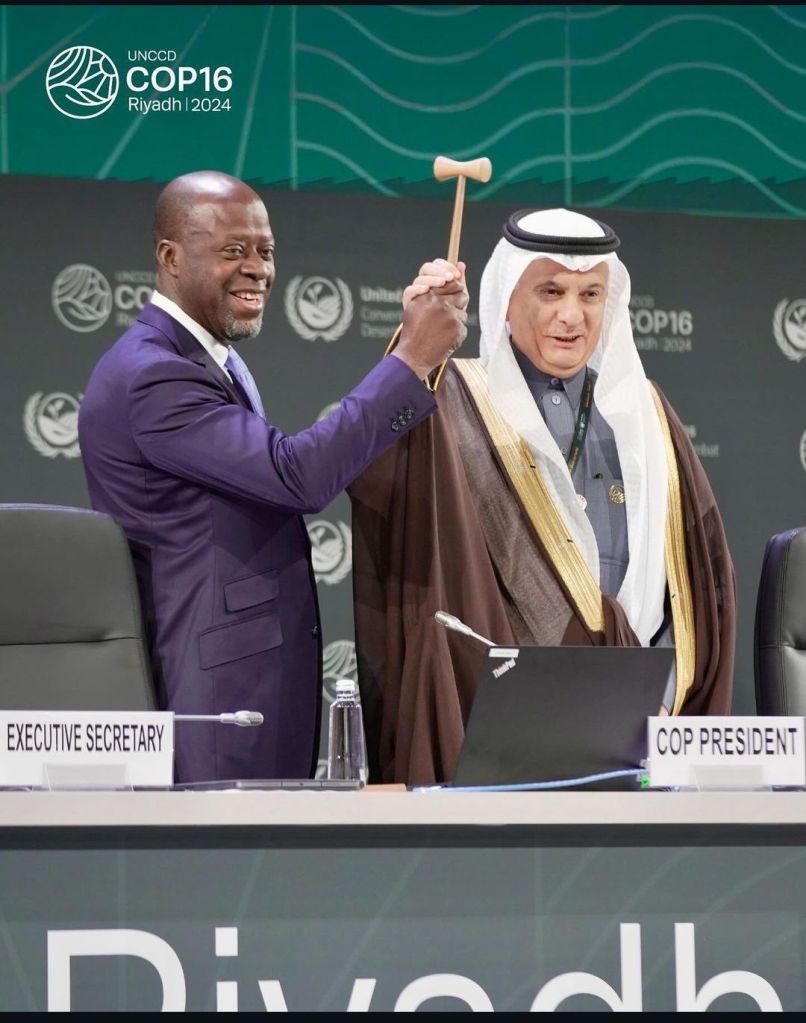
RIYADH- SAUDI ARABIA- Following a cultural performance, the 16th meeting of the Conference of the Parties (COP 16) to the UN Convention to Combat Desertification (UNCCD) opened on Monday, 2 December. The COP elected Abdulrahman Abdulmohsen AlFadley, Minister of Environment, Water and Agriculture, Saudi Arabia, as COP 16 President, and heard opening statements and addressed organizational matters. In the afternoon, the Committee of the Whole (COW) convened in parallel to a High-level Ministerial Dialogue.

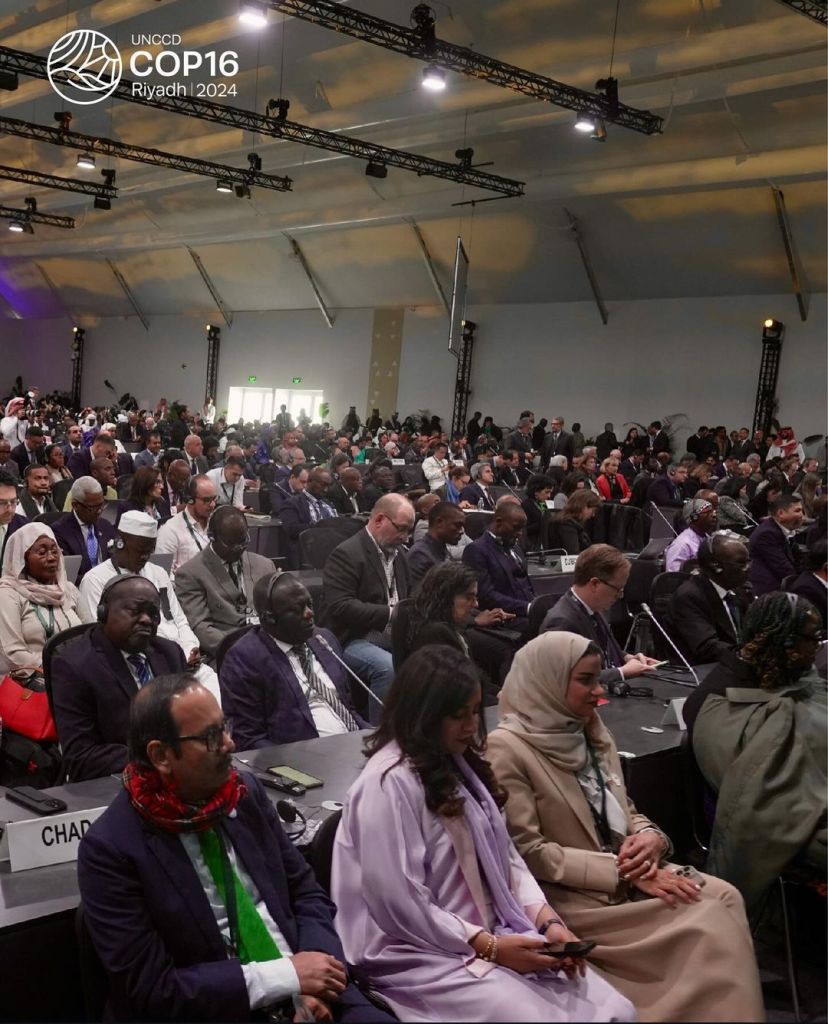
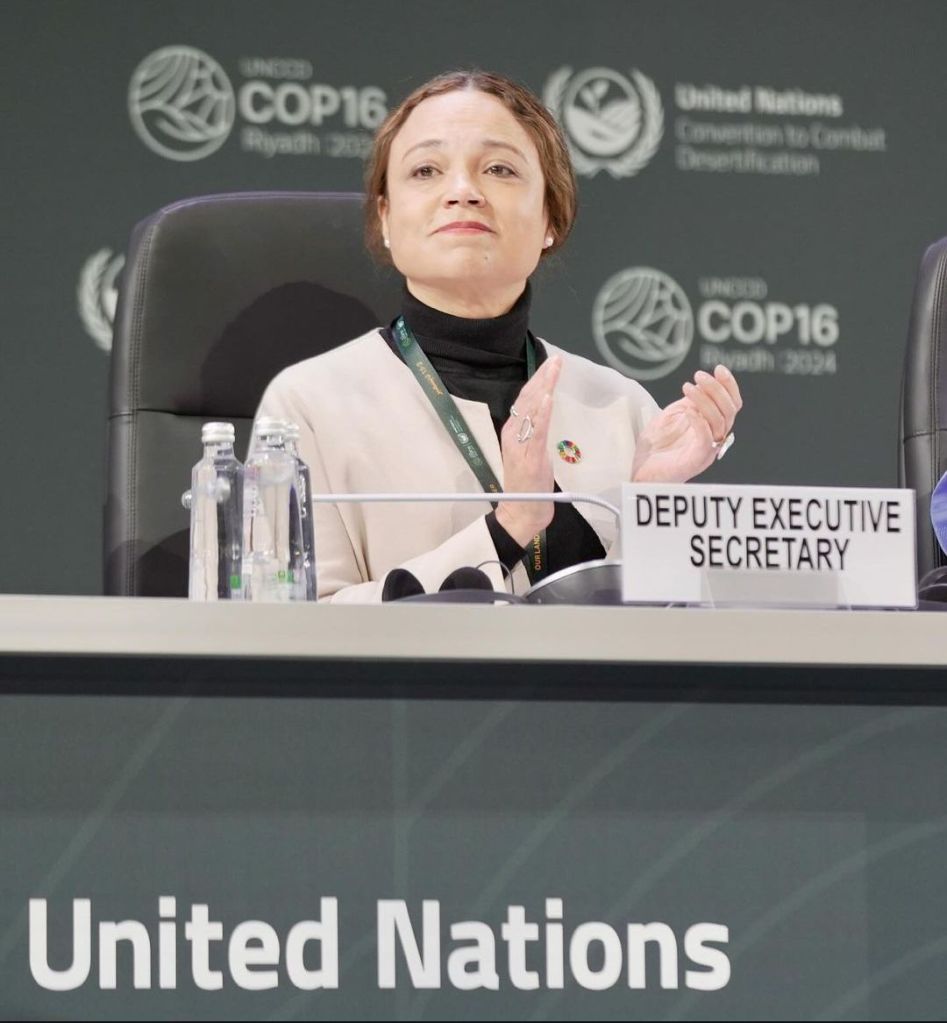

Plenary
COP 15 President Alain-Richard Donwahi, Côte d’Ivoire, opened COP 16, noting that COP 15 made significant progress in addressing land degradation, focusing on innovation, financing, and involvement of local communities, women and youth. He reiterated the call of African Ministers for the establishment of a legally binding protocol on drought under the UNCCD.
In his opening statement, President AlFadley welcomed everyone and noted the Middle East is one of the regions most impacted by desertification, land degradation, and drought (DLDD). He stressed the importance of international partnerships. He highlighted Saudi Arabia’s Vision 2030 and the Saudi Green Initiative, which aims to rehabilitate 40 million hectares of degraded land by 2030.
Faisal bin Abdulaziz bin Ayyaf, Mayor of the Riyadh Region, emphasized the role of local governments in complementing strategies and policies developed at the national level. He said the balance between urbanization, the rapid development it requires, and protecting a country’s natural resources remain a constant challenge.
Amina J. Mohammed, UN Deputy Secretary-General, via video, noted 40% of the world is affected by land degradation and urged COP 16 to prioritize: strengthening international cooperation on reversing land degradation and boosting rehabilitation of degraded lands; ramping up restoration efforts, which will accelerate many sustainable development priorities, such as generating green jobs for youth; and prioritizing financial investment in fighting drought and desertification.
Ibrahim Thiaw, UNCCD Executive Secretary, reminded participants that land degradation and drought affect all life on earth, threaten food and energy security, force migration, and obstruct trade. He highlighted inequalities facing farmers and women in land ownership. Noting that COP 16 is about our reliance on land, but also our resilience, he expressed hope this will be remembered as the COP that adopts the most important decisions on addressing drought.
Oyun-Erdene Luvsannamsrai, Prime Minister of Mongolia, stressed the need to safeguard land, which is “the future of humanity.” He expressed gratitude that the UN General Assembly (UNGA) declared 2026 as the International Year of Rangelands and Pastoralists. He welcomed delegates to COP 17 in Mongolia.
Johan Rockström, Director, Potsdam Institute for Climate Impact Research, presented the Special Report on Land, underlining the links between land, resilience, and planetary health. He emphasized the importance of decarbonizing energy systems while also improving sustainable stewardship of land to limit global temperature rise.
Osama Ibrahim Faqeeha, Deputy Minister of Environment, Saudi Arabia, announced the Riyadh Global Drought Resilience Partnership, to be supported by USD 150 million from Saudi Arabia. He said the partnership will promote multilateral efforts to take a preventative and proactive approach to drought. He noted the Partnership activities will include the transfer of knowledge, the use of drought resilient crops, financing water infrastructure, and helping small farmers, with the overall goal to increase resilience and limit economic and social impacts.
Muhammad Sulaiman Al Jasser, Chairman, Islamic Development Bank Group (IsDB), on behalf of the Arab Coordination Group Member Institutions, reaffirmed their partnership with the UNCCD and discussed shifting from reactive responses to proactive resilience measures to collectively address the challenges of DLDD.
Regional and Interest Group Opening Statements: Morocco, on behalf of the AFRICAN GROUP, noted the increasing frequency and severity of drought, calling for adoption of a legally binding protocol. He drew attention to achieving the Sustainable Development Goals (SDGs), especially target 15.3 on reducing land degradation, accelerating sustainable land management (SLM), addressing sand and dust storms (SDS), and implementing the UNCCD Strategic Framework.
The EU urged delegations to promote SLM, addressing the challenges of drought and desertification through enhancing the resilience of communities, and urged delegates to call attention to the destructive impacts of unsustainable agricultural practices and harmful subsidies. Reminding participants that droughts are exacerbated by climate change, he called for urgent efforts to tackle the drivers of drought and land degradation, while: addressing climate change mitigation and adaptation, building national capacities, and valorizing local knowledge systems.
Bhutan, on behalf of the ASIA-PACIFIC GROUP, noting the range of issues his region faces are “within the crosshairs of this Convention,” called for international collaboration to overcome the multiple challenges caused by desertification, drought, and land degradation. He said the region looked forward to the forthcoming guidance from the mid-term evaluation of the UNCCD Strategic Framework, for direction on where actions should be redirected by 2030.
Ecuador, for the LATIN AMERICAN AND CARIBBEAN GROUP (GRULAC), called for a progressive and balanced approach to drought, paying special consideration to the needs of developing countries, rather than a legally binding agreement, that is adaptable for all countries. They also called for a dedicated financial mechanism for drought-related projects, and the development of indicators and targets aligned with national priorities.
Hungary, on behalf of the IMPLEMENTATION ANNEX FOR THE NORTHERN MEDITERRANEAN, underscored that land-based solutions play a pivotal role in addressing environmental challenges, including their social and economic implications. They welcomed the efforts to promote gender equality and empowerment of all women, highlighting the crucial role of women in reaching the Convention’s objectives.
Azerbaijan, for the IMPLEMENTATION ANNEX FOR CENTRAL AND EASTERN EUROPE, emphasized enhancing global collaboration and synergies across the Rio Conventions. He said UNCCD should extend beyond arid and semi-arid areas, and that the full range of terrestrial ecosystems should be included in the mid-term evaluation. He further emphasized enhancing gender action plans, land tenure, and public-private partnerships for land restoration.

CIVIL SOCIETY ORGANIZATIONS drew attention to strengthening land tenure, investing in integrated approaches to land restoration, including agroecology, and ending harmful subsidies. She stressed the importance of small grants and fiscal incentives to mobilize local actions and called for establishing an Indigenous Peoples’ caucus, including a gender expert in the science-policy interface, and appointing national gender focal points.
Adoption of the Agenda: The COP adopted the agenda and the programme of work, as orally amended (ICCD/COP(16)/1/Rev.1). The COP agreed to establish a Friends of the Chair Group facilitated by the COP Presidency to work on a ministerial declaration.
Election of Officers: The plenary elected the following Vice-Presidents: Angola and Morocco (African Group); Mongolia (Asia-Pacific); Chile and Trinidad and Tobago (GRULAC); and Germany and Switzerland (Western European and Others Group). The election of the remaining officers will take place at a later date.
About Abdulrahman bin Abdulmohsen Al-Fadhli
He is the Saudi Minister of Environment, Water and Agriculture who was appointed in January 2015. He holds a bachelor’s degree in Chemical Engineering from King Saud University.
Establishment of Subsidiary Bodies: The plenary agreed to establish a Committee of the Whole (COW) to address Agenda Items 2, 3, 4, 6 and 7, to be chaired by Anna Luise (Italy).
Al-Fadhli worked years in the petroleum industries sector before becoming the general manager of Almarai food company. In 2000, he was promoted to be the CEO of Almarai. He chaired the board of director of other companies.
Al-Fadhli also is the board chairman of several institutions including the National Water Company, the Saudi Grains Organization, the Agriculture Development Fund, the Saudi Wildlife Authority, and the General Authority of Meteorology and Environment Protection.
Invest or Donate towards HICGI New Agency Global Media Establishment – Watch video here
Email: editorial@hicginewsagency.com TalkBusiness@hicginewsagency.com WhatsApp +256713137566
Follow us on all social media, type “HICGI News Agency” .
 HICGI News Agency