
By Anastasios Gordon Sekandi – updated at 05:44 EAT Saturday 01 February 2025
A small but growing group of scientists is pushing to classify aging as a disease—but they face an uphill battle.
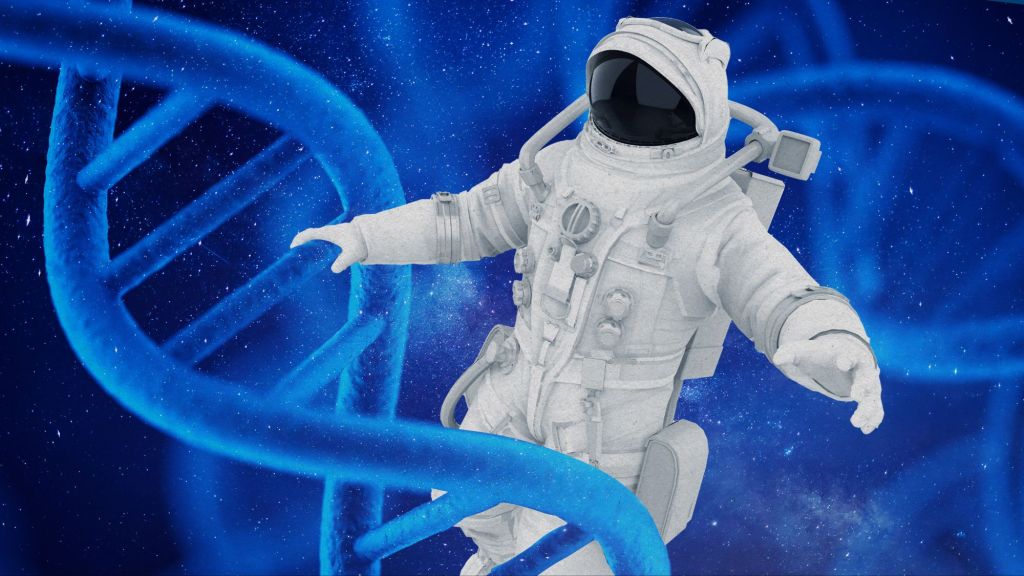
(HICGI) – Advances in the biology of aging are reshaping the debate. Some scientists, doctors, and entrepreneurs argue that aging isn’t just a natural process but a key driver of disease and death. Recognizing it as a disease, they say, could open the door to treatments that target aging itself, rather than just the health conditions that come with it.
At the same time, the population is aging, and many older Americans remain healthy and active. To them—and many healthcare professionals—the idea of aging as a disease is not only misleading but even offensive. After all, growing older isn’t inherently bad.
Critics argue that such a classification could backfire, leading doctors to dismiss legitimate health concerns as “just old age,” ultimately resulting in worse care for seniors. Others worry it could fuel financial exploitation, with the anti-aging industry pushing expensive, unproven treatments that promise to “cure” aging.
“I can have an 80-year-old who can still ski, dance or run a marathon. And I can have a 40-year-old who doesn’t move much and can’t do any of that,” Carole Blueweiss told a local media, a physical therapist with a specialty in geriatrics. “Age the number is not at all an indicator of anything.”
The U.S. Food and Drug Administration (FDA) does not currently classify aging as a disease, nor has it approved any drug specifically to treat human aging.
Last year, two groups submitted citizen petitions urging the FDA to change its stance. Meanwhile, the booming longevity industry—now attracting billions in investment—has pushed the fight against aging further into the mainstream. Supporters are optimistic that the agency may take a more sympathetic view under President Trump’s newly proposed commissioner.
The FDA said it doesn’t comment on pending petitions. A spokesperson referred to aging as a “natural process.”
‘Not Inherently Bad’
The biological processes that drive aging also contribute to disease, says Richard Faragher, a professor of biogerontology at the University of Brighton and board member of the American Federation for Aging Research. One key example is cellular senescence—a process where aging cells stop dividing but don’t die, accumulating over time and increasing the risk of age-related diseases.
“Can we influence the fundamental biology of human aging? I think the answer is an emphatic yes,” Faragher says.

Advocates argue that longevity drugs, if proven effective, could slow or prevent age-related conditions before they develop, rather than just treating them after the fact. This could save millions in healthcare costs, particularly as chronic disease spending soars. In 2021, the most expensive 1% of traditional Medicare beneficiaries accounted for 19% of total spending, according to the nonpartisan Medicare Payment Advisory Commission. Costs are particularly high for those in their final year of life.
But there’s another cost to consider—the stigma around aging, says Becca Levy, a Yale University professor who studies how beliefs about aging impact health. One of her studies found that ageism contributes to $63 billion in annual healthcare spending by worsening health outcomes.

Levy recalls a relative in her mid-80s whose severe bruise was dismissed by a doctor as “just aging” when it was actually a medication side effect. Misconceptions like this can delay treatment, leading to more serious and expensive health problems down the line.
“Classifying aging as a disease can reinforce structural ageism,” Levy warns. “Aging is not inherently bad.”

Age Advantages
At 81, former Air Force pilot Art Saboski sees aging as an opportunity, not a limitation. In retirement, he took up watercolor painting, submitting his work to local competitions in Prescott Valley, Arizona. He also began composing and arranging music, which has aired on a local radio station. He meets regularly for lunch with a group of close friends, has even had a letter published in this newspaper—and remains in good health.
“Aging can be a time of enjoyment, not a time of detriment,” Saboski says. “Life is pretty good, as long as we can do stuff like that.”
But some experts worry that classifying aging as a disease could have unintended consequences. Nancy Morrow-Howell, a gerontologist and director of the Harvey A. Friedman Center for Aging at Washington University in St. Louis, warns that doctors might be more likely to dismiss treatable conditions as inevitable effects of aging, leading to subpar care.
Eric Verdin, CEO and president of the Buck Institute for Research on Aging, argues that if aging were considered a disease, then technically, “everyone who’s 20 years old is actually ill.” He believes aging should instead be seen as a risk factor for disease—similar to high cholesterol, which isn’t a disease itself but increases the risk of heart disease and is often managed with statins.
Beyond biology, aging also brings social and emotional benefits, says Dr. John Rowe, a geriatrician and professor of health policy and aging at Columbia University. Older adults often develop better problem-solving skills and greater emotional stability.
Invest or Donate towards HICGI New Agency Global Media Establishment – Watch video here
“They adapt better to various kinds of stresses,” Rowe says. “That’s not a disease.”
Email: editorial@hicginewsagency.com TalkBusiness@hicginewsagency.com WhatsApp +256713137566
Follow us on all social media, type “HICGI News Agency” .
 HICGI News Agency