
Updated at 18:57 EAT Friday 28 February 2025

The evolving digital landscape demands more from cyber leaders than ever before. As threats grow more sophisticated and regulations tighten, today’s cybersecurity leaders must adapt to stay ahead. Let’s explore three powerful trends shaping the future of cyber leadership — and what they mean for organizations striving to protect their digital frontiers.

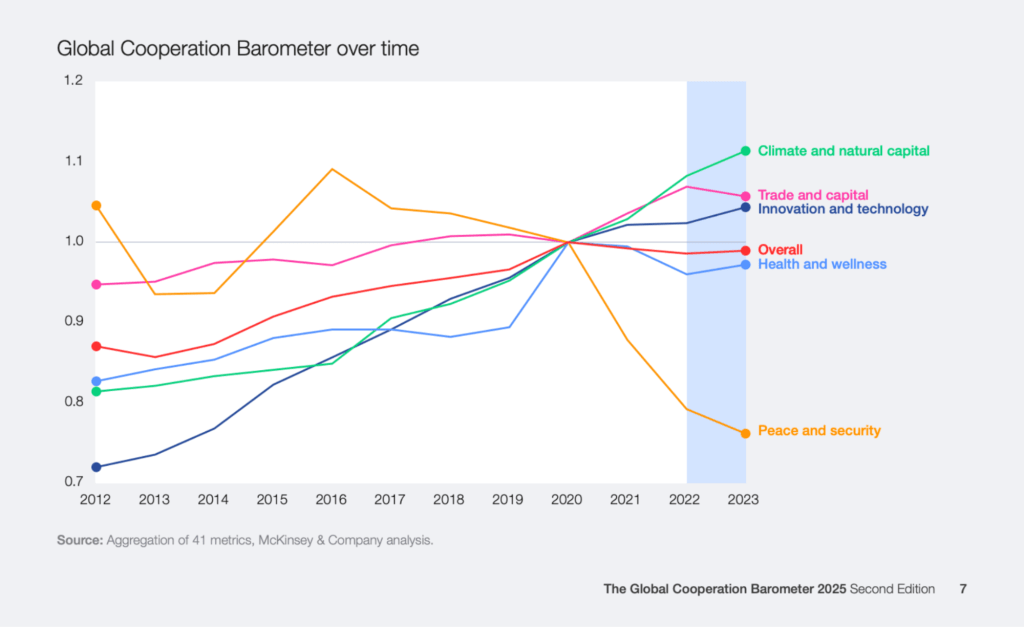
The Global Cooperation Barometer, released in January, delivered a stark warning to global cyber leaders: mounting macro trends are undermining their ability to build and sustain digital resilience.
The report revealed that geopolitical, economic, and technological disruptions have caused peace and security cooperation to decline for seven consecutive years. This creates a formidable challenge for the global cyber leadership community at a time when increased international collaboration is crucial — from establishing interoperable global security standards to safeguardingtu cross-border data flows and collectively defending shared critical infrastructures.

Recent geopolitical tensions and domestic trade pressures have disrupted global cybersecurity alliances, jeopardizing funding for cyber and federal agencies and weakening commitments to international law-enforcement cooperation.
Cyber resilience operates differently from traditional security domains. As the digital and physical worlds continue to merge, unraveling shifting political dynamics becomes increasingly complex — especially against the backdrop of growing global supply chain interdependencies.
Even so, geopolitics and evolving domestic priorities represent just one of three major strategic macro trends set to shape the future cyber leadership agenda, alongside transformative technologies and significant demographic shifts.
1. Geopolitics tensions and the new domestic agenda
The 2024 year of elections saw Donald Trump enter the White House. It also signalled the start of more mandates worldwide for more inward approaches to trade and the economy.
It follows that geopolitical tensions will arise, creating a more uncertain macro-environment.
As outlined in the World Economic Forum Global Cybersecurity Outlook, “geopolitics” is the number one challenge facing the cyber community, given it leads to state-sponsored attacks, data sovereignty conflicts and hinders cooperation.
Amid the early days of the new US administration, geopolitics has already manifested in the domestic cyber domain. It shows a potential cyber blueprint others will follow globally, with cyber policy set to change on several fronts.
Firstly, regarding international cooperation, cyber capacity-building efforts will be curtailed, and the cyberspace and technology supply chains will see further division.
A push to diversify suppliers, reshoring production and strengthening local infrastructure, will continue at pace.
Secondly, an expected retreat on regulatory and governance measures, such as relieving pressure on the technology giants, software liability and pausing minimum industry standards, will cascade across the ecosystem.
Finally, adopting a “peace through strength” foreign policy could inadvertently exacerbate existing conflicts and contribute to more instability in the cyber domain.
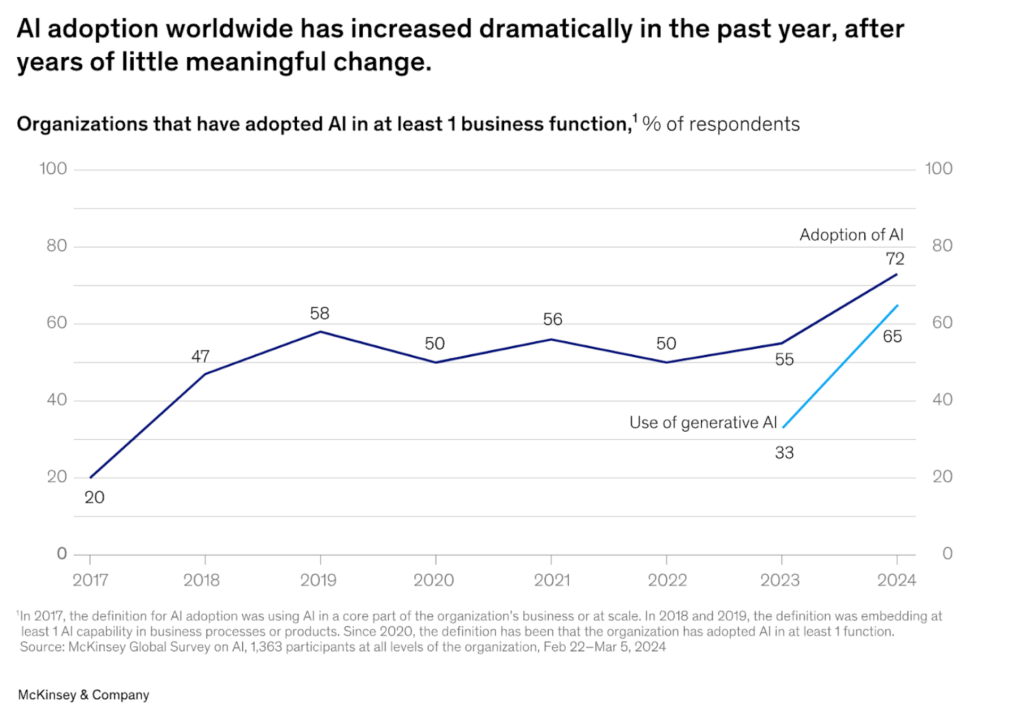
Challenges are inherent in securing complex applications and their transformative business processes but the release of the DeepSeek app only highlighted again how aggressive the timelines are for the new tools, security principles and necessary capabilities.
Cyber leaders must also move beyond traditional information security practices to ensure fairness, adversarial robustness and explainability, which underpin the trust that the C-suite now demands of their AI investments.
At an ecosystem level, as the CEO of Cloudflare outlined at the 2025 World Economic Forum Annual Meeting in Davos, Switzerland, AI-driven cyber resilience is potentially game-changing for attacker-defender dynamics.
However, unlocking game-changing cyber defence will be driven by access to relevant proprietary data at a scale that inherently favours larger hyper-scalers and end-to-end cyber providers.
This principle is a key driver behind recent record stock prices and market consolidation towards a few major cyber platform providers. Cyber leaders should be aware of the potential implications of concentration and dependencies that could lead to systemic impact, accelerate cyber inequity or sit at odds with some countries’ “sovereign” aspirations.
3. Millennials + Gen Z = Cyber 3.0
The Global Cooperation Barometer highlights how growing global supply chain complexity makes risks harder to predict, just as millennials and Generation Z become the majority of the global workforce.
The past decade has focused on securing enterprise networks in traditional industries such as banking, manufacturing and healthcare. Now, hundreds of millions of digitally native consumers and workers interact with many decentralized, cloud and edge infrastructures in newer nascent industries in their cyber journey.
Consequently, cyber leaders will need to address new points of risk.
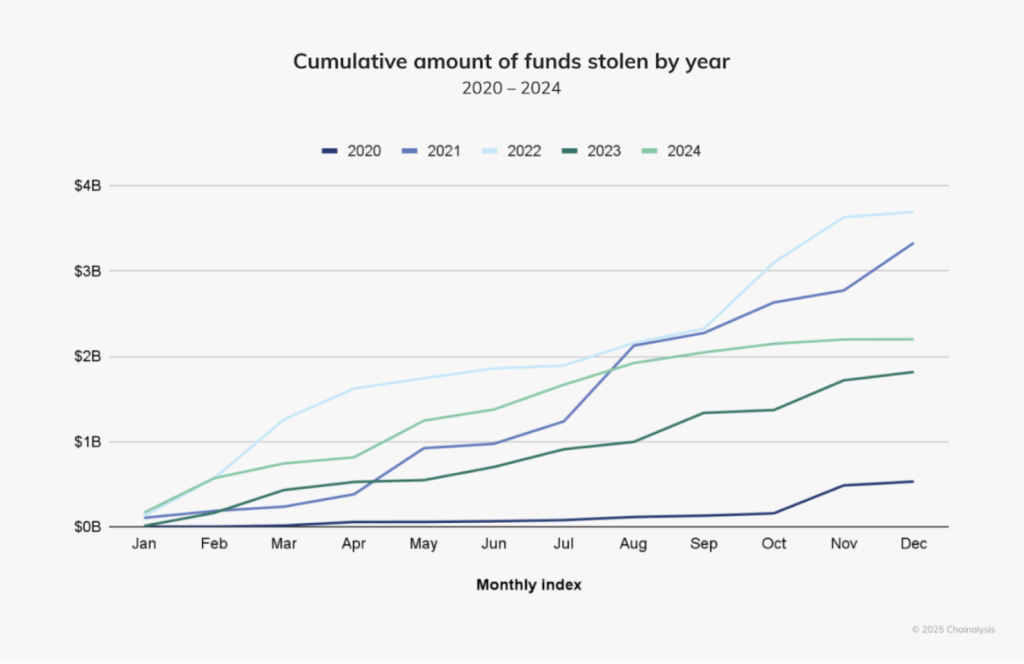
Cybercriminals are already riding this trend. The online gaming industry alone now sees half of all global DDoS attacks. An epidemic of direct hacking of global cryptocurrency exchanges has resulted in another year exceeding billions of dollars in losses.
The International Monetary Fund and US Federal Agencies have identified it as an emergent systemic risk that requires urgent global action to better protect what has become an industry with a market capitalization akin to India’s gross domestic product.
Web 3 technologies and platforms are no longer marginal in the global economy. Interactive media entertainment is an industry worth hundreds of billions of dollars – even NVIDIA started as a gaming graphics card company.
More millennials own cryptocurrency than real estate before accounting for other frontier platforms such as the metaverse, virtual reality or newer applications used by hundreds of millions of people under 35 but with limited or fully adopted cyber frameworks or consistently accepted cyber governance.

Collective cyber resilience
At times of global tension, economic headwinds and rapid technology adoption, more rather than less dialogue is needed.
The cyber resilience in industries community is in a trusted and unique position. It can be central to ensuring a multistakeholder and global pathway can be found for a prosperous, resilient digital future even amidst a complex risk landscape.
They can identify what is critical and imperative to the ecosystem despite heightened tension between the major powers, especially regarding international capacity building and global interoperable minimum standards in industry.
They can also focus on convening the technical, business and policy communities towards the safe and secure use of emerging technologies, especially artificial intelligence.
Moreover, they can concentrate on increasing the resilience of the new digital ecosystems and industries – increasingly important but less protected. Together, these efforts can help ensure our digital future.

Invest or Donate towards HICGI New Agency Global Media Establishment – Watch video here
Email: editorial@hicginewsagency.com TalkBusiness@hicginewsagency.com WhatsApp +256713137566
Follow us on all social media, type “HICGI News Agency” .
 HICGI News Agency