
Updated by Faith Barbara.N.Ruhinda at 10:52 EAT on Tuesday 18th March 2025
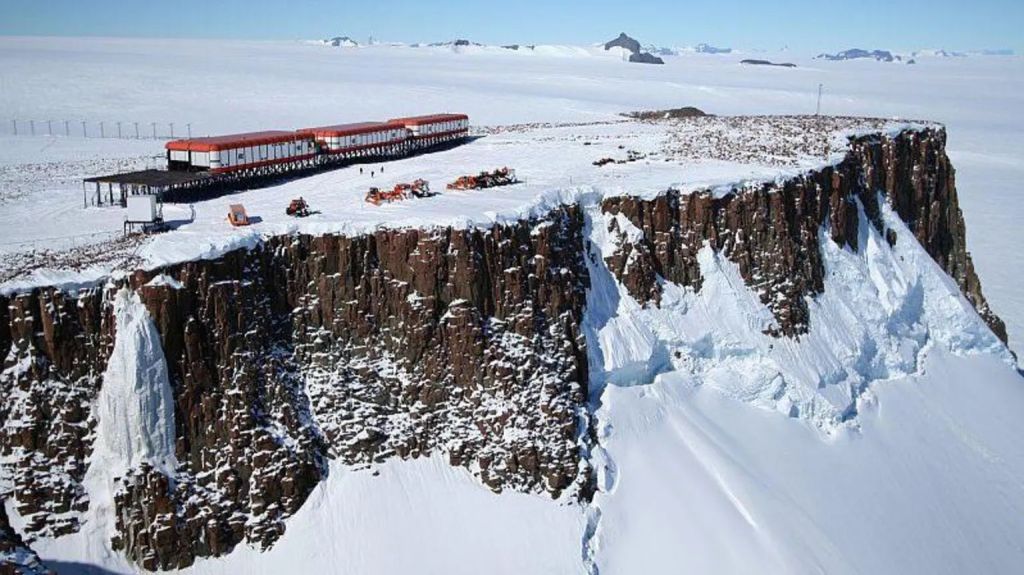
A group of scientists due to work together for months at a remote Antarctic research station has been rocked after a member of the team was accused of assault.
About 10 researchers typically stay at the South African-run base, which sits about 170km (about 105 miles) from the edge of the ice shelf and is difficult to reach.

South Africa’s Sunday Times, which was first to report the story, said members of the team had pleaded to be rescued.
The ministry also said that those in the team had been subject to “a number of evaluations that include background checks, reference checks, medical assessment as well as a psychometric evaluation by qualified professionals”, which all members had cleared.
The Sanae IV research base is located more than 4,000km from mainland South Africa and harsh weather conditions mean scientists can be cut off there for much of the year.
South African research expeditions have been taking place since 1959. The team to the Sanae IV base typically comprises a doctor, two mechanics, three engineers, a meteorological technician and a couple of physicians.
These expeditions, with harsh weather conditions mandating a lot of time spent in a confined indoor space, normally run without incident, and team members have to undergo a range of psychological assessments before travelling.
But on Sunday, South Africa’s Sunday Times reported that one member of the team had sent an email warning of “deeply disturbing behaviour” by a colleague and an “environment of fear”.
Incidents in Antarctica are rare, but not unprecedented. In 2018 there were reports of a stabbing at the Russian-operated Bellingshausen research station.
“One thing we know from these rare occurrences, when something bad happens in enforced isolation or capsule working, is that it’s often the small things, tiny things that can blow up into conflict,” said Craig Jackson, professor of workplace health psychology at Birmingham City University, and a chartered member of the British Psychological Society.

Gabrielle Walker, a scientist and author who has been on expeditions to Antarctica, said working in such close proximity to a small group of colleagues had risks.
“You know exactly how they put their coffee cup down and what direction the handle points in; you know that they scratch their nose three times before they sit down; you know everything about them.
“And in the bad circumstances, it can start to irritate you… because there’s nothing else – there’s no other stimulus and you’re with people 24/7,” she said.
But any rescue operation would have to contend with the harsh climate, with temperatures well below freezing and the possibility of strong winds.
Invest or Donate towards HICGI New Agency Global Media Establishment – Watch video here
Email: editorial@hicginewsagency.com TalkBusiness@hicginewsagency.com WhatsApp +256713137566
Follow us on all social media, type “HICGI News Agency” .
 HICGI News Agency