
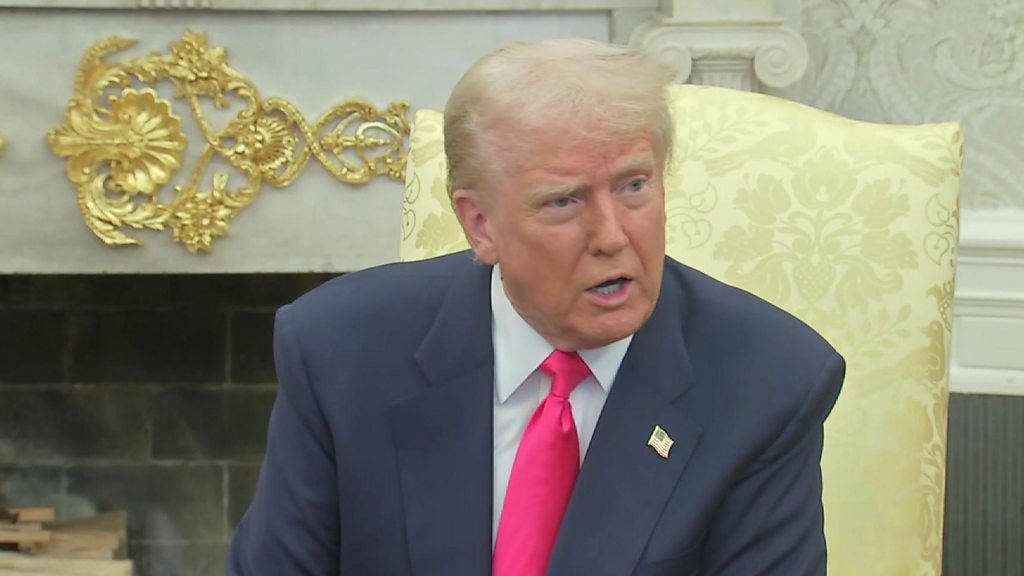
Washington, D.C. – U.S. President Donald Trump is set to announce a sweeping new tariff policy in a major White House address. The move, expected within hours, has already sparked concerns from European leaders who warn that escalating trade tensions could lead to a full-blown trade war.

Countries including Germany and Italy have voiced opposition to the potential tariffs, arguing that such measures could disrupt global trade and strain diplomatic ties. European officials have urged the U.S. administration to reconsider, emphasizing the risks of retaliatory measures that could harm businesses on both sides of the Atlantic.
In the UK, Prime Minister Keir Starmer has responded cautiously as US-UK trade negotiations continue. Starmer has indicated that Britain is “preparing for all scenarios” in case the tariffs impact trade relations between the two allies. The UK government is expected to closely monitor developments to safeguard economic interests.
Trump has branded the tariff policy as “Liberation Day,” arguing that the measures will strengthen American industries and protect domestic jobs. However, Democratic House Leader Hakeem Jeffries has pushed back against this characterization, warning that the policy could trigger economic instability. “This is not Liberation Day,” Jeffries said. “It’s recession day.”
Details on the scope of the tariffs remain unclear, including which countries will be targeted and how high the new taxes on imports will be. Analysts caution that a broad implementation could drive up global prices, further straining economies that are already grappling with inflation and supply chain disruptions.
While Trump and his supporters argue that the tariffs will lead to fairer trade deals and benefit American workers, many experts warn of the risk of economic retaliation from affected nations. The coming days will likely see increased global scrutiny as world leaders react to the former president’s latest economic maneuver.
 HICGI News Agency