
By Earnest Kivumbi Benjamin, Faith Barbara N Ruhinda & Anastasious Gordon Sekandi

MUNYONYO- President Yoweri Kaguta Museveni has called on African nations to take ownership of their development trajectories through homegrown solutions and enhanced regional integration. While acknowledging that external support can be helpful, he emphasized that it is not a reliable path to sustainable progress.
The President made these remarks today while officiating at the 11th Session of the Africa Regional Forum on Sustainable Development (ARFSD-11), held at the Speke Resort Convention Centre in Munyonyo, Kampala. The three-day forum is convened under the theme: “Driving job creation and economic growth through sustainable, inclusive, science and evidence-based solutions for the 2030 Agenda and Agenda 2063.”
The ARFSD is an annual platform organized by the United Nations Economic Commission for Africa (UNECA) in collaboration with the African Union and host governments.
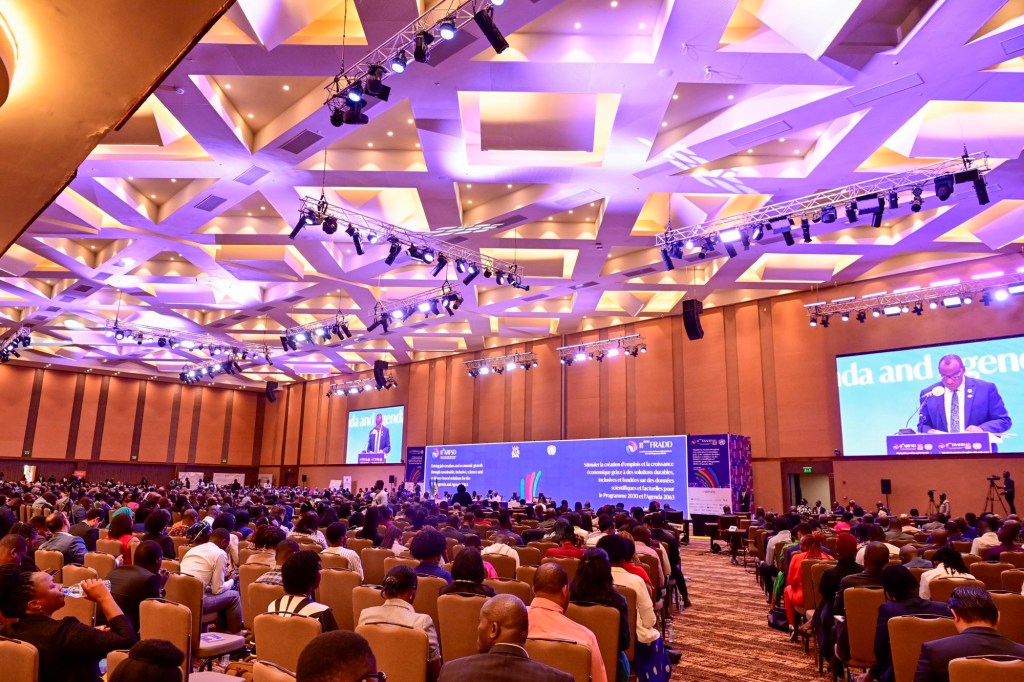

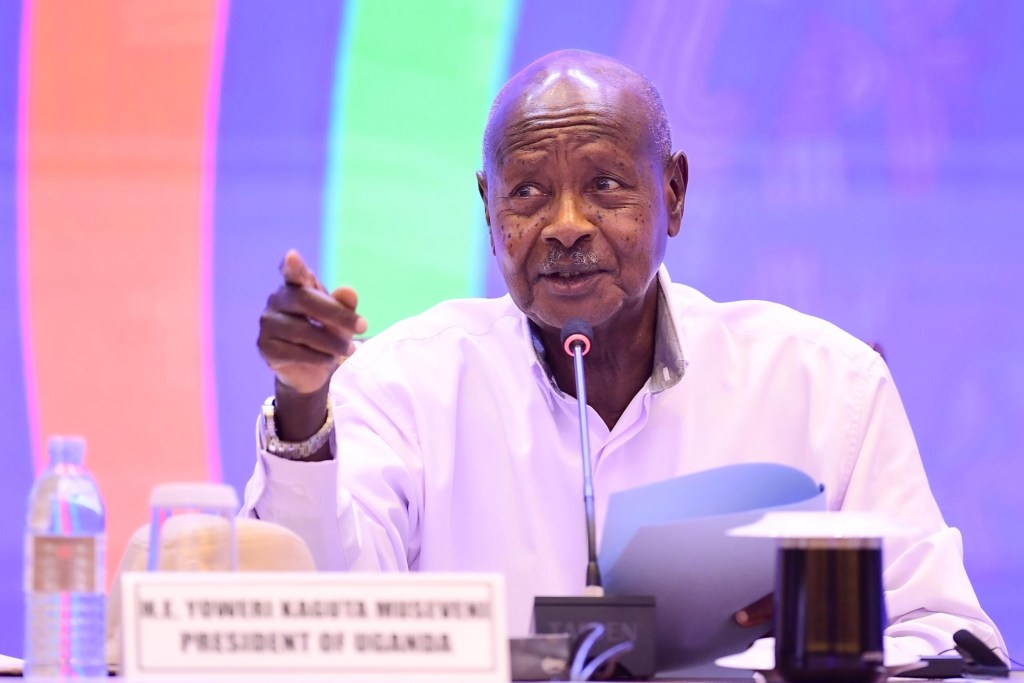
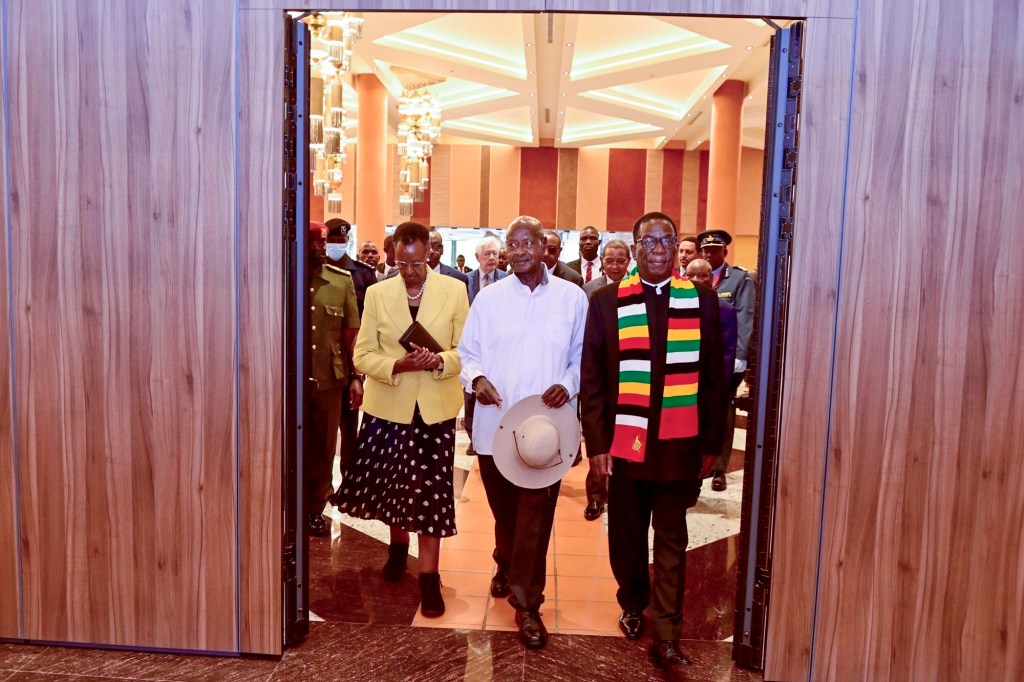
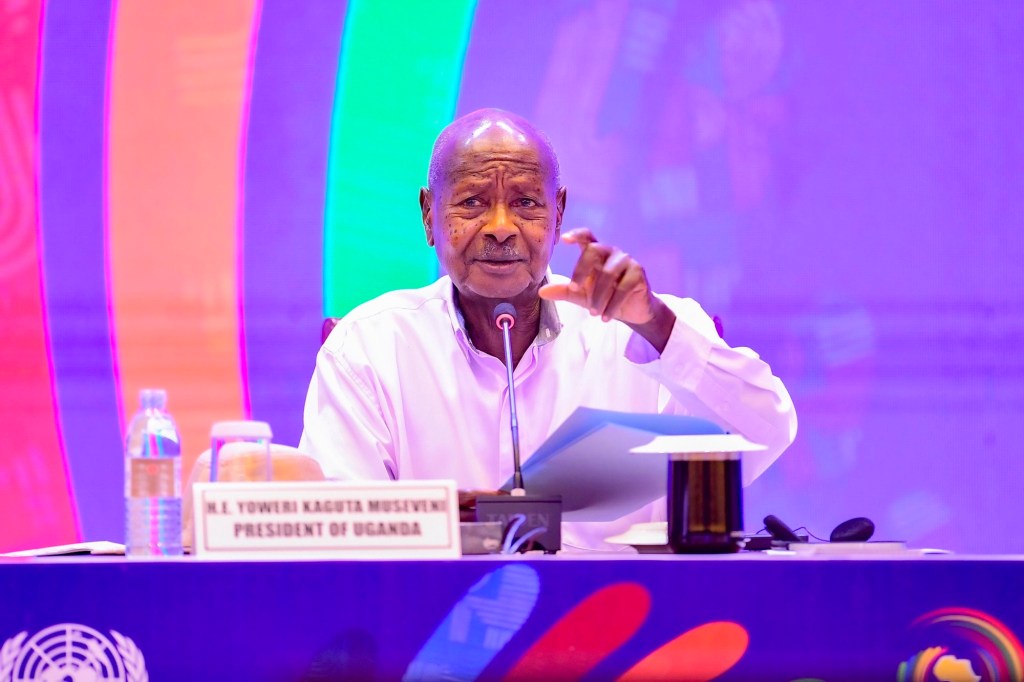

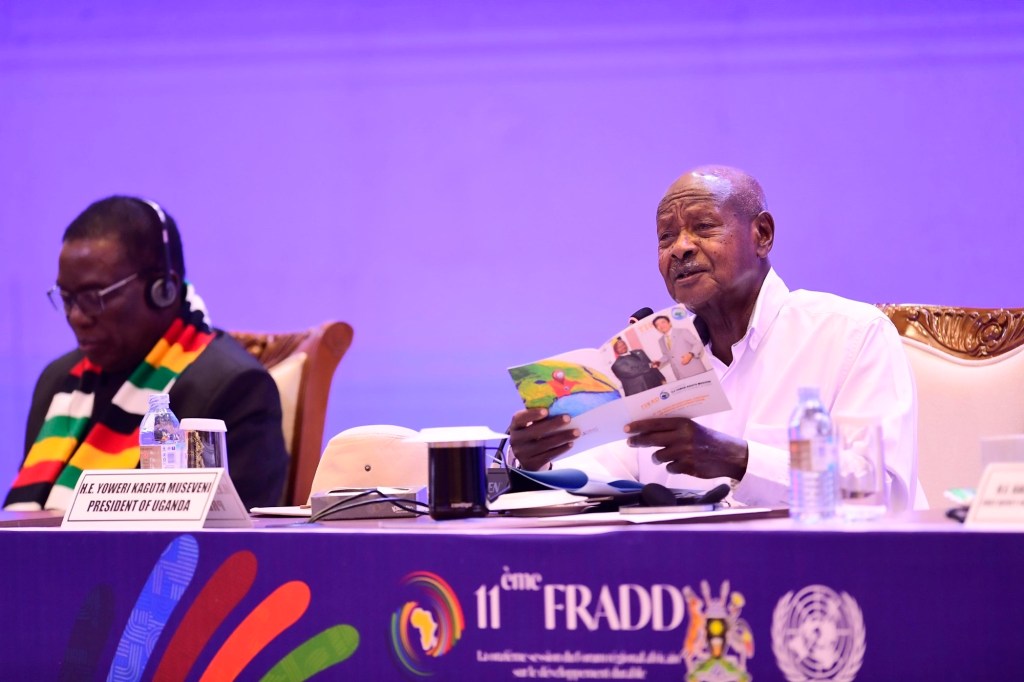

President Museveni was joined at the event by the First Lady and Minister of Education and Sports, Maama Janet Museveni, and the President of the Republic of Zimbabwe, H.E. Emmerson Dambudzo Mnangagwa.
“The solutions are with us,” President Museveni stressed, underscoring the importance of self-reliance. He cited a recent disagreement between Uganda and Western nations over Uganda’s legislation on homosexuality.
“We had an argument with Europeans recently. We passed a law concerning homosexuality. The United States removed us from the AGOA list and the World Bank suspended funding. Yet, our economy still grew by 6%,” he said.
This, he noted, proves that African countries can thrive even in the absence of foreign aid—provided they maintain strategic focus and harness internal capabilities. “What’s crucial for me, apart from our own mistakes, is regional integration. If we avoid those mistakes, we can go far,” he added.

President Museveni provided a detailed reflection on Uganda’s economic history, beginning in 1900 when the British established Uganda as a protectorate. At that time, the economy was based on subsistence agriculture, livestock, fishing, artisanal crafts (emyooga), and traditional healing (kuragura), with barter (okuchurika) being the main mode of exchange.
By independence in 1962, the British had developed a small “enclave economy” built on exports of raw materials—Cotton, Coffee, Copper (3Cs) and Tobacco, Tea, and Tourism (3Ts). These commodities were exported without value addition, yielding only about 10% of their actual worth and exporting potential jobs.
This enclave economy, however, benefited only about 4% of Ugandan homesteads. When Idi Amin came to power in 1971, the already fragile economy deteriorated further. By the time the National Resistance Movement (NRM) took over in 1986, even the enclave economy had collapsed.
Since then, the NRM government has made significant strides. President Museveni highlighted five major interventions:
1. Restoring the enclave economy by reviving key export sectors.
2. Expanding production, such as increasing coffee exports from 3 million bags in 1986 to 9 million bags currently.
3. Diversifying the economy, with growth in milk, beef, maize, fruits, fish, and leather production.
4. Adding value to raw materials to increase income and job creation.
5. Transitioning into a knowledge economy, including ventures into automobile manufacturing, vaccine development, and ICT innovations.
Despite progress, the President acknowledged that as of 2013, 68% of homesteads were still engaged in subsistence farming. In response, the government launched Operation Wealth Creation (OWC) to distribute free planting materials and livestock. This later evolved into the Parish Development Model (PDM)—a community-driven, sustainable development approach based on parish-level SACCOs.
Museveni emphasized the need for selecting enterprises with “ekibaro”—economic logic that aligns with land size and capacity. High-value, intensive farming like coffee, dairy, fruits, poultry, piggery, and fish farming were recommended. He noted that with proper planning, one acre of land can employ up to 15 people.
“Uganda has 40 million acres suitable for agriculture. If we use just 7 million of these, we can create 105 million jobs—more than double Uganda’s population of 46 million,” he stated.
He also identified four key pillars of economic growth: agriculture, industry/artisanship, services, and ICT. Currently, agriculture employs 3.6 million people, industry 1.4 million, services 5 million, and ICT over 46,000.
To support these sectors, Museveni stressed the need to remove what he called “strategic bottlenecks”: lack of affordable transport and electricity, limited access to credit, export of raw materials, and gaps in education and health.
He concluded with a caution: “Quantitative growth alone is not enough. Without transformation, it’s a path to perpetual underdevelopment.”
International Perspectives and Support
Mr. Robert Keith Rae, Canada’s Ambassador and Permanent Representative to the UN, echoed the importance of Africa’s leadership in achieving the Sustainable Development Goals (SDGs).
He stressed that climate change is a scientific reality, not a political ideology, and called for collective global action. “Your struggle is not only your struggle; it is the struggle of everyone,” he said, advocating for education, especially for girls, and greater global solidarity.
H.E. Amina Mohammed, UN Deputy Secretary-General, urged African leaders to adopt bold, homegrown solutions and confront the difficult realities around development financing.
She highlighted that over 60% of African countries spend a significant portion of their revenue on debt servicing, posing a major obstacle to SDG progress. However, she affirmed, “These figures do not define us.”
Mohammed praised the role of women in Africa’s transformation and called for urgent action against gender-based violence. “Women are not just beneficiaries of development—they are its drivers,” she declared.
Mr. Claver Gatete, Executive Secretary of UNECA, commended Uganda’s progress and President Museveni’s leadership. He emphasized the need for rapid implementation of SDG-aligned strategies and called for increased investment in Africa’s youth, particularly through vocational training.
He outlined four strategic areas to accelerate SDG progress:
1. Curtailing Illicit Financial Flows
2. Unlocking Domestic Capital
3. Expanding Access to Finance, especially for Women and Youth
4. Maximizing the African Continental Free Trade Area (AfCFTA)
The event was also attended by Uganda’s Prime Minister, Rt. Hon. Robinah Nabbanja, Third Deputy Prime Minister Rt. Hon. Rukia Nakadama, ministers, and other dignitaries.
 HICGI News Agency