
By Faith Barbara N Ruhinda updated at 1321 EAT on Monday 21 April 2025
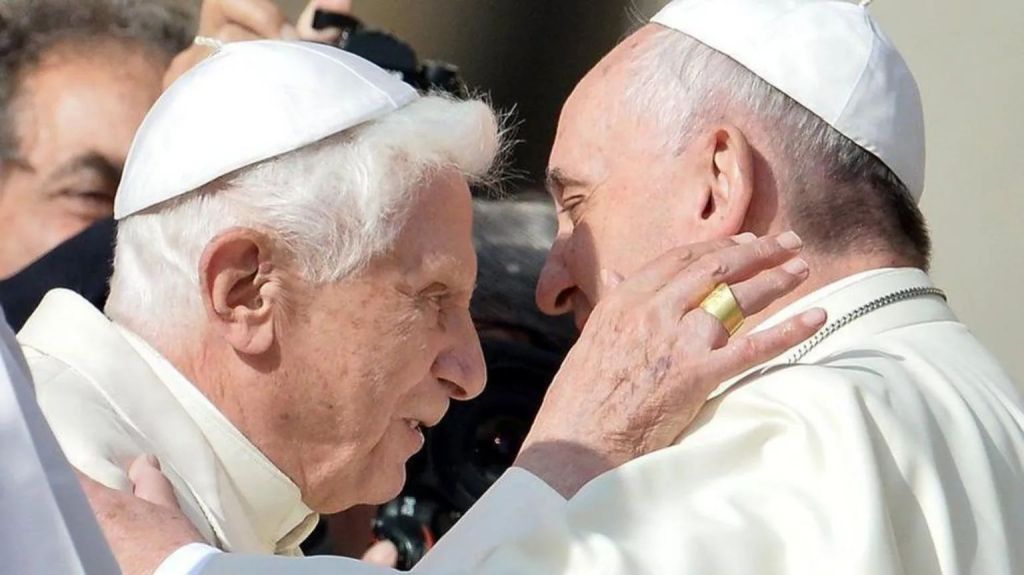
Francis was the first Pope from the Americas or the Southern Hemisphere. Not since Syrian-born Gregory III died in 741 had there been a non-European Bishop of Rome.
He was also the first Jesuit to be elected to the throne of St Peter – Jesuits were historically looked on with suspicion by Rome.
His predecessor, Benedict XVI, was the first Pope to retire voluntarily in almost 600 years and for almost a decade the Vatican Gardens hosted two popes.
Many Catholics had assumed the new pontiff would be a younger man – but Cardinal Bergoglio of Argentina was already in his seventies when he became Pope in 2013.
He had presented himself as a compromise candidate: appealing to conservatives with orthodox views on sexual matters while attracting the reformers with his liberal stance on social justice.
It was hoped his unorthodox background would help rejuvenate the Vatican and reinvigorate its holy mission.
But within the Vatican bureaucracy some of Francis’s attempts at reform met with resistance and his predecessor, who died in 2022, remained popular among traditionalists.

From the moment of his election, Francis indicated he would do things differently. He received his cardinals informally and standing – rather than seated on the papal throne.
On 13 March 2013, Pope Francis emerged on the balcony overlooking St Peter’s Square.
Clad simply in white, he bore a new name which paid homage to St Francis of Assisi, the 13th Century preacher and animal lover.
He was determined to favour humility over pomp and grandeur. He shunned the papal limousine and insisted on sharing the bus taking other cardinals home.
The new Pope set a moral mission for the 1.2 billion-strong flock. “Oh, how I would like a poor Church, and for the poor,” he remarked.
His last act as head of the Catholic Church was to appear on Easter Sunday on the balcony of St Peter’s Square, waving at thousands of worshippers after weeks in hospital with double pneumonia.
Jorge Mario Bergoglio was born in Buenos Aires, Argentina, on 17 December 1936 – the eldest of five children. His parents had fled their native Italy to escape the evils of fascism.
He enjoyed tango dancing and became a supporter of his local football club, San Lorenzo.
He was lucky to escape with his life after an initial and serious bout of pneumonia, undergoing an operation to remove part of a lung. It would leave him susceptible to infection throughout his life.
As an elderly man he also suffered from pain in his right knee, which he described as a “physical humiliation”.
The young Bergoglio worked as a nightclub bouncer and floor sweeper, before graduating as a chemist.
At a local factory, he worked closely with Esther Ballestrino, who campaigned against Argentina’s military dictatorship. She was tortured, her body never found.
He became a Jesuit, studied philosophy and taught literature and psychology. Ordained a decade later, he won swift promotion, becoming provincial superior for Argentina in 1973.
He was accused of involvement in the military kidnapping of two priests during Argentina’s Dirty War, a period when thousands of people were tortured or killed, or disappeared, from 1976 to 1983.
The two priests were tortured but eventually found alive – heavily sedated and semi-naked.
Bergoglio faced charges of failing to inform the authorities that their work in poor neighbourhoods had been endorsed by the Church. This, if true, had abandoned them to the death squads. It was an accusation he flatly denied, insisting he had worked behind the scenes to free them.
Asked why he did not speak out, he reportedly said it was too difficult. In truth – at 36 years old – he found himself in a chaos that would have tried the most seasoned leader. He certainly helped many who tried to flee the country.
He also had differences with fellow Jesuits who believed Bergoglio lacked interest in liberation theology – that synthesis of Christian thought and Marxist sociology which sought to overthrow injustice. He, by contrast, preferred a gentler form of pastoral support.

He was named Auxiliary Bishop of Buenos Aires in 1992 and then became Archbishop.
Pope John Paul II made him a cardinal in 2001 and he took up posts in the Church’s civil service, the Curia.
He cultivated a reputation as a man of simple tastes, eschewing many of the trappings of a senior cleric. He usually flew economy and preferred to wear the black gown of a priest – rather than the red and purple of his new position.
In his sermons, he called for social inclusion and criticised governments that failed to pay attention to the poorest in society.
As Pope, he made great efforts to heal the thousand-year rift with the Eastern Orthodox Church. In recognition, for the first time since the Great Schism of 1054, the Patriarch of Constantinople attended the installation of a new Bishop of Rome
Francis worked with Anglicans, Lutherans and Methodists and persuaded the Israeli and Palestinian presidents to join him to pray for peace.
After attacks by Muslim militants, he said it was not right to identify Islam with violence. “If I speak of Islamic violence, then I have to speak of Catholic violence too,” he declared.
Invest or Donate towards HICGI New Agency Global Media Establishment – Watch video here
Email: editorial@hicginewsagency.com TalkBusiness@hicginewsagency.com WhatsApp +256713137566
Follow us on all social media, type “HICGI News Agency” .
 HICGI News Agency