
By Faith Barbara N Ruhinda updated at 1457 EAT on Tuesday 6 May 2025
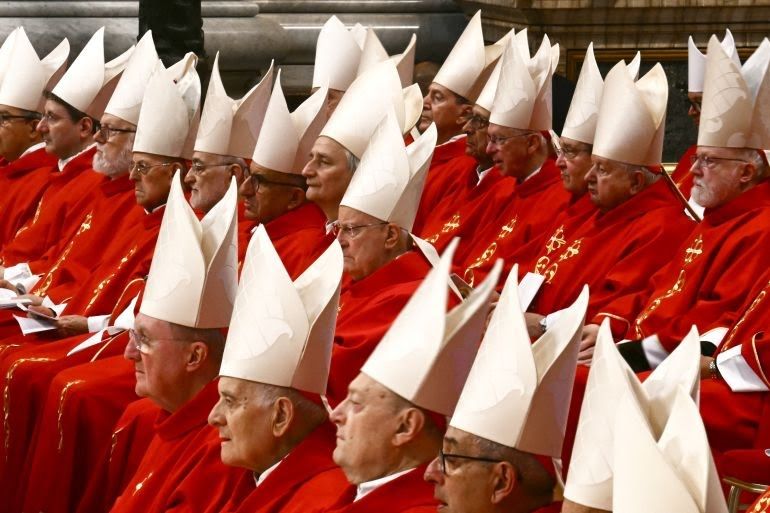
As the formal mourning period for Pope Francis has ended, attention now shifts to the papal conclave in Vatican City, where powerful members of the Catholic Church are converging to elect the next pontiff.
Cardinals from around the world will choose the 267th pope, leader of the world’s 1.4 billion Catholics, at an event of spiritual, political and global relevance. Francis died on April 21 at the age of 88 after 12 years in the papacy.
The conclave, which will kick off on Wednesday, will be held behind the closed doors of the Sistine Chapel. It generally lasts several days and, in some cases, weeks.
The term conclave comes from the Latin term “con clavis”, meaning “with a key”, a reference to the tradition of locking the cardinals away until a new pope is elected.

In the Roman Catholic Church, a papal conclave is a solemn, closed-door gathering of the College of Cardinals held to elect a new pope.
Known as the “princes of the church,” the cardinals follow an intricate and centuries-old process rooted in the Middle Ages.
While the traditions have evolved, the current procedures are largely based on the 1996 apostolic constitution Universi Dominici Gregis, issued by Pope John Paul II with later amendments made by Pope Benedict XVI.2
Cardinals below the age of 80 vote although all cardinals may attend the meetings irrespective of age. There are currently 135 eligible voters.
In the Roman Catholic Church, the pope is regarded as the successor of St Peter, the chief of Jesus’s apostles and the first leader of the early Christian church.
As such, the pope holds supreme authority over the worldwide Catholic Church in matters of faith, morals, governance and discipline.
The pope is the spiritual leader of Catholics around the globe, supported today by 252 cardinals.
While Pope Francis emphasised that true power comes from Jesus Christ and that he is merely a disciple, the pope is undeniably a powerful global figure.
The pope typically presides over major church celebrations held at St Peter’s Basilica throughout the year. He is expected to meet with more than 5,000 bishops from around the world at least once every five years. As the bishop of Rome, he is also in charge of governing and managing the Vatican.
The papal conclave is scheduled to begin on Wednesday in the Sistine Chapel, located in the Apostolic Palace, or Papal Palace, at the Vatican.
This follows the traditional nine-day mourning period for Francis
How does the balloting take place?
Voting after the first day occurs a maximum of four times: twice in the morning and twice in the afternoon.
Each cardinal receives a ballot marked “Eligo in Summum Pontificem” (“I elect as Supreme Pontiff”) and writes in their chosen candidate.
One by one, they approach the altar before Michelangelo’s Last Judgement, swear an oath and place their votes in a chalice.
If a pope is not chosen in the first four days of the conclave, voting is suspended on the fifth day to allow time for prayer, quiet reflection and informal discussions.

A two-thirds majority is required to elect a pope. If no one reaches that threshold, another vote is held. After each round, ballots are burned.
If black smoke appears from a chimney on top of the Sistine Chapel, it means no pope has been chosen. White smoke signals the Catholic Church has a new pontiff.
Black smoke is produced by burning a mixture of potassium perchlorate, anthracene and sulphur while white smoke results from a blend of potassium chlorate, lactose and a conifer resin known as rosin.
The last two conclaves, held in 2005 and 2013, wrapped up by the end of the second day of voting.
Invest or Donate towards HICGI New Agency Global Media Establishment – Watch video here
Email: editorial@hicginewsagency.com TalkBusiness@hicginewsagency.com WhatsApp +256713137566
Follow us on all social media, type “HICGI News Agency” .
 HICGI News Agency