
By Faith Barbara N Ruhinda updated at 1638 EAT on wednesday 7 May 2025
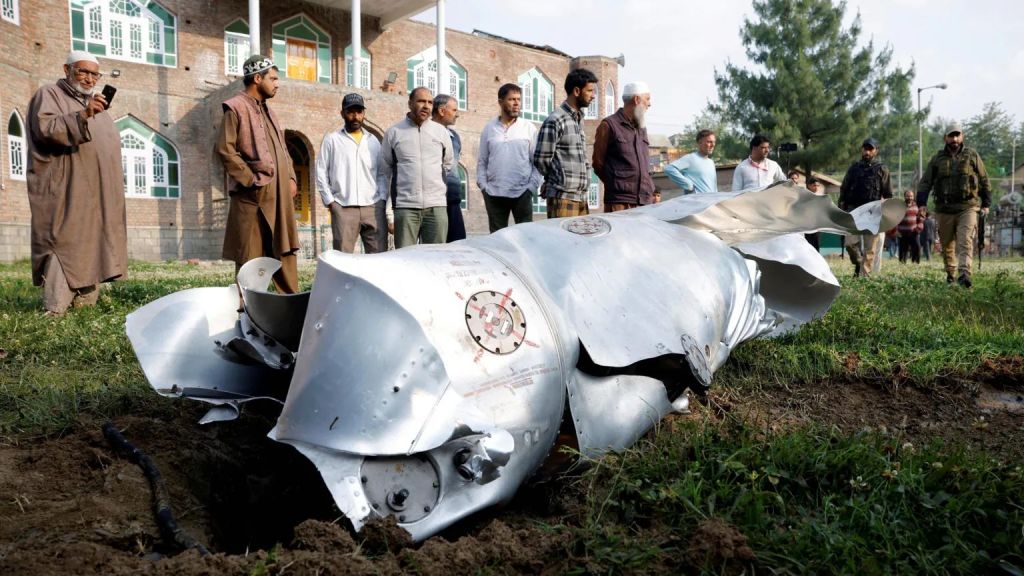
The strikes, lasting just 25 minutes between 01:05 and 01:30 India time (19:35 and 20:00 GMT on Tuesday), sent shockwaves through the region, with residents jolted awake by thunderous explosions.
Pakistan said only six locations were hit and claimed to have shot down five Indian fighter jets and a drone – a claim India has not confirmed.
Islamabad said 26 people were killed and 46 injured in Indian air strikes and shelling across the Line of Control (LoC) – the de facto border between India and Pakistan. Meanwhile, India’s army reported that 10 civilians were killed by Pakistani shelling on its side of the de facto border.
This sharp escalation comes after last month’s deadly militant attack on tourists in Pahalgam in Indian-administered Kashmir, pushing tensions between the nuclear-armed rivals to dangerous new heights.

India says it has clear evidence linking Pakistan-based terrorists and external actors to the attack – a claim Pakistan flatly denies. Islamabad has also pointed out that India has not offered any evidence to support its claim.
The deepest hit, says India, was a Jaish-e-Mohammed headquarters in Bahawalpur, 100km inside Pakistan.
A LeT camp in Muzaffarabad, 30km from the LoC and capital of Pakistan-administered Kashmir, was linked to recent attacks in Indian-administered Kashmir, the spokesperson said.
Pakistan says six locations have been hit, but denies allegations of there being terror camps.
The India-Pakistan International Border is the officially recognised boundary separating the two countries, stretching from Gujarat to Jammu.

The majority of experts agree that a retaliation from Pakistan is inevitable – and diplomacy will come into play.
Pakistan’s response is sure to come. The challenge would be to manage the next level of escalation. This is where crisis diplomacy will matter,” says Mr Bisaria.
Pakistan will be getting advice to exercise restraint. But the key will be the diplomacy after the Pakistani response to ensure that both countries don’t rapidly climb the ladder of escalation.”
Pakistan-based experts like Ejaz Hussain, a Lahore-based political and military analyst, say Indian surgical strikes targeting locations such as Muridke and Bahawalpur were “largely anticipated given the prevailing tensions”.
Dr Hussain believes retaliatory strikes are likely.
Given India’s stated targets of groups and facilities associated with terrorism and militancy in India, I think it is likely but far from certain – that Pakistan will confine itself to attacks on Indian military targets,” he said.
Despite the rising tensions, some experts still hold out hope for de-escalation.
There is a decent chance we escape this crisis with just one round of reciprocal standoff strikes and a period of heightened firing along the Line of Control, says Mr Clary.
However, the risk of further escalation remains high, making this the most dangerous India-Pakistan crisis since 2002 and even more perilous than the 2016 and 2019 standoffs, he adds.
Today, the Pakistani public is far less eager to support the military compared to 2016 or 2019 – the usual wave of war hysteria is noticeably absent.
But if public opinion shifts in central Punjab where anti-India feelings are more prevalent, we could see increased civilian pressure on the military to take action. And the military will regain popularity because of this conflict.”
Invest or Donate towards HICGI New Agency Global Media Establishment – Watch video here
Email: editorial@hicginewsagency.com TalkBusiness@hicginewsagency.com WhatsApp +256713137566
Follow us on all social media, type “HICGI News Agency” .
 HICGI News Agency