
By Faith Barbara N Ruhinda Updated at 1336 EAT on Tuesday 24 June 2025
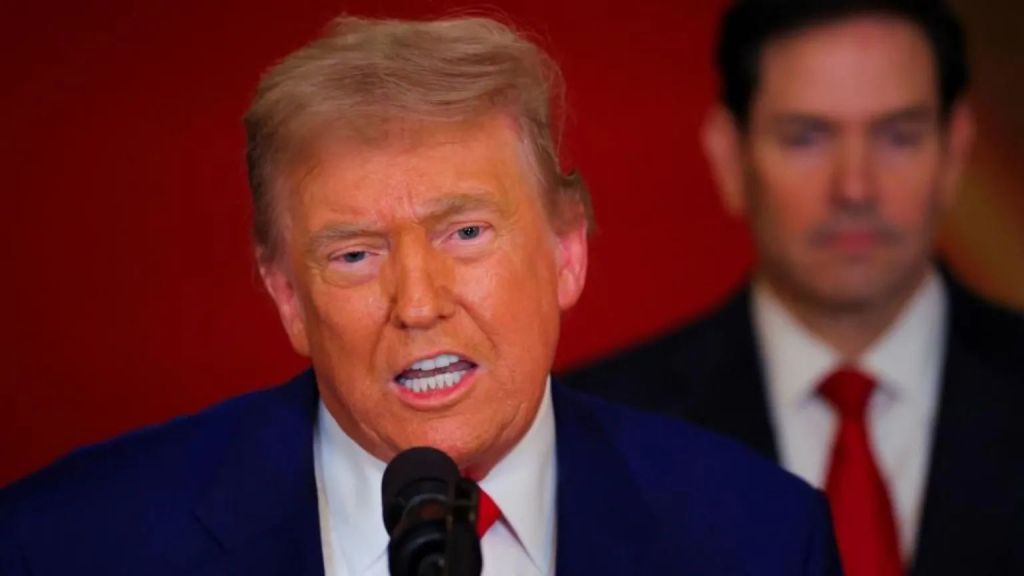
On Monday evening, Trump announced that both countries had agreed to a ceasefire, one he claimed could pave the way for lasting peace.
If the American president has indeed brought an end to what he called the “12-Day War,” it would mark a major de-escalation in a crisis that had threatened to engulf the region — especially after US airstrikes on Iranian nuclear facilities over the weekend risked pulling the United States deeper into the conflict.
Shortly after, the Israeli government said it had agreed to the proposal, claiming it had “achieved the objectives” of its strikes on Iran.
As the 4:00 a.m. (00:30 GMT) deadline approached in Tehran, both sides appeared to step back from further escalation. Reports indicated that Israeli attacks had come to a halt, suggesting a tentative pause in hostilities.
But the fragility of the ceasefire was quickly exposed. Just two hours after it took effect, Israel’s defense minister accused Iran of violating the agreement and vowed a forceful response. Iran, for its part, denied any breach.

The Trump administration will be hoping this flare-up is merely a temporary setback a reflection of underlying tensions and that both sides ultimately adhere to the ceasefire.
Trump’s ceasefire announcement came at the end of a volatile day in the region, as Iran followed through on its pledge to retaliate for Saturday’s U.S. airstrike.
According to early reports, all Iranian missiles aimed at the large U.S. military base in Qatar were intercepted, with no American casualties or damage reported.
In a televised address Saturday night, President Trump had warned of an overwhelming response to any Iranian attacks on U.S. interests. He emphasized that additional Iranian targets remained on the table should further action be required.
For more than 24 hours, the world watched anxiously, waiting to see how Iran would respond. Once Tehran launched its retaliation, attention shifted swiftly back to the U.S. president and after several hours of silence, Donald Trump broke it with a statement.
“Iran has officially responded to our obliteration of their nuclear facilities with a very weak response, which we expected, and have very effectively countered,” Trump wrote on his social media platform.
Trump suggested that Iran had “gotten it all out of their ‘system’” and expressed hope that “perhaps Iran can now proceed to Peace and Harmony in the Region.”
Though the reported damage from Iran’s response was limited, Trump appeared inclined to hold back further military action, betting that Tehran might now be open to serious negotiations. Behind the scenes, the White House said the president was in contact with Qatari mediators and Israeli Prime Minister Benjamin Netanyahu to hammer out the details of the ceasefire.
Trump’s weekend strike on Iran was a high-risk move — but one where the potential payoffs are already beginning to emerge.

A similar pattern unfolded in January 2020, when Trump ordered the targeted killing of Iranian Revolutionary Guard commander Qasem Soleimani in Baghdad. In response, Iran launched missiles at U.S. bases in Iraq, injuring more than 100 American personnel. Despite the provocation, the U.S. refrained from further escalation, and cooler heads ultimately prevailed.
According to U.S. media reports, in Monday’s retaliatory strike, Iran launched a number of missiles at American bases roughly equal to the total number of bombs dropped by U.S. warplanes during the weekend attack.
That symmetry coupled with Iran’s decision to provide advance notice to the Qatari government before the launch, a move for which Trump publicly expressed gratitude suggests Tehran may be aiming for proportionality rather than escalation.
Throughout much of the day, however, Trump appeared more preoccupied with oil prices, domestic media coverage, and a provocative suggestion by former Russian President Dmitry Medvedev that a foreign power should consider supplying Iran with nuclear weapons.
U.S. officials have emphasized that this president follows through on his threats — a contrast, they suggest, to some of his predecessors.
If Iran were to launch another wave of attacks resulting in American casualties or significant damage, the pressure on Trump to retaliate forcefully would likely become overwhelming.
For now, however, he appears to be searching for an off-ramp from further conflict and both Washington and Tehran seem, at least tentatively, open to exploring it.
Invest or Donate towards HICGI New Agency Global Media Establishment – Watch video here
Email: editorial@hicginewsagency.com TalkBusiness@hicginewsagency.com WhatsApp +256713137566
Follow us on all social media, type “HICGI News Agency” .
 HICGI News Agency