
By Faith Barbara N Ruhinda Updated at 1326 EAT on Wednesday 25 June 2025
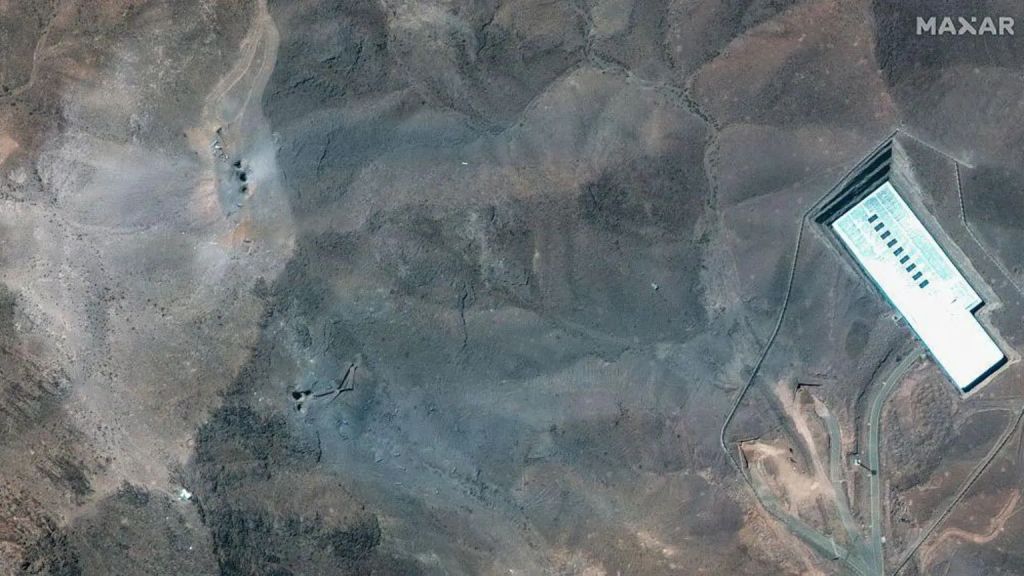
The U.S. airstrikes on Iran’s nuclear facilities did not destroy the country’s nuclear program and likely only delayed its progress by several months, according to an early intelligence assessment by the Pentagon.
Sources familiar with the classified Defense Intelligence Agency (DIA) evaluation says, told that Iran’s stockpile of enriched uranium remained intact following Saturday’s bombings. The Islamic Republic had reportedly taken precautions to safeguard key assets ahead of the strike.
Despite the findings, the White House dismissed the assessment as inaccurate. A spokesperson described it as a leak from “a low-level loser in the intelligence community” and insisted the operation was a success.
President Donald Trump reiterated his claim that Iran’s nuclear sites were “completely destroyed,” accusing the media of trying to “demean one of the most successful military strikes in history.”
The U.S. has 18 intelligence agencies, each with distinct missions and areas of focus—often resulting in differing assessments. This divergence is evident in the early evaluations of the recent U.S. airstrikes on Iran’s nuclear infrastructure, which may evolve as more intelligence is gathered. Officials caution that conclusions drawn so far are preliminary and subject to change.

The strikes likely set Iran’s nuclear program back by only a few months, rather than crippling it. The report notes that the Islamic Republic’s stockpile of enriched uranium was not destroyed, and much of its centrifuge infrastructure remains intact.
The U.S. targeted three major nuclear sites Fordow, Natanz, and Isfahan using “bunker buster” bombs capable of penetrating up to 18 meters (60 feet) of concrete or 61 meters (200 feet) of earth. Despite this, the most significant damage was reportedly confined to above-ground structures.
Entrances to two facilities were sealed, and some infrastructure was damaged or destroyed. However, because the critical components of Iran’s enrichment efforts are housed deep underground, much of the core infrastructure appears to have escaped the full force of the strikes.
The intelligence assessment estimates that Iran could resume its nuclear activities relatively quickly, depending on how long it takes to conduct repairs and excavate blocked access points.
Notably, the Massive Ordnance Penetrator, a 30,000-pound (14,000 kg) bomb used in the operation, is considered the only U.S. weapon capable of reaching deeply buried targets like those in Iran.
The Iranian government has consistently maintained that its nuclear program is entirely for peaceful purposes.
In the immediate aftermath of Saturday’s airstrikes on Iran’s nuclear infrastructure, U.S. military leaders and intelligence officials offered differing views on the extent of the damage.
Gen. Dan Caine, Chairman of the Joint Chiefs of Staff, told reporters that assessing the full impact would take time. However, he asserted that “all three sites sustained extremely severe damage and destruction.” Satellite imagery released shortly after the strikes showed six fresh craters clustered around two entry points at the Fordo facility, along with significant dust plumes and surface debris.
But analysts cautioned that such images offer limited insight into what happened below the surface, where Iran’s key nuclear assets are buried deep underground.
Iranian officials have downplayed the strikes. Hassan Abedini, deputy political director of Iran’s state broadcaster, claimed that the sites had been evacuated “a while ago” and that “no major blow” was dealt to the program because critical materials had already been removed.
Meanwhile, U.S. and Israeli officials have publicly hailed the operation as a success, emphasizing the precision and scale of the attacks. Still, early assessments from the Defense Intelligence Agency (DIA) suggest that Iran’s core nuclear infrastructure remains largely intact, and the program may have only been delayed by a few months.
As intelligence agencies continue their analysis, the true impact of the strikes—especially on underground facilities—remains uncertain, leaving open questions about the strategic effectiveness of the operation.

U.S. Defense Secretary Pete Hegseth defended the bombing campaign in a forceful statement on Tuesday, insisting that the strikes had effectively neutralized Iran’s nuclear weapons capability.
“Based on everything we have seen and I’ve seen it all our bombing campaign obliterated Iran’s ability to create nuclear weapons,” Hegseth said. He dismissed doubts about the operation’s success, claiming, “Anyone who says the bombs were not devastating is just trying to undermine the President and the successful mission.”
However, skepticism continues to grow in Washington, including from within the president’s own government. Congressman Brad Sherman.
“They haven’t said whether the strikes eliminated Iran’s ability to weaponize uranium, destroyed its centrifuges, or depleted its stockpile,” Sherman said. He noted that, based on available intelligence, Iran’s enriched uranium reserves may still be sufficient to produce up to nine nuclear weapons.
“When they say ‘obliterate the program,’ they’re not even clarifying whether that includes centrifuge destruction or the enriched uranium itself,” he added.
Sherman also pointed to remarks by Vice President J.D. Vance, who suggested the stockpile was likely not hit in the strikes.
“All indications, including Vice-President Vance’s statement, indicate that we don’t think we got the stockpile,” Sherman said, citing satellite imagery showing trucks leaving one of the targeted facilities just days before the attack.
Invest or Donate towards HICGI New Agency Global Media Establishment – Watch video here
Email: editorial@hicginewsagency.com TalkBusiness@hicginewsagency.com WhatsApp +256713137566
Follow us on all social media, type “HICGI News Agency” .
 HICGI News Agency