
By Faith Barbara N Ruhinda Updated at 1042 EAT on Monday 30 June 2025
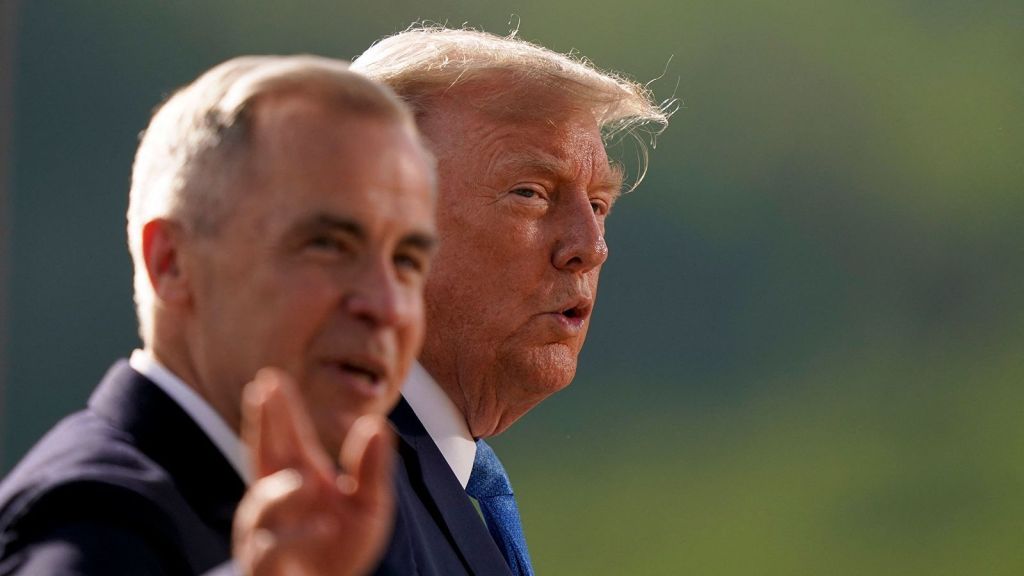
Canada will withdraw its proposed digital services tax a levy targeting online companies in an effort to revive stalled trade negotiations with the United States, the federal government announced on Sunday.
The move follows U.S. President Donald Trump’s decision on Friday to cancel ongoing trade talks, describing the tax as “a direct and blatant attack on our Country.”
“In support of those negotiations, the Minister of Finance and National Revenue, the Honourable François-Philippe Champagne, announced today that Canada would rescind the Digital Services Tax (DST) in anticipation of a mutually beneficial comprehensive trade arrangement with the United States,” the government said in a statement.

The decision comes just two days after U.S. President Donald Trump abruptly canceled bilateral trade talks, calling the tax “a direct and blatant attack on our Country.”
According to the statement, Prime Minister Mark Carney and President Trump have agreed that negotiations will resume immediately, with the goal of reaching a new trade agreement by July 21, 2025.
Trump has categorized digital services taxes as part of what he calls “non-tariff trade barriers” measures used by foreign governments, he argues, to restrict competition within their own markets, often at the expense of U.S. companies.
The Canadian Digital Services Tax was scheduled to take effect Monday, with retroactive application to revenues dating back to 2022.
Canada’s decision to cancel the measure marks a significant political win for President Trump, who frequently accuses other countries of “ripping off” the United States through unfair trade practices.
While Canada and the U.S. remain close economic partners, their relationship has been strained since Trump’s return to office in January.

The president has repeatedly threatened to impose tariffs of at least 25% on all Canadian exports, citing what he describes as persistent trade imbalances and protectionist policies.
Since returning to office, Trump has introduced a series of sweeping changes to U.S. trade policy, adjusting tariff rates not only on Canadian goods but on imports from around the world.
The rapid and sometimes unpredictable shifts have fueled uncertainty both domestically and abroad, prompting companies of all sizes to rethink their strategies for the remainder of the year.
More disruptions may lie ahead. A July 9 deadline looms for dozens of countries to finalize new trade deals with the U.S. or face “reciprocal” tariffs. While the president has the authority to extend that deadline, it remains unclear whether he intends to do so.
Invest or Donate towards HICGI New Agency Global Media Establishment – Watch video here
Email: editorial@hicginewsagency.com TalkBusiness@hicginewsagency.com WhatsApp +256713137566
Follow us on all social media, type “HICGI News Agency” .
 HICGI News Agency