
By Faith Barbara N Ruhinda Updated at 1435 EAT on Wednesday 2 July 2025
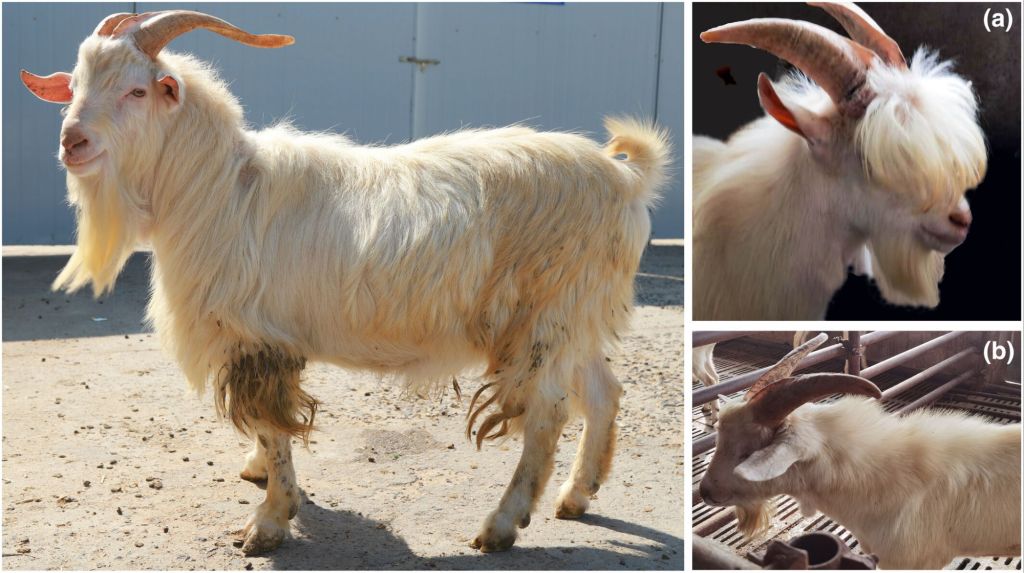
The goats, imported from Chengdu in Southwest China’s Sichuan Province, arrived at Entebbe internarional Airport on Monday.
The small herd, which includes six females, was later transported to the National Animal Genetic Resources Centre and Data Bank (NAGRC&DB), located just a few kilometers from the airport.
The goats are a hybrid of the British Nubian and the indigenous Jiang breed, combining traits of high milk yield, adaptabiliy, and disease resistence.
The goats were imported under the United Nations Food and Agriculture Organisation (FAO)-China-Uganda South-South Cooperation Project, a tripertite initiative aimed at transferring agricultural technologies and best practices from China to Uganda.
The project focuses on Crop production, aquaculture, and livestock improvement.

In support of these goals, Uganda’s Ministry of Agriculture, Animal Industry and Fisheries ( MAAIF) promotes both indigenous and exotic goat breeds.
Indigenous breeds include the Mubende. Kigezi, Small East African, Karamoja and Sebei goats, which are valued for their adaptability to local conditions.
Exotic breeds commonly found in Uganda include the Boer, savanna, Kalahari Red, saanen, and Anglo-Nubian goats.
According to sources at MAAIF, the Jianzhou Big-Eared goat has been identified as a key breed to help transform Uganda’s goat farmung sector.
Rose Ademum, the Commisioner for Animal Health at MAAIF, said the Jianzhou Big-Eared goat is a superior meat breed known for its rapid growth, high carcass yield, and adaptability to various agro-climate conditions.
Ademun madr the ramarks in an interview with Xinhua on Tuesday at the National Animal Genetic Resources Centre and Data Bank ( NAGRC&DB), where the imported goats are currently housed.

The animals will undergo a research and multilication phase to assess and expand their potential in Uganda’s livestock system.
“Beyond increasing meat ouput, the imported goats will also be used for crossbreeding with local breeds to improve ptoductivity- ultimately raising farmers’ income,” Ademun said.
Julius Twinamasiko, who leads the Ugandan team on the South-South Cooperation Project, told Xinhua that the initiative will provide farmers and extension workers with hands-on teaining in modern husbandry practices.
“Over the next five years, we plan to multiply these goats and ditribute them across the country to enhance meat production and improve livelihoods,” he said.
Invest or Donate towards HICGI New Agency Global Media Establishment – Watch video here
Email: editorial@hicginewsagency.com TalkBusiness@hicginewsagency.com WhatsApp +256713137566
Follow us on all social media, type “HICGI News Agency” .
 HICGI News Agency