
By Faith Barbara N Ruhinda Updated at 2231 EAT on Saturday 5 July 2025
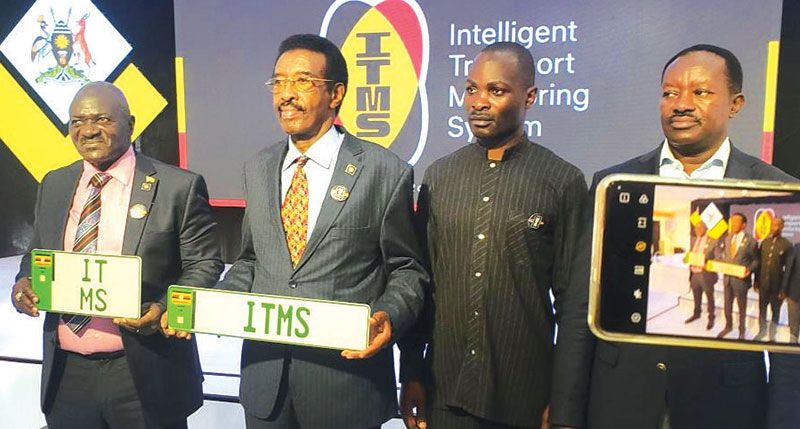
The government has been ordered to present in court key documents related to the implementation of the Intelligent Transport Monitoring System (ITMS), a nationwide vehicle tracking project being executed by Russian firm Joint Stock Company Global Security.
Justice Boniface Wamala issued the directive after a successful application by Legal Brains Trust, a public interest legal organisation led by senior counsel Isaac Ssemakadde.
The organisation, represented by advocate Stanley Okecho, filed the case under Miscellaneous Cause No. 225 of 2021, seeking transparency over the project.
The High Court has specifically ordered the government to produce, within 60 days.
The ruling marks a key development in the years-long push for public access to information about the controversial surveillance initiative.
These documents were cited in an affidavit submitted by Haji Yunus Kakande, Secretary in the Office of the President.
Legal Brains Trust asked the court to order the government not only to produce the documents but also to permit its legal team to review and copy them.
The records include the memorandum of understanding between Uganda and Joint Stock Company Global Security, outlining a feasibility study for the ITMS project, as well as the primary contract for implementing a digital monitoring and tracking system covering all motor vehicles and motorcycles in Uganda.

The system will be managed through a real-time control and monitoring centre.
They also requested access to the project’s financial model, the due diligence report, and the technical and financial capacity assessment reports referenced in the government’s affidavit.
In addition to these documents, Legal Brains Trust sought further and better particulars regarding the ITMS project including its standard operating procedures, the organisational structure of the officers overseeing its implementation, and the checks and balances established to ensure transparency and accountability.
In his submissions, advocate Stanley Okecho also requested the feasibility study report and comprehensive details of the due diligence process including its methodology, sources of funding, key findings, and the approvals it received. The application was supported by an affidavit sworn by Lynette Akankwatsa, a lawyer and case officer with Legal Brains Trust.
She stated that the government had failed to respond to earlier requests for the documents, despite their direct relevance to the case and the fact that such materials are in the government’s custody. She noted that these documents are legally required for any foreign company seeking to collect and process personal data in Uganda.
Akankwatsa further argued that disclosure of the documents would promote the fair and expeditious resolution of the main suit, facilitate meaningful pre-trial concessions, or potentially pave the way for an out-of-court settlement.
However, in its defence, the government opposed the application through an affidavit sworn by Haji Yunus Kakande, Secretary in the Office of the President.
Kakande asserted that the government had already responded to the request for particulars on August 25, 2021, and dismissed the application as a “fishing expedition.” He maintained that the requested documents were confidential, and that their disclosure would infringe on the privacy rights of the foreign investors and could potentially pose a threat to national security.

However, in his ruling, Justice Boniface Wamala held that the government’s claims of confidentiality and national security could not be verified or reasonably assessed without first examining the documents in question. He noted that no specific evidence had been presented to demonstrate how the production of the requested materials would endanger state security or violate the rights of foreign investors.
The judge emphasised that the court retains the authority to order the production of documents for inspection, even where claims of privilege or confidentiality are raised so long as the production is necessary for the fair disposal of the case or to avoid unnecessary costs.
Citing Order 10 Rule 14 and Rule 19(2) of the Civil Procedure Rules, Justice Wamala clarified that courts are permitted to inspect documents to assess the validity of such claims.
He added that where appropriate, the court can impose restrictions on access or publication to safeguard sensitive information.
Quoting Order 10 Rule 14 and Rule 19(2) of the Civil Procedure Rules, Justice Boniface Wamala observed that the court is empowered to inspect documents to assess the validity of claims of privilege or confidentiality. He further noted that the court may impose restrictions on the publication or broader access to sensitive material where necessary.
He explained that the documents in question can be produced in a controlled and secure manner strictly for inspection and use in court proceedings. No unauthorised publication or disclosure is permitted unless the court expressly allows it after considering the legitimacy of the confidentiality or privilege claims.
Justice Wamala ruled that the application had merit and allowed it in part. He ordered the government to produce the specified documents within sixty days for inspection by the court.
The production is to be for court use only, and neither party may publish or disclose the contents without prior court approval.
The judge also ruled that the costs of the application would be determined as part of the main proceedings.
Commenting on the decision, Ssemakadde’s lawyer, Stanley Okecho, welcomed the ruling:
“This is a positive step.
The court is upholding transparency as a tenet for a functioning democracy. We expect them to appeal, but we are ready to sweep out secrecy in matters touching the public purse.”
Invest or Donate towards HICGI New Agency Global Media Establishment – Watch video here
Email: editorial@hicginewsagency.com TalkBusiness@hicginewsagency.com WhatsApp +256713137566
Follow us on all social media, type “HICGI News Agency” .
 HICGI News Agency