
By Faith Barbara N Ruhinda Updated at 2322 EAT on Tuesday 15 July 2025
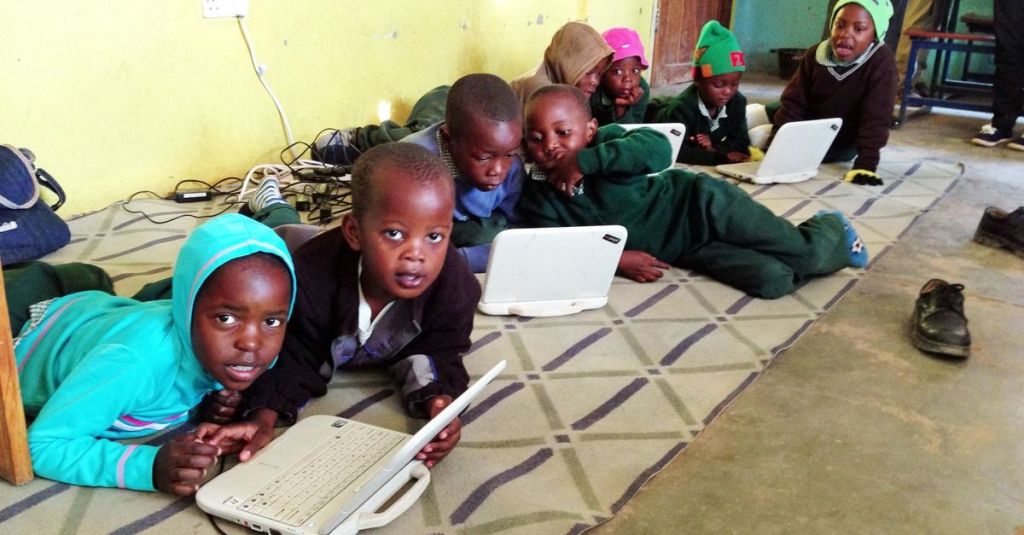
From solar-powered tablets in Malawian classrooms to Kenya’s Digital Literacy Program and Ghana’s nationwide teacher learning hubs, a quiet revolution is underway in the education systems of low-resource countries (LDCs).
At its heart is the promise that thoughtfully implemented digital courseware can bridge entrenched educational inequalities and prepare the next generation for a digital future.
A comprehensive report released in March 2025 by the mEducation Alliance and the Spix Foundation gathers insights from over 40 education officials, donors, and implementers across eight African countries.
The report offers a nuanced view of digital courseware in low-resource settings—a narrative of innovation confronting challenges, and of ambitious visions grounded in practical realities.

COVID-19 became an unlikely catalyst for change. When schools shut down in 2020, governments across Africa scrambled to adopt digital alternatives. What began as emergency responses are now evolving into long-term national education strategies.
One standout initiative is Malawi’s Building Education Foundations through Innovation and Technology (BEFIT) program. Funded by a $15.2 million grant from the Global Partnership for Education, BEFIT is rolling out digital courseware across all primary schools.
Its multi-modal approach—combining online, offline, on-air, mobile, and printed materials—aims to ensure no learner is left behind.
Tanzania, The Gambia, and Liberia are also harnessing partnerships with organizations such as Imagine Worldwide, ProFuturo, and CEMASTEA to advance digital education.
These collaborations focus not just on providing devices, but also on building capacity—through teacher training and the deployment of digital science labs—ensuring that education reform is holistic and sustainable.
A common thread across these initiatives is the shift from passive content consumption to interactive, learner-centered education. Adaptive platforms are now personalizing learning pathways, tailoring content to each student’s pace and level. Importantly, offline-first solutions—such as low-cost Raspberry Pi units in Malawi and preloaded SD cards in The Gambia—are enabling digital learning to thrive even in areas with limited or no internet connectivity.

In Kenya, the Alice Ngunzu Digital Labs—a Mastercard-backed initiative—is offering free science simulations to secondary school learners. Similarly, Ghana’s Online Gambia Project and Tanzania’s use of digital game-based learning tools demonstrate that edtech can flourish even in low-connectivity environments.
In Liberia, Tanzania, and Nigeria, ProFuturo’s professional development program has trained over 15,000 teachers, equipping them with practical skills to integrate digital tools into everyday classroom instruction.
In Kenya, online platforms such as Elimika and the TSC Teacher Professional Development (TPD) program are helping educators build 21st-century competencies. Complementing these efforts, the INCREASE program by VVOB in Kenya combines in-person workshops with app-based training to strengthen the leadership and digital management skills of school leaders.
The promise of data-driven learning is beginning to take shape in places like Kenya’s Embu County, where EIDU’s real-time analytics are helping inform both policy decisions and classroom strategies.9
In The Gambia, education officials are developing systems that use institutional local area networks (LANs) to deliver secure educational content—without depending on internet connectivity.
Yet challenges persist. Many digital platforms remain fragmented, and the lack of interoperability across tools and devices continues to hinder large-scale adoption.
Open-source solutions are gaining traction as a promising way to reduce costs and enable local customization. However, they also highlight the urgent need for sustainable financing models to ensure long-term success.
What does ideal digital courseware look like?
According to the report, effective digital learning tools share a set of key characteristics:
- Hybrid – designed to complement, not replace, teachers.
- Offline-first – ensuring access even in the most remote or low-connectivity areas.
- Inclusive – accommodating learners with disabilities and supporting instruction in local languages.
- Free or low-cost – made possible through open educational resources (OERs).
- Safe – with strong data protection, no advertising, and a focus on learner well-being.
Global initiatives like UNESCO’s Gateways to Public Digital Learning and the ProFuturo Digital Library are setting important benchmarks. However, local governments increasingly seek greater control over content and delivery. For example, The Gambia is exploring a centralized content delivery system managed via a secure VPN, overseen by a single provider to ensure both accessibility and data security.
Invest or Donate towards HICGI New Agency Global Media Establishment – Watch video here
Email: editorial@hicginewsagency.com TalkBusiness@hicginewsagency.com WhatsApp +256713137566
Follow us on all social media, type “HICGI News Agency” .
 HICGI News Agency