
By Faith Barbara N Ruhinda at 1540 EAT on Monday 18 August 2025
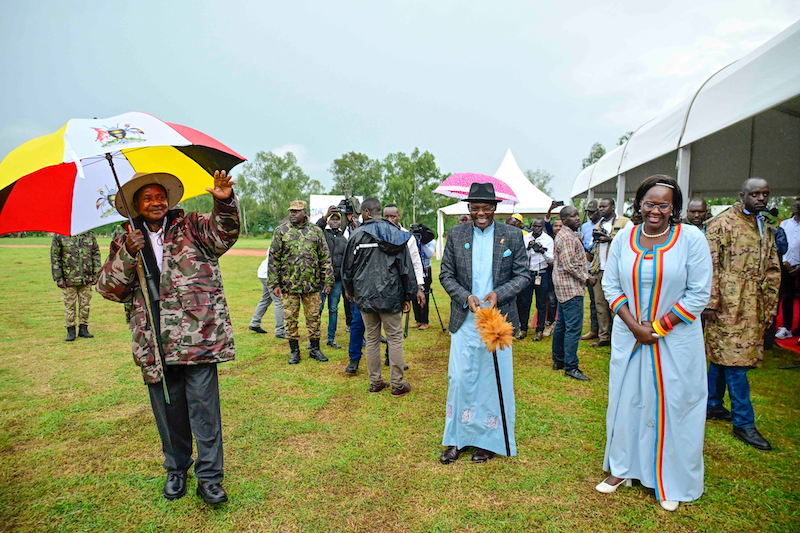
President Yoweri Museveni has ruled out direct compensation for losses suffered during past insurgencies, stating that such restitution is neither feasible nor supported under international norms.
Speaking during a meeting with leaders in Soroti City, President Yoweri Museveni likened the impact of war to a natural disaster, stating, “We cannot compensate for war; it’s a natural occurrence, like an earthquake.”
He acknowledged that while wars often stem from poor political decisions, governments cannot afford to pay direct reparations for the resulting destruction. Instead, Museveni said his administration would focus on restocking and rehabilitation programs to support affected families.
As a potential solution, the President proposed a flat-rate compensation model, suggesting that the Shs 169 billion allocated for the Teso sub-region could be distributed equally—translating to approximately Shs 7 million per household.

To guide the process, Museveni tasked Vice President Jessica Alupo and the Ministry of Teso Affairs with consulting widely among community stakeholders—including elders, youth, and women—and reporting back within a month.
He emphasized that the goal is to rehabilitate families and help them restock so that the available resources benefit everyone fairly.
The issue of cattle compensation has re-emerged as a key political flashpoint in the Teso sub-region, with opposition parties—including the Forum for Democratic Change (FDC) and the National Unity Platform (NUP)—mobilizing supporters under the slogan “No cow, no vote.” The campaign has heightened pressure on the ruling National Resistance Movement (NRM) to address long-standing grievances over war-time losses.
Bosco Okiror, MP for Usuk County and chairperson of the Teso Parliamentary Group, criticized the government’s handling of the compensation process, citing a lack of transparency and inclusivity. He argued that while much of the focus has been on cattle, many victims of torture, displacement, and other war-related atrocities have been left out of the conversation.
Bosco Okiror, MP for Usuk County, has called on President Museveni to intervene in long-pending compensation cases—some dating back to 1962—urging the government to consider out-of-court settlements. He noted that, so far, only the Teso Animals and Property Compensation Organization (TAPCO) has received any significant attention.

Katakwi Resident District Commissioner (RDC) Stephen Ilemukorit echoed the concerns, warning that the delays are being weaponized by opposition parties during election campaigns.
“Every election season, the opposition uses cattle compensation to attack the NRM, and the people become more disillusioned,” he said.
Concerns over corruption and mismanagement continue to plague the government’s cattle compensation program in the Teso sub-region. Teddy Acam, a National Resistance Movement (NRM) mobilizer in the area, revealed that some intended beneficiaries receive less than their rightful allocation due to kickbacks.
“If you’re entitled to Shs 10 million, you might only receive Shs 9 million because someone else takes a cut,” Acam said.
She also lamented that many claimants have died before receiving any payments, while their families face complex bureaucratic hurdles when seeking to access the compensation owed to them.
Deputy Attorney General Jackson Kafuuzi confirmed that since the program’s inception in 2021, the government has disbursed Shs 200 billion, benefiting around 28,000 claimants. However, he acknowledged that funding shortfalls brought the program to a halt in 2022 and 2023. Although payments resumed in 2024, several complications persist, including bounced transactions due to deceased account holders and errors such as minors being listed as beneficiaries.
Vice President Jessica Alupo admitted the political sensitivity of the issue, noting that Teso residents are eager to see it resolved once and for all. She emphasized the region’s identity as both cattle keepers and cultivators, stressing that fair compensation is essential—not only for restoring livelihoods but also for maintaining political stability.
As President Museveni shifts focus toward rehabilitation rather than direct reparations, the government faces increasing pressure to ensure transparency, rebuild public trust, and deliver a credible resolution that avoids stoking further political unrest in the region.
Invest or Donate towards HICGI New Agency Global Media Establishment – Watch video here
Email: editorial@hicginewsagency.com TalkBusiness@hicginewsagency.com WhatsApp +256713137566
Follow us on all social media, type “HICGI News Agency” .
 HICGI News Agency