
By Faith Barbara N Ruhinda at 1056 EAT on Monday 25 August 2025
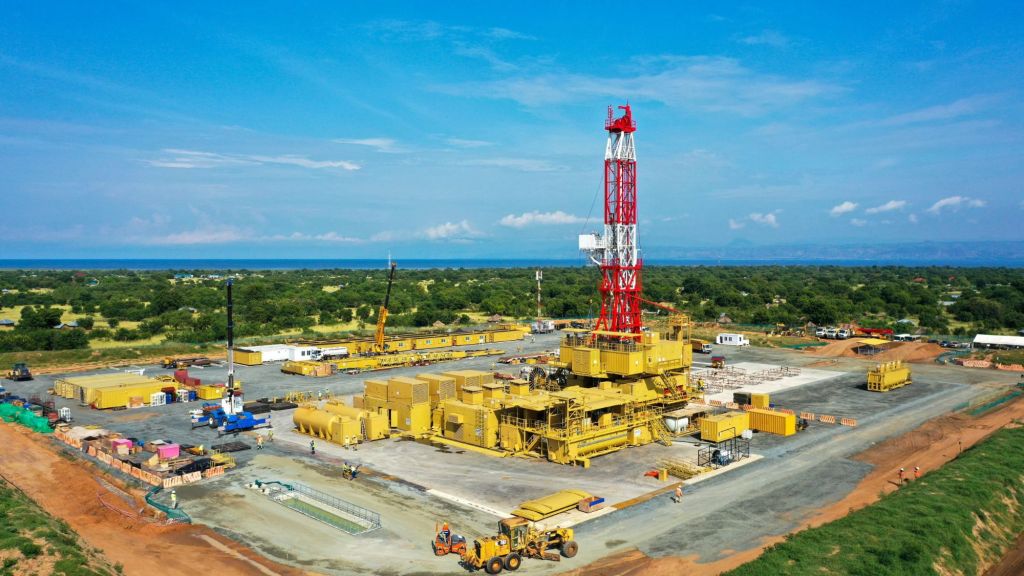
“Uganda has moved a step closer to producing its first oil, following the successful drilling of 15 wells by CNOOC Uganda Limited at the Kingfisher oil field in Kikuube District.”
“With only 16 wells remaining before full-scale production, the milestone marks a clear sign of Uganda’s readiness to enter the oil production era.”
Dennis Mulondo, a geologist at CNOOC Uganda Limited, outlined the technical progress behind the ongoing drilling operations, emphasizing the scale and structure of the project.
“Our onshore drilling operations will consist of 31 wells constructed across four well pads,” Mulondo explained. “Of these, 20 will be production wells, while the remaining 11 will serve as water injectors.”
“The purpose of the injectors is to pump water into the reservoir, which increases pressure and pushes the oil toward the production wells—ultimately boosting output,” he explained.

He also highlighted key infrastructure developments that will support crude oil handling once production begins.
“We have established a lake water upstream station, which will draw substantial volumes of water from the lake to support operations, including water injection,” Mulondo added.
“We have flowlines connecting the four well pads to the Central Processing Facility (CPF),” he said. “When oil is produced, it comes mixed with sand, water, and gas. At the CPF, we separate out the sand and water, leaving only crude oil, which is then pumped through an eight-kilometre pipeline to Kabaale.”
Despite the significant progress, Mulondo emphasized that actual oil production cannot commence until the necessary export and refining infrastructure is fully in place.
“The 15 wells we’ve drilled are sufficient—we needed these to be ready for first oil, and from a development standpoint, we are prepared to produce,” he said. “However, the East African Crude Oil Pipeline (EACOP) is not yet ready, and the government places significant importance on the refinery, which is also still under development.”
He added that President Yoweri Museveni is particularly invested in ensuring that not all of Uganda’s crude is exported unprocessed.
“The President is very clear—he doesn’t want all the oil to leave the country in raw form. So until both the EACOP and the refinery are completed, we cannot begin production. The wells are ready, but without transport or refining capacity, oil cannot flow.”
Ernest Rubondo, Executive Director of the Petroleum Authority of Uganda, highlighted the significance of the progress made at the Kingfisher project.
“The Kingfisher development is planned to have a total of 31 wells, and CNOOC Uganda Limited is making strong progress,” Rubondo said. “To commence production, they need about 17 wells. Having already drilled 15, you can see how close they are to being ready. The remaining wells will continue to be drilled even after production has started.”

Ernest Rubondo, Executive Director of the Petroleum Authority of Uganda, praised the cooperation of local communities in advancing oil development efforts, while cautioning against the spread of misinformation.
“The company has worked very well with the community, and I want to thank the residents for their continued support,” Rubondo said. “The only challenges have come from a few civil society organizations funded by foreign entities. However, the communities have recognized these efforts and remain supportive of the project.”
On the export front, the East African Crude Oil Pipeline (EACOP) remains the critical link to international markets. John Bosco Habumugisha, Deputy Managing Director of EACOP, provided reassurance on the pipeline’s progress.
“We are building an intelligent, innovative, and sustainable pipeline system powered entirely by green energy,” he noted. “We are using only hydropower—Uganda will supply power through UETCL, while Tanzania will supply through TANESCO.”
Habumugisha also emphasized EACOP’s commitment to responsible development. “We are working closely with communities to ensure we contribute to sustainable development in all areas we operate. By the second half of next year, we expect the pipeline to be complete. That’s when we can talk about delivering Uganda’s first oil to the global market.”
Derrick Jonathan Mbabazi, National Content Manager for the EPC III Project, highlighted Uganda’s growing participation in the oil and gas sector through local content.
“National content refers to the extent to which Ugandan citizens, resources, and companies participate in the oil and gas industry,” Mbabazi explained. “We are committed to our obligations, particularly in employing Ugandans. Over 2,000 Ugandans have been employed on the Central Processing Facility, including 500 from surrounding communities. Many have received training and certification in trades such as welding and scaffolding.”
With 15 of the required 17 wells already drilled at the Kingfisher oil field, Uganda is drawing closer to achieving first oil—an ambitious milestone nearly two decades in the making since oil was first discovered in 2006.
The final step now hinges on the completion of two major pieces of infrastructure: the 1,443-kilometre EACOP pipeline and the planned refinery at Kabaale. Once operational, these will enable Uganda not only to export crude oil to international markets via Tanzania’s coast, but also to process some of it domestically—laying the foundation for a new era in the country’s energy and economic landscape.
Invest or Donate towards HICGI New Agency Global Media Establishment – Watch video here
Email: editorial@hicginewsagency.com TalkBusiness@hicginewsagency.com WhatsApp +256713137566
Follow us on all social media, type “HICGI News Agency” .
 HICGI News Agency