
Updated by Faith Barbara N Ruhinda at 1247 EAT on Tuesday 16 September 2025
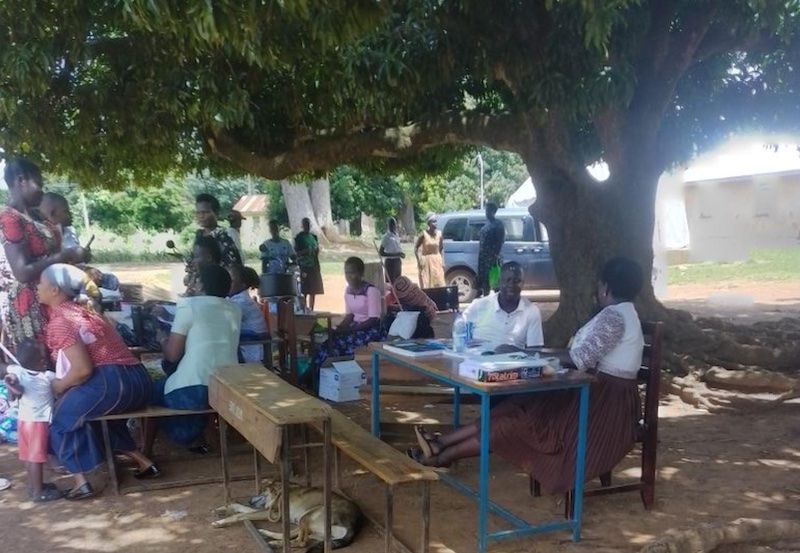
Classrooms across Soroti City remained eerily silent as the third term of the school year began, with teaching activities stalled due to an ongoing strike.
The start of third term in Soroti City was anything but normal, as classrooms stood empty and the usual rhythm of school life gave way to confusion and uncertainty.
At Pioneer Primary School, the head teacher’s and deputy’s offices were locked shut. With no teachers in sight, children wandered aimlessly around the compound, while parents waited outside—torn between hope and hesitation, unsure whether to leave their children or take them back home.
The disruption comes just as schools began welcoming learners for the third term. The Uganda National Teachers’ Union (UNATU) directed teachers nationwide to lay down their tools starting September 15, 2025, in protest over long-standing salary disparities that have plagued the education sector for years.

“We brought our children ready for lessons, only to find no teachers in class,” said John Obuin, a concerned parent.
Obuin expressed worry that while government schools are paralyzed by the strike, private schools have resumed normal learning. He fears that if the situation persists, pupils under the Universal Primary Education (UPE) program will be left behind—particularly troubling given that this is a critical academic term.
Obuin also voiced concern over the safety and welfare of the pupils, noting that non-teaching staff were left to register children in the absence of trained educators.
“Who is responsible for our children’s safety when the professionals we rely on are missing?” he asked.
Similar fears were shared by another parent, Pius Akol, who showed up hoping to speak with the head teacher—only to find the office locked.
“We’re deeply worried, especially for the girls who are left roaming the school grounds unsupervised,” Akol said. “The government must step in and resolve this immediately. We pay taxes—where is that money going?”

At Soroti Islamic Primary School, head teacher Moses Oyara explained that his teaching staff had initially reported for duty and even commenced lessons. However, they later received a formal directive from UNATU instructing them to join the nationwide industrial action and return home.
“A teacher with a bachelor’s degree earns about Shs 400,000. Meanwhile, a Member of Parliament with only a senior six education earns over Shs 40 million. The government finds money for politics, but not for classrooms. How do we survive as living costs continue to rise?” asked Moses Oyara, head teacher of Soroti Islamic Primary School.
Adding to the frustration is a government directive requiring all teachers to hold bachelor’s degrees—a policy that has sparked outrage among educators who argue that their current salaries can barely meet basic needs, let alone fund further education.
James Osekel, head teacher of Soroti Demonstration Primary School, said he faced a similar challenge. With 1,232 pupils enrolled and no teachers present, he had to assign the school bursar—a non-teaching staff member—to manage pupil registration.

“Parents kept bringing children even as teachers were leaving. The start of our term is already compromised,” said one school administrator, speaking to The Observer.
Soroti City education officer Michael Oguya confirmed that while many teachers initially reported for duty, they walked out once the strike was officially declared. He warned that the industrial action would disproportionately affect learners in the Universal Primary Education (UPE) and Universal Secondary Education (USE) programs—especially since private schools have resumed lessons uninterrupted.
This is not the first time Uganda’s education sector has faced such disruption. Earlier this year, the Uganda Professional Humanities Teachers’ Union staged a week-long strike, which was suspended after President Yoweri Museveni promised phased salary enhancements and tax relief.
However, many of those promises remain unfulfilled. According to the Ministry of Public Service, significant salary disparities persist: graduate science teachers earn a gross monthly salary of approximately Shs 4 million, while their arts counterparts take home as little as Shs 672,000.
Bridging that wage gap for over 17,000 arts teachers would cost the government an estimated Shs 509 billion annually—a figure the Ministry of Finance has so far deemed fiscally unsustainable.
Invest or Donate towards HICGI New Agency Global Media Establishment – Watch video here
Email: editorial@hicginewsagency.com TalkBusiness@hicginewsagency.com WhatsApp +256713137566
Follow us on all social media, type “HICGI News Agency” .
 HICGI News Agency