
Updated By Faith Barbara N Ruhinda at 1443 EAT on Monday 10 November 2025
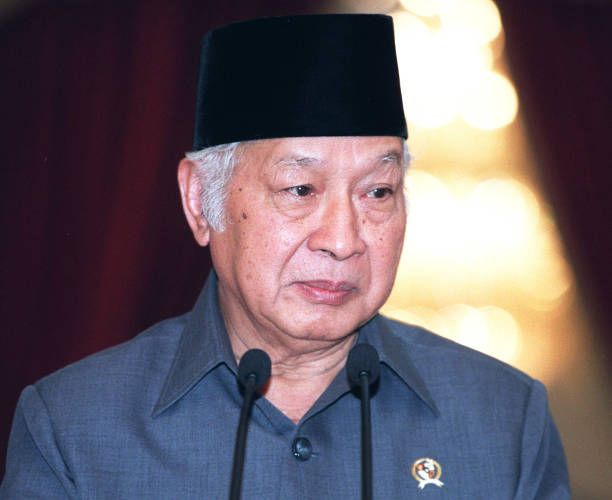


Indonesia has posthumously named former President Suharto a national hero, a decision that has reignited debate over his legacy and the human rights abuses committed under his rule.
Suharto was among 10 figures granted the nation’s highest civilian honor on Monday. The award was approved by President Prabowo Subianto — Suharto’s former son-in-law — prompting criticism from activists and academics who argue the move whitewashes one of Indonesia’s darkest political eras.

Suharto, who ruled Indonesia for more than three decades until his fall from power in 1998, is accused of overseeing widespread human rights violations, including mass killings in the 1960s, as well as systemic corruption and nepotism that shaped his authoritarian regime.
The award, presented during Indonesia’s National Heroes Day ceremony, places Suharto among more than 200 figures who have received the nation’s highest civilian honor — a list that includes Sukarno, the leader of Indonesia’s independence movement and its first president.
“A prominent figure from Central Java and a hero of the independence struggle, General Suharto distinguished himself since the early years of the republic,” the presidential military secretary said as President Prabowo Subianto handed the award to Suharto’s daughter, Siti Hardiyanti Rukmana, and his son, Bambang Trihatmodjo.

Each year, the National Hero title is conferred on Indonesians recognized for making significant contributions to the country’s independence, unity, and development.
Suharto, who died in 2008 at the age of 86, ruled Indonesia with an iron hand for more than three decades after taking power from Sukarno in 1967 following a failed coup attempt. His rule, often referred to as the “New Order,” was marked by rapid economic growth but also by widespread human rights abuses, corruption, and suppression of dissent.
Indonesia declared independence in 1945, following centuries of Dutch colonial rule and a brief Japanese occupation during World War II.

The former general relied on the military to tighten control over civilian life and suppress dissent. His rule was also marred by allegations of widespread corruption and nepotism that enriched his family and close associates.
Last week, around 500 members of civil society groups, activists, and academics signed an open letter to President Prabowo Subianto urging him not to grant Suharto the national hero title.
The letter described the award as a betrayal of Suharto’s victims and of Indonesia’s democratic values, warning that it represented a dangerous distortion of history.
Critics also view the decision as a troubling sign for the current administration, which they say is dominated by figures who prospered under Suharto’s rule.
Prabowo, a former special forces commander under Suharto and once married to the late president’s daughter, has long faced accusations of human rights abuses in East Timor — allegations he has denied.
Since his sweeping electoral victory last year, Prabowo has also faced sporadic protests over economic inequality and growing public anger toward government spending and privileges for lawmakers.

The Commission for the Disappeared and Victims of Violence (KontraS), a local human rights group, condemned the decision to name former President Suharto a national hero, calling it immoral and a move that helps normalise impunity.
“Suharto, as someone suspected of involvement in human rights violations, state violence, and other offences, does not deserve to be awarded the title of national hero,” KontraS coordinator Dimas Bagus Arya told the AFP news agency.
Defending the decision, State Secretary Prasetyo Hadi said the government was honouring the contributions of past leaders.
“It is part of how we honour our predecessors, especially our leaders, who undoubtedly have made extraordinary contributions to the nation and the country,” he told reporters.
The other nine individuals awarded the national hero title this year include slain labour activist Marsinah and former President Abdurrahman Wahid, who died in 2009.
Source: Aljazeera
Invest or Donate towards HICGI New Agency Global Media Establishment – Watch video here
Email: editorial@hicginewsagency.com TalkBusiness@hicginewsagency.com WhatsApp +256713137566
Follow us on all social media, type “HICGI News Agency” .
 HICGI News Agency