
Updated by Faith Babara N Ruhinda at 1137 EAT on Wednesday 19 November 2025

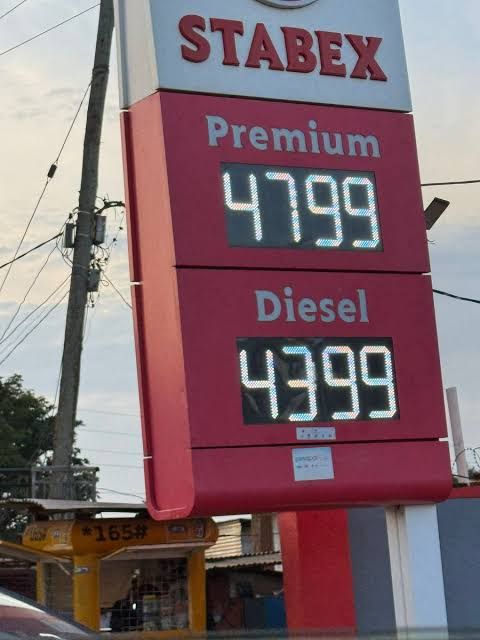


Across Africa, a litre of petrol can mean the difference between feeding a family, keeping markets open, or earning a day’s wage. In Libya, it costs less than a bottle of water. In Uganda, the same litre can swallow an entire day’s pay.
The contrast exposes a continent living in two economic realities: one cushioned by oil wealth and subsidies, the other hammered by imports, weak currencies, and global shocks. In Tripoli, a taxi driver tops up for barely the price of a cup of tea. Ten hours south, in DR Congo’s Goma, a motorcyclist carefully counts every kilometre, aware that fuel can cost more than a day’s earnings.

Two men live on the same continent, but their daily realities could not be more different. In Libya, petrol costs just $0.028 per litre — about Shs 100 — making it the cheapest in Africa, according to Global Petrol Prices.
In the Democratic Republic of Congo, the same litre sells for $1.039 (Shs 3,700), roughly 37 times higher. In East Africa, where millions depend on fuel for transport, food delivery, and basic survival, prices soar even further: Shs 4,950–5,060 in Uganda, nearly Shs 4,900 in Rwanda, and Shs 4,888 in Kenya.
Fuel is not merely a commodity; it is a lens through which to see Africa’s economic divides. It exposes the strain on households, the difficult choices facing governments, and the fragile balance between movement and stagnation that defines everyday life across the continent.
Libya’s ultra-cheap fuel is no mystery. Massive subsidies and abundant crude reserves keep prices artificially low.
“Libya is one of the few countries where fuel prices have barely moved in a decade,” said an energy economist in Cairo. “The state absorbs the shock.”
But that model comes at a cost: fuel smuggling, subsidy fraud, and deep distortions in the economy. Libya spends billions each year to maintain what many consider politically essential cheap fuel.
By contrast, Uganda, Kenya, and Rwanda, which lack functional refineries, import nearly all their fuel from global markets. The result is predictable: higher prices driven by shipping costs, international crude prices, insurance, taxes, and increasingly, the strength of local currencies. Over the past three years, Uganda and Kenya have experienced some of the sharpest fuel price spikes in the region, fueled both by global market shocks and currency depreciation.

“Uganda’s fuel price is not just about oil,” said a Kampala-based macroeconomist. “It’s also about the shilling. When you import everything, your currency becomes your biggest vulnerability.”
The Nigeria Paradox
Nigeria, Africa’s largest oil producer, occupies an awkward middle ground. At $0.586 per litre (around Shs 2,000), fuel is relatively affordable — but far from the bargain prices many expect from an oil giant.
The gap reflects Nigeria’s recent reliance on imported fuel due to a lack of functioning refineries. That may soon change. With the new Dangote refinery set to begin large-scale production, analysts predict a dramatic shift in prices.
“If Dangote hits full capacity, you could see Nigeria move into the top three cheapest countries,” said a West African energy analyst.

“It could transform West Africa’s fuel landscape,” analysts say. If Nigeria begins supplying refined fuel to the region, the ripple effects could be far-reaching, affecting everything from inflation in Ghana to transport fares in Benin.
Tunisia, Liberia, and Ethiopia, each with petrol prices hovering near Shs 3,000 per litre, fall into a different category: struggling economies burdened by debt, IMF restructuring, subsidy cuts, and currency instability.
“Fuel subsidies are politically seductive but economically dangerous,” an African Development Bank official told The Observer. “Remove them suddenly, and you have riots. Keep them too long, and you sink the economy. There is no easy path.”
East Africa: The Most Expensive Neighbourhood
Nowhere is the strain more visible than in East Africa. In Tanzania, petrol costs about $1.14 per litre (Shs 4,000). In Rwanda, nearly Shs 4,900. In Kenya, Shs 4,888. Uganda tops the region, paying between Shs 4,950 and 5,060, making it one of Africa’s highest-priced countries for fuel.
Invest or Donate towards HICGI New Agency Global Media Establishment – Watch video here
Email: editorial@hicginewsagency.com TalkBusiness@hicginewsagency.com WhatsApp +256713137566
Follow us on all social media, type “HICGI News Agency” .
 HICGI News Agency