
Updated by Eric Kikomeko at 1505 EAT on Monday 1 December 2025


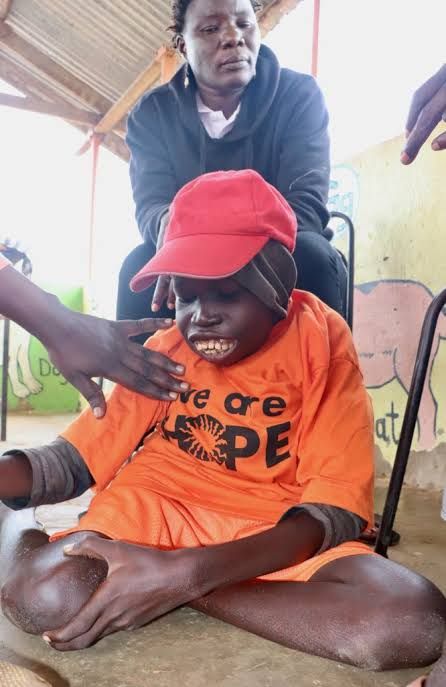
Residents of Northern Uganda have accused the government of downplaying the ongoing crisis of Nodding Syndrome (NS), a debilitating condition that continues to devastate families and strain communities.
Unlike other epidemics such as HIV/AIDS, Nodding Syndrome receives limited attention, insufficient funding, and inadequate healthcare support. Cases persist in Pader, Kitgum, and Omoro districts, leaving families struggling with both illness and poverty.
In September 2025, Pader district health officer Dr Benson Oyoo reported 1,359 NS patients in the district, including 562 with severe forms of the disease.

“The disease places a heavy burden directly on households and the wider community,” Oyoo said, noting that some aggressive patients further intensify the strain on their caregivers.
Joe Otoo, Nodding Syndrome coordinator in Labongo-Akwang, Kitgum district, who first documented the condition in 1999, has criticized the stark disparity in public health responses.
“While diseases like COVID-19 were quickly addressed, Nodding Syndrome remains neglected to this day,” he said.

Otoo noted that tracking cases is challenging, as patients rely solely on epilepsy medication for relief. Dickson Ojok, a district councillor for Angagura sub-county, added that no patients have fully recovered, with numbers “reducing only through death.”
Both called attention to the absence of specialized care centres and urged urgent government intervention, insisting that Nodding Syndrome be treated as a public health emergency.
The contrast between the government’s response to HIV/AIDS and Nodding Syndrome (NS) is stark. While the HIV response is well-funded and data-driven, leading to a decline in adult prevalence to 4.9% nationally by 2024, NS continues to be largely neglected.

Walter Okumu, a village chairperson in Ogom, described harrowing scenes in affected communities, where patients—particularly girls—struggle with hunger or are tied to trees to prevent seizures. Few adhere to medication schedules, none attend school, and some communities isolate victims.
Local leaders have also criticized the lack of transparency in the use of NS funds. “Unlike HIV patients, many families have given up, some even wish their children would die to end the suffering,” said Tabu Ojok, Ajan sub-county chairperson.
Research and setbacks
Studies suggest a link between NS and Onchocerca volvulus, the parasite responsible for river blindness. The World Health Organization describes NS as a neurological disorder, first documented in Tanzania in the 1960s and later in Northern Uganda in 2007.

Minister Ruth Aceng highlighted government efforts to eliminate onchocerciasis but noted challenges posed by cross-border movement of refugees carrying the parasite. Researchers also point to potential autoimmune reactions, though the disease remains geographically restricted, suggesting local environmental or genetic factors may play a role.
The SOFSUNS project, run by Caritas, provided vocational skills training to a small number of children affected by Nodding Syndrome, but most were forced to drop out due to frequent seizures. Community leaders are now calling for the restoration of specialized treatment centres.

Desperation has driven some families to turn to unproven methods, including witch doctors, raising concerns about exploitation. Authorities warn that without proper medical services, more vulnerable families risk being misled.
Health expert Ocaya emphasized the urgent need for updated data, further research, and comprehensive support for affected communities.
Reporting by The Observer.
Invest or Donate towards HICGI New Agency Global Media Establishment – Watch video here
Email: editorial@hicginewsagency.com TalkBusiness@hicginewsagency.com WhatsApp +256713137566
Follow us on all social media, type “HICGI News Agency” .
 HICGI News Agency