
Updated by Faith Barbara N Ruhinda at 1302 EAT on Tuesday 2 December 2025
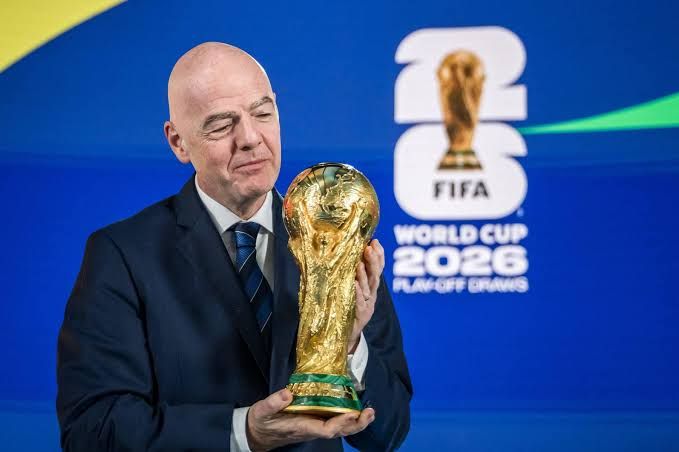
The FIFA World Cup draw is a quadrennial moment that can shape far more than group assignments — it often sets the tone for a nation’s confidence heading into football’s most prestigious global tournament.
The 2026 edition, hosted jointly by the United States, Canada and Mexico, will feature a record 48 teams. This year’s draw introduces several new elements designed to better separate the contenders from the hopefuls, adding fresh intrigue to an already expanded format.

When and where is the FIFA World Cup 2026 draw?
The draw will take place at the John F. Kennedy Center for the Performing Arts in Washington, DC, on Friday, December 5, beginning at 12 p.m. local time (17:00 GMT).
How does the World Cup draw work?
The process starts with Pot 1, where the 12 seeded teams — determined by FIFA — will be assigned to Groups A through L. The seeded nations include:
Top four in the FIFA rankings: Spain, Argentina, France and England
Next five top-ranked teams: Belgium, Brazil, Germany, the Netherlands and Portugal

Host-nation seeds: Canada, Mexico and the United States
The draw will then proceed sequentially through Pots 2, 3 and 4, FIFA said.
Six World Cup berths remain open and will be decided in March during the playoffs, which feature 22 teams still battling for qualification.
Italy — four-time world champions and currently 12th in the FIFA rankings — must navigate the playoffs and, if they qualify, could be placed as low as Pot 4.
Among the confirmed entrants, debutants Uzbekistan are in Pot 3, while fellow first-timers Jordan, Cape Verde and Curaçao have been placed in Pot 4.

Each nation’s name is printed on a slip of paper, folded, and placed inside a numbered plastic ball — from 1 to 4 — corresponding to its assigned pot.
Draw representatives mix the balls in large glass bowls — or “pots” — before selecting one ball at a time from each to complete the groups.
The three host nations already have predetermined positions: Mexico will lead Group A, Canada Group B, and the United States Group D.
The remaining nine top-seeded nations will be allocated across the other nine groups — C, E, F, G, H, I, J, K and L — ensuring each begins in a separate section of the draw.

For the other 36 teams, placement is governed by several rules designed to balance the field:
No group may contain more than one team from the same confederation.
UEFA is the lone exception: with 16 European teams in the field, up to two may be drawn into the same group.
When can the top seeds meet?
The 2026 draw uses a tennis-style seeding system that places the four highest-ranked teams — Spain, Argentina, France and England — into separate quadrants of the knockout bracket. According to FIFA, if all four win their respective groups, they cannot meet until the semifinals.
That means defending champions Argentina, led by Lionel Messi and ranked No. 2, and top-ranked Spain, the reigning European champions spearheaded by Lamine Yamal, would be kept apart until a potential final at MetLife Stadium near New York.
Forty-two of the 48 teams have already secured their places at the 2026 World Cup, with the final six berths to be decided in March 2026.

On Friday, teams will be randomly drawn from four pots and assigned to one of the 12 groups:
Pot 1: Canada, Mexico, United States, Spain, Argentina, France, England, Brazil, Portugal, Netherlands, Belgium, Germany
(Three host nations and nine top-seeded teams)
Pot 2: Croatia, Morocco, Colombia, Uruguay, Switzerland, Japan, Senegal, Iran, South Korea, Ecuador, Austria, Australia
Pot 3: Norway, Panama, Egypt, Algeria, Scotland, Paraguay, Tunisia, Ivory Coast, Uzbekistan, Qatar, South Africa
Pot 4: Jordan, Cape Verde, Ghana, Curaçao, Haiti, New Zealand, European playoff winners A, B, C and D, and Intercontinental playoff winners 1 and 2
Alavi told Al Jazeera that the federation had contacted FIFA and was hopeful the governing body could help resolve the issue.
The administration of former US President Donald Trump announced in June a travel ban affecting citizens from 12 countries, including Iran. At the time, officials said exemptions would be granted for “any athlete or member of an athletic team, including coaches, persons performing a necessary support role, and immediate relatives, traveling for the World Cup, Olympics, or other major sporting event as determined by the secretary of state.”
Invest or Donate towards HICGI New Agency Global Media Establishment – Watch video here
Email: editorial@hicginewsagency.com TalkBusiness@hicginewsagency.com WhatsApp +256713137566
Follow us on all social media, type “HICGI News Agency” .
 HICGI News Agency