
Updated by Eric Kikomeko at 1415 EAT on Wednesday 10 December 2025
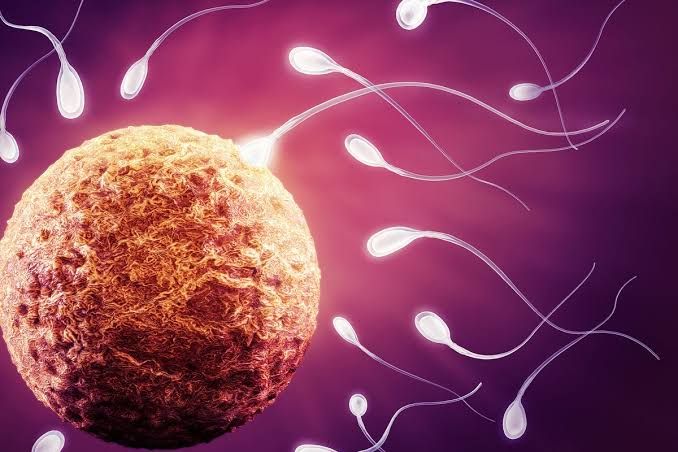

A sperm donor who unknowingly carried a genetic mutation that significantly increases the risk of cancer has fathered at least 197 children across Europe, according to a major investigation.
Several of the children have already died, and experts warn that only a small proportion of those who inherit the mutation are likely to avoid developing cancer during their lifetimes.
The sperm was not distributed to UK clinics, but the BBC confirmed that a “very small” number of British families — who have since been notified — used the donor’s sperm while undergoing fertility treatment in Denmark.

Denmark’s European Sperm Bank, which supplied the samples, said it extended its “deepest sympathy” to affected families and acknowledged that the donor’s sperm had been used to produce too many children in certain countries.
The investigation was carried out by 14 public service broadcasters, including the BBC, as part of the European Broadcasting Union’s Investigative Journalism Network.
The donor was an anonymous man who began giving sperm as a paid student in 2005. His samples were used in fertility treatments for roughly 17 years.

Although healthy and able to pass standard donor screening, a spontaneous mutation had occurred in some of his cells before birth. The mutation affected the TP53 gene, which plays a critical role in preventing cells from becoming cancerous.
While most of the donor’s cells do not contain the harmful variant, up to 20% of his sperm do. Any child conceived from sperm carrying the mutation inherits it in every cell of their body.
The condition, known as Li-Fraumeni syndrome, carries up to a 90% lifetime risk of developing cancer — often in childhood — as well as a heightened risk of breast cancer later in life.

“It is a dreadful diagnosis,” Prof Clare Turnbull, a cancer geneticist at the Institute of Cancer Research in London, told the BBC. “It’s a very challenging diagnosis to land on a family; there is a lifelong burden of living with that risk. It is clearly devastating.”
Those with the syndrome require intensive, regular monitoring, including annual whole-body and brain MRI scans, along with abdominal ultrasounds, to detect tumours as early as possible. Many women also choose preventive mastectomies to reduce their cancer risk.
The European Sperm Bank said the “donor himself and his family members are not ill” and that the mutation is “not detected preventatively by genetic screening.” The bank said the donor was “immediately blocked” once the issue with his sperm was identified.

Children have died
Doctors treating children with cancers linked to the donor’s sperm raised the alarm earlier this year at the European Society of Human Genetics conference. They reported identifying 23 children with the mutation out of 67 known cases at the time, ten of whom had already been diagnosed with cancer.
Freedom of Information requests and interviews with doctors and families now indicate that the number of children conceived with the donor’s sperm is far higher. At least 197 children have been identified, although the final figure may be higher as data from some countries is still unavailable.
It also remains unclear how many of these children inherited the dangerous genetic variant.
Dr Edwige Kasper, a cancer geneticist at Rouen University Hospital in France who presented the initial findings, told the investigation: “We have many children who have already developed a cancer. We have some children who have developed two different cancers, and some of them have already died at a very early age.”
Céline — not her real name — is a single mother in France whose daughter, conceived with the donor’s sperm 14 years ago, carries the mutation. She received a call from the Belgian fertility clinic that treated her, urging her to have her daughter screened.

She says she bears “absolutely no hard feelings” toward the donor but insists it was unacceptable that she was given sperm “that wasn’t clean, that wasn’t safe, that carried a risk.”
Céline says the threat of cancer will hang over them indefinitely. “We don’t know when, we don’t know which one, and we don’t know how many,” she says. “I understand there’s a high chance it’s going to happen, and when it does, we’ll fight — and if there are several, we’ll fight several times.”
Sarah Norcross, director of the Progress Educational Trust, said such cases are “vanishingly rare” when considering the total number of children conceived through sperm donation.
All the experts interviewed emphasized that using a licensed clinic provides additional safeguards, as the sperm is screened for far more conditions than most prospective fathers would check themselves.
Professor Allan Pacey, a fertility expert, said prospective parents should ask: “Is this a UK donor, or is this a donor from somewhere else? If it’s a donor from another country, it’s legitimate to ask whether that donor has been used before, and how many times the donor will be used.”
Invest or Donate towards HICGI New Agency Global Media Establishment – Watch video here
Email: editorial@hicginewsagency.com TalkBusiness@hicginewsagency.com WhatsApp +256713137566
Follow us on all social media, type “HICGI News Agency” .
 HICGI News Agency