
Updated by Eric Kikomeko at 1847 EAT on Monday 15 December 2025

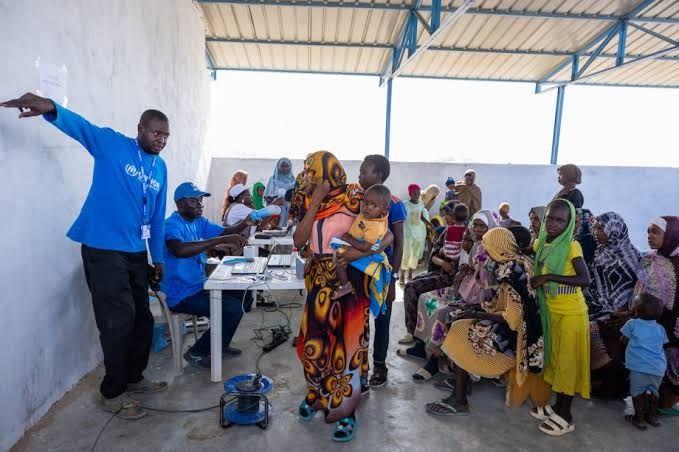
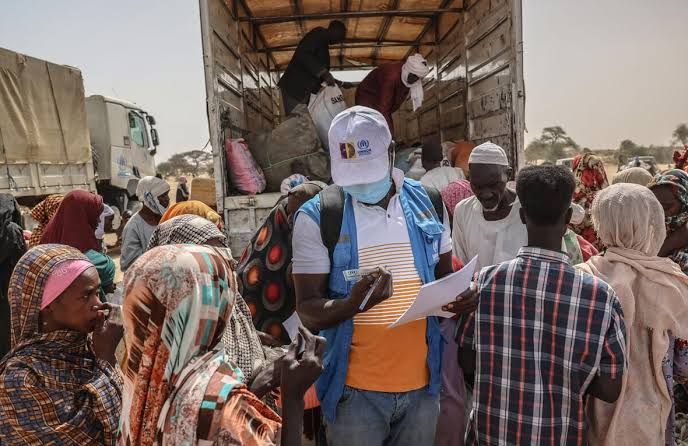
As fighting persists and humanitarian access remains tightly constrained, Sudan’s civilian population continues to absorb the overwhelming costs of a protracted conflict showing few signs of resolution. Systematic violence, widespread displacement, and the collapse of basic services have compounded the impact of the war, leaving millions increasingly dependent on aid that remains largely out of reach.
The conflict between Sudan’s military and the Rapid Support Forces (RSF) paramilitary, which erupted on April 15, 2023, has evolved into one of the world’s fastest-growing man-made humanitarian crises, reshaping the country’s political, economic, and social landscape.

Both sides to the conflict have been accused of war crimes and crimes against humanity, while the Rapid Support Forces (RSF) have been implicated in atrocities in Darfur that the United Nations says may amount to genocide.
According to the latest UN figures, at least 21.2 million people face acute food insecurity, 9.5 million are internally displaced, 4.35 million have fled the country, and an estimated 10 million children are out of school as classrooms have been destroyed, occupied, or rendered unsafe.

Women and girls face particularly acute risks, with survivors reporting mass executions, torture, rape, sexual abuse, and ransom demands by RSF fighters.
According to the International Organization for Migration (IOM), Sudan is facing the world’s largest humanitarian and displacement crisis, with more than 9.5 million people internally displaced across 10,929 locations in 185 localities spanning all 18 states.
The largest concentrations of displaced people are in South Darfur (1.84 million), North Darfur (1.75 million), and Central Darfur (978,000). Children account for more than half of the displaced population, representing 51 percent of those uprooted by the conflict.

Even before the current war began, the International Organization for Migration (IOM) estimated that more than 2.32 million people had already been displaced in Sudan—most of them in Darfur—after years of conflict and climate-related shocks.
Since April 2023, a further 7.25 million people have been displaced within the country, including about 2.7 million from Khartoum state, 2 million from South Darfur, and a comparable number from North Darfur.
According to Al Jazeera, the Integrated Food Security Phase Classification (IPC) estimated in September 2025 that 21.2 million people—about 45 percent of Sudan’s population—were facing high levels of acute food insecurity. Of those, 6.3 million were classified in Phase 4, or emergency conditions, while 375,000 people were experiencing Phase 5, the most severe level, indicating famine.

Famine represents the worst stage of hunger and is declared when severe food shortages are accompanied by widespread acute malnutrition and elevated mortality linked to starvation.
El-Fasher in North Darfur and the besieged town of Kadugli in South Kordofan have been classified as being in famine. Conditions in the nearby town of Dilling are believed to be similarly dire, with supply routes cut off and shortages worsening steadily.
The Rapid Support Forces (RSF) captured el-Fasher, the capital of North Darfur state, in October following an 18-month campaign marked by siege and starvation. The city had been the Sudanese army’s last major stronghold in the region.

Civilians fleeing el-Fasher—particularly children—are arriving in nearby towns such as Tawila in a state of acute malnutrition, further underscoring the scale of the humanitarian emergency.
Invest or Donate towards HICGI New Agency Global Media Establishment – Watch video here
Email: editorial@hicginewsagency.com TalkBusiness@hicginewsagency.com WhatsApp +256713137566
Follow us on all social media, type “HICGI News Agency” .
 HICGI News Agency