
Updated by Eric Kikomeko at 1528 EAT on Wednesday 7 January 2026
Russia has reportedly dispatched a submarine and other naval vessels to escort an oil tanker being pursued by United States forces across the North Atlantic, escalating tensions between Moscow and Washington.
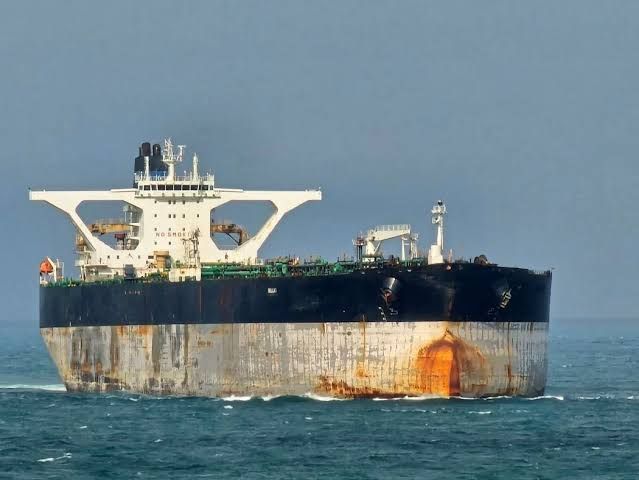
The vessel, formerly known as Bella 1 and now sailing under the name Marinera with a Russian flag, has been tracked by the U.S. Coast Guard since late December after resisting an attempt to board it near Venezuela. The United States alleges the ship was involved in transporting oil in violation of sanctions linked to Iran and Venezuela, though it is currently believed to be empty.

Ship‑tracking data show the tanker moving northeast between Iceland and the British Isles as U.S. surveillance aircraft and maritime assets maintain close monitoring. Russia’s move to escort the vessel comes amid a broader U.S. campaign to enforce sanctions and block sanctioned tankers. Moscow has formally asked Washington to halt its pursuit, with the Russian Foreign Ministry saying it is monitoring the situation “with concern.”
The tanker’s reflagging and renaming have complicated legal efforts to seize it, with experts noting that vessels sailing under a national flag are generally protected from boarding under international law. The incident underscores rising geopolitical friction over maritime sanctions enforcement and energy routes.

Two U.S. officials have told CBS News, a BBC media partner, that Russia has deployed a submarine and other naval vessels to escort an oil tanker currently being pursued by U.S. forces across the North Atlantic. The vessel, now sailing under the name Marinera after previously operating as Bella 1 and reflagging to Russia, has drawn intense maritime attention amid efforts by Washington to enforce sanctions.
The U.S. Coast Guard attempted to board the ship last month in the Caribbean when it was believed to be heading toward Venezuela, seeking to seize it under a warrant over alleged sanctions violations. After resisting the boarding, the tanker altered course and has since traveled northeast, with its approach to European waters coinciding with increased U.S. surveillance activity, including transport aircraft and helicopters in the region.

Moscow has said it is “monitoring with concern” developments around the vessel. Russia’s Foreign Ministry issued a statement asserting that the Marinera is “sailing in the international waters of the North Atlantic under the state flag of the Russian Federation and in full compliance with the norms of international maritime law.” It added that the attention being given by the U.S. and NATO appeared “disproportionate,” despite the tanker’s “peaceful status.”
U.S. officials told CBS News that American forces were planning to board the ship and that Washington prefers to seize rather than sink it, underscoring the legal and diplomatic complexities of the situation.

Footage reviewed by BBC Verify from Russian state media appears to show a U.S. Coast Guard Legend‑class cutter trailing the tanker, and ship‑tracking data from MarineTraffic places the Marinera in the North Atlantic Ocean, about 300 km (186 miles) south of Iceland as of Tuesday morning. Previous tracking suggests the ship passed north of the UK’s western coast over the past two days.
On Tuesday, the U.S. military’s Southern Command said on social media that it “remains ready to support our U.S. government agency partners in standing against sanctioned vessels and actors transiting through this region,” signalling continued vigilance in tracking the oil tanker at the centre of rising tensions with Russia. “Our sea services are vigilant, agile, and postured to track vessels of interest. When the call comes, we will be there,” the statement added.
Before any U.S. military action is launched from the United Kingdom, Washington would be expected to inform its ally, a diplomatic convention recognised by military partners. The UK Ministry of Defence, however, said it would not comment on other nations’ military activities.
U.S. officials quoted by CBS News have suggested that Washington could mount a boarding operation similar to one conducted last month when U.S. forces seized the Skipper, a large crude oil tanker flagged to Guyana, after it left Venezuela in defiance of sanctions.
Under international law, vessels flying a country’s flag are generally regarded as under that nation’s protection, complicating efforts to board them.

Experts told BBC Verify that the legal identity of a ship is determined by its IMO number, ownership and sanctions history rather than its name or flag. “U.S. action is driven by the vessel’s underlying identity [IMO number], ownership/control networks, and sanctions history, not by its painted markings or flag claim,” said maritime intelligence analyst Dimitris.
Another expert, Michelle Bockmann of Windward, noted that reflagging a vessel to Russia could complicate enforcement efforts. “Under the UN Convention on the Law of the Sea, there’s a provision that allows a stateless vessel to be boarded by authorities. By reflagging to Russia, the vessel is no longer able to be boarded under this provision,” she said, adding that while flag changes mid‑voyage have been observed, they are “highly unusual and only seen with dark fleet tankers.”
The potential stand‑off comes amid heightened geopolitical tensions following a controversial U.S. operation in Venezuela earlier this month in which President Nicolás Maduro was captured by U.S. forces and flown to New York to face federal charges—a move that has drawn international scrutiny and heightened scrutiny of U.S. actions in the region.
-BBC
Invest or Donate towards HICGI New Agency Global Media Establishment – Watch video here
Email: editorial@hicginewsagency.com TalkBusiness@hicginewsagency.com WhatsApp +256713137566
Follow us on all social media, type “HICGI News Agency” .
 HICGI News Agency