
Updated by Erick Kikomeko at 1336 EAT on Friday 9 January 2026
Islamabad, Pakistan – Pakistan may soon sell its domestically produced JF-17 Thunder fighter jets to Bangladesh, the military signaled following a meeting between Air Chief Marshal Zaheer Ahmed Babar Sidhu and his Bangladeshi counterpart, Air Chief Marshal Hasan Mahmood Khan.
The Inter-Services Public Relations (ISPR) said Khan praised the Pakistan Air Force’s combat record and requested support to modernize Bangladesh’s aging fleet and integrate air defense radar systems.
Alongside a promise of fast-tracked delivery of Super Mushshak trainer aircraft, the statement, issued on January 6, said “detailed discussions were also held on potential procurement of JF-17 Thunder aircraft.”

The Super Mushshak is a lightweight, two- to three-seater, single-engine plane with fixed, non-retractable tricycle landing gear, primarily used for pilot training. More than 10 countries, including Azerbaijan, Turkey, Iran, and Iraq, currently operate the aircraft in their fleets.
A day later, Reuters reported that Pakistan and Saudi Arabia were in talks to convert about $2 billion in Saudi loans into a JF-17 fighter jet deal, further strengthening military cooperation between the two longtime allies. The discussions follow a mutual defense pact signed by the countries in September last year.
Both developments follow reports in late December that Pakistan had reached a $4 billion deal with a Libyan rebel faction, the self-styled Libyan National Army (LNA), including the sale of more than a dozen JF-17 Thunder jets.

While the Pakistani military has not formally confirmed any agreements with Libya or Saudi Arabia, and Bangladesh has so far only expressed “interest” rather than signing a contract, analysts say events in 2025 have boosted the JF-17’s appeal.
The jet’s relatively low price, estimated at $25 million to $30 million, has attracted interest from several countries over the past decade, including Nigeria, Myanmar, and Azerbaijan, which already operate the aircraft. Analysts say recent events have further enhanced Pakistan’s air combat reputation.
In May, India and Pakistan engaged in a four-day air conflict, launching missiles and drones across each other’s territories, including parts of Kashmir and military bases, after 26 civilians were killed in Indian-administered Kashmir. India blamed Pakistan, which denied involvement.

Pakistan reported shooting down several Indian fighter jets during the clashes, a claim Indian officials later acknowledged, without specifying the number.
“The PAF demonstrated superior performance against much more expensive Western and Russian systems, which has made these aircraft an attractive option for several air forces,” said Adil Sultan, a former Pakistan Air Force air commodore.
During the conflict, the Indian Air Force (IAF) deployed Russian Mirage-2000 and Su-30 jets, as well as French Rafale aircraft. Pakistan relied on its Chinese J-10C Vigorous Dragon and JF-17 Thunder jets, along with U.S.-made F-16 Fighting Falcons, fielding 42 aircraft against 72 IAF planes, according to the PAF.
So, what is the JF-17 Thunder, what capabilities does it offer, and why is it attracting so much international interest?
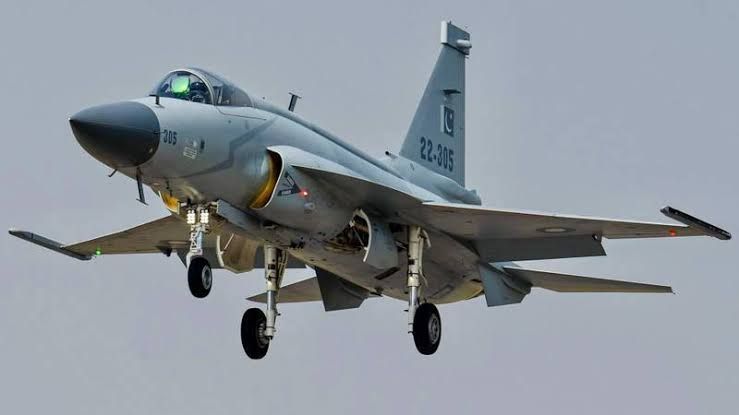
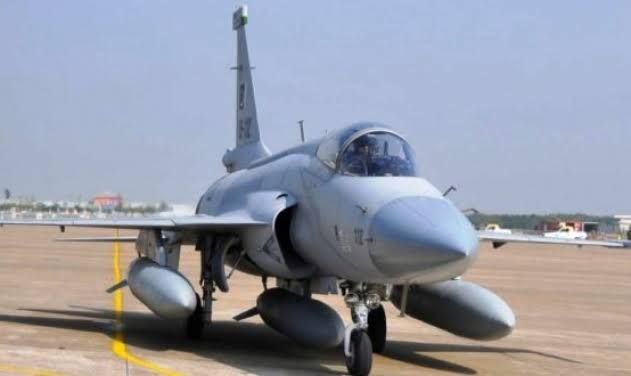
The JF-17 Thunder is a lightweight, multi-role fighter jointly built by Pakistan Aeronautical Complex and China’s Chengdu Aircraft Corporation. Development began in the early 2000s at PAC’s Kamra facility, about 80 km north of Islamabad, following a 1990s agreement between the two countries.

Production of the JF-17 Thunder is split between Pakistan and China, with 58 percent built in Pakistan and 42 percent in China, a retired Pakistan Air Force air commodore told Al Jazeera. Pakistan assembles the complete aircraft, including the front fuselage and vertical tail, while China produces the middle and rear fuselage. The jet uses a Russian engine and British-made Martin Baker seats.
The aircraft was unveiled in 2007, with the Block 1 variant entering service in 2009 and the advanced Block 3 variant in 2020. It has since become the backbone of Pakistan’s air force, replacing older Mirage III, Mirage 5, and J-7 jets.
The JF-17 Block 3 is a 4.5-generation fighter with air-to-air and air-to-surface capabilities, advanced avionics, AESA radar, electronic warfare systems, and beyond-visual-range missile capability. Its radar can track multiple targets at long range, though the jet lacks stealth. The Pakistan Air Force says it is highly maneuverable and “a potent platform for any air force.”

Myanmar was the first foreign buyer of the JF-17, ordering at least 16 Block 2 aircraft in 2015, with seven delivered to date. Nigeria followed with three jets in 2021. Azerbaijan ordered 16 in February 2024 and unveiled five in November 2025, becoming the third operator. Pakistan has signed an MoU with an unnamed country, while Iraq, Sri Lanka, and Saudi Arabia have also considered purchases.
The JF-17 Block 3 is a 4.5-generation fighter, unlike fifth-generation jets such as the U.S. F-22 and F-35, China’s J-20 and J-35, and Russia’s Su-57, which feature full stealth. 4.5-generation jets, including the JF-17, Gripen, Rafale, and Typhoon, have radar-reducing coatings and electronic jamming capabilities but are detectable.
The JF-17’s estimated unit cost is $25–30 million, compared with over $90 million for the Rafale and more than $100 million for the Gripen. Analysts cite its affordability, low maintenance, and combat performance as key selling points.
“The JF-17’s appeal is less about headline performance than the overall package, which includes lower cost, flexible weapons integration, training, spares, and generally fewer Western political strings,” a source involved with the JF-17 project told Al Jazeera, requesting anonymity.
“In that sense, the JF-17 is a ‘good enough’ multirole jet optimized for accessibility. It can suit air forces modernizing on tight budgets, but it is not a direct substitute for higher-end fighters such as the J-10C or F-16V in range, payload, electronic warfare capabilities, and long-term upgrade potential.”
Adil Sultan, the former Pakistan Air Force air commodore and dean of the Faculty of Aerospace and Strategic Studies at Islamabad’s Air University, said the JF-17’s performance against Indian aircraft in 2025 underscored its capabilities.
However, he cautioned that outcomes in air combat depend not only on the aircraft, but also on the operators.
“The jets’ integration with other systems, such as ground and airborne radars, communication networks, and the skills developed during training, plays the most vital role,” Sultan told Al Jazeera.
Invest or Donate towards HICGI New Agency Global Media Establishment – Watch video here
Email: editorial@hicginewsagency.com TalkBusiness@hicginewsagency.com WhatsApp +256713137566
Follow us on all social media, type “HICGI News Agency” .
 HICGI News Agency