
Updated by Faith Barbara N Ruhinda at 1307 EAT on Friday 9 January 2026
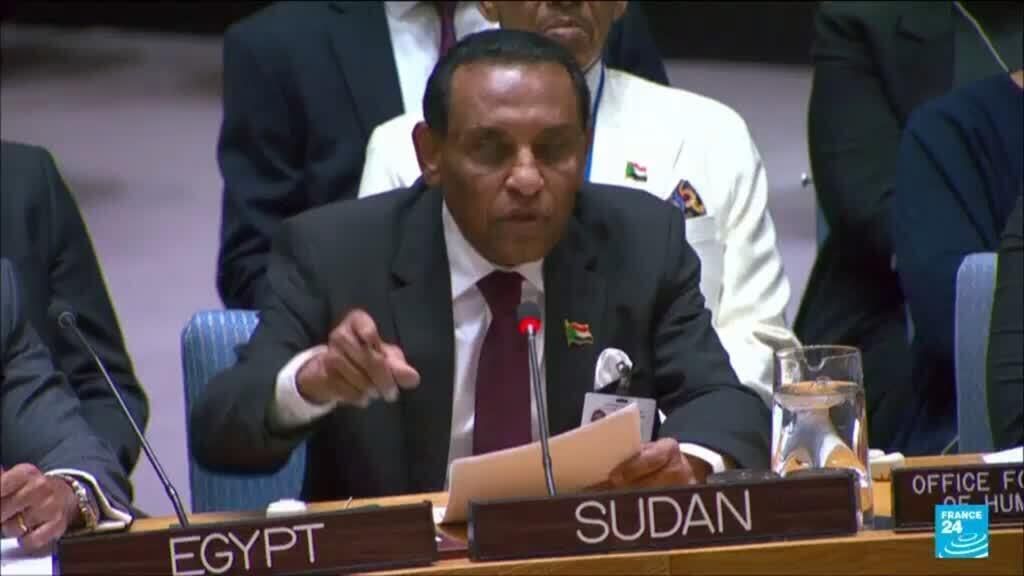
Standing before the United Nations Security Council in New York, Sudan’s Prime Minister, Dr. Kamil El-Tayeb Idris, delivered a stark and deliberate message.
Sudan, he said, had reached a critical juncture where action mattered more than rhetoric, warning that delays would only deepen the country’s suffering. Nearly a decade after recurring conflicts escalated into full-scale war, Sudan is facing one of the most serious crises in its history.

Cities have been damaged, millions of people have been displaced, and the country’s social fabric has been affected by the conflict. Against this backdrop, the government has presented what it describes as a homegrown peace initiative, outlining a roadmap it says is based on Sudanese realities rather than external models.
The initiative, formally presented after months of regional consultations, sets out a multi-layered plan aimed at ending hostilities, protecting civilians and restoring state authority. Dr. Idris framed it not as a declaration of victory, but as a response to what he described as pressing necessity.

The proposal, he said, is consistent with international principles and intended to complement ongoing Saudi-U.S. mediation efforts, while remaining Sudanese-led. In its opening sections, the government describes the conflict as driven by rebel militias formerly known as the Rapid Support Forces, accusing them of serious violations of international law that it says have contributed to a humanitarian crisis and regional instability.
The stated aim is to end the violence, preserve Sudan’s unity and territorial integrity, and contribute to regional and international stability. Central to the plan is a comprehensive ceasefire, to be declared and jointly monitored by the United Nations, the African Union and the League of Arab States.

The ceasefire would be followed by the withdrawal of rebel forces from areas they control, in line with the Jeddah Declaration of Principles signed in May 2023. The proposal also calls for militia fighters to be assembled in designated camps under joint international supervision.
Combatants would be registered and documented, seen as a first step toward accountability, disarmament and eventual reintegration.
Humanitarian concerns are central to the initiative, with the government pledging to help internally displaced people return safely, support refugees’ voluntary return, and guarantee unrestricted access for aid agencies.

Disarmament is presented as non-negotiable. Weapons collected under international supervision, the government says, must not be recycled into the conflict. At the same time, the plan outlines confidence-building measures based on Security Council Resolution 2736, emphasizing Sudanese ownership of the peace process.
The transitional government says its accountability measures will distinguish between those responsible for serious crimes and those involved in the conflict without committing atrocities.
Offenders would be subject to transitional justice mechanisms, while others could be considered for reconciliation. The government also pledges not to strip returnees of identity documents—a small but significant assurance in a country where displacement has erased paper trails and legal status. Reform of the security sector forms another key pillar of the plan.

The initiative proposes integrating eligible individuals into regular forces and implementing disarmament, demobilization, and reintegration programs, with support from regional and international partners.
-Observer
Invest or Donate towards HICGI New Agency Global Media Establishment – Watch video here
Email: editorial@hicginewsagency.com TalkBusiness@hicginewsagency.com WhatsApp +256713137566
Follow us on all social media, type “HICGI News Agency” .
 HICGI News Agency