
Updated by HICGI News Agency at 1522 EAT on Saturday 10 January 2026
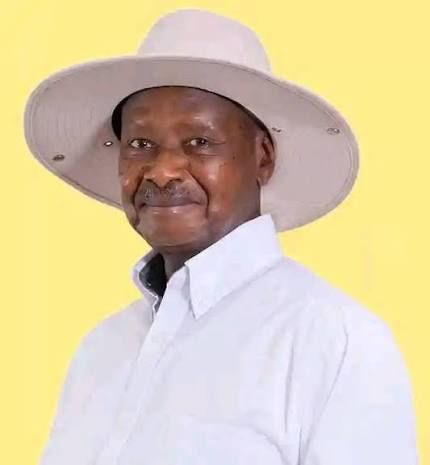
On the eve of Uganda’s 2021 presidential election, few observers doubted the likely outcome. Regardless of the ballots, Yoweri Museveni was almost certain to be declared the winner.
A climate of repression, routine state violence, allegations of vote manipulation, and an unprecedented internet shutdown had already shaped the political landscape. When Museveni was confirmed for a sixth consecutive term, it came as little surprise.
As Uganda heads to the 15 January 2026 election, one expectation persists: Yoweri Museveni will win. Yet beneath the surface, the political landscape is far from static. Shifts within the opposition, fractures inside the ruling party, and lingering uncertainty over succession hint at a country grappling with change.
State repression remains a constant, but it alone cannot explain why power is so fiercely protected. Museveni, now in his eighties, wields authority not just as a leader of nearly four decades, but as a man whose survival, legacy, and family interests are inseparable from the state itself.

Uganda fits a broader regional pattern. As the late Tanzanian political theorist Issa Shivji argued, long-serving African leaders often fear elections not simply because they might lose office, but because losing power threatens everything built around it: wealth, legal immunity, networks of loyalty, and carefully crafted historical narratives.
This helps explain why even leaders with formidable reputations — Museveni in Uganda, Kagame in Rwanda — remain anxious about stepping down. Scholars such as Mahmood Mamdani have long observed that when liberation movements become ruling parties, the state becomes deeply personalised, entwining the leader’s survival with the fate of the nation itself.

In such systems, power ceases to be a temporary stewardship and instead becomes existential. Stepping aside is no longer a democratic gesture; it is a plunge into uncertainty, vulnerability, and the risk of retribution. Succession, in these contexts, is never neutral — it is a high-stakes struggle over continuity, protection, and control.
Uganda’s opposition politics have evolved within these constraints. The rise of Bobi Wine since 2017 stands out as one of the most striking political developments of the past decade. A popular musician turned politician, he has skillfully channelled generational frustration into a potent political movement.

His journey — from Kamwookya to global celebrity to political challenger — struck a chord with young Ugandans who had known no other president. In a country where more than three-quarters of the population is under 35, his rise was hardly accidental; it was symptomatic.
Bobi Wine’s significance, however, extends beyond his popularity. His movement demonstrated that opposition politics could transcend traditional party structures, ethnic loyalties, and elite bargaining.
The National Unity Platform performed strongly even in areas long considered safe for the ruling party, unsettling a regime accustomed to predictable electoral geographies.

As Kenyan political analyst Nanjala Nyabola has noted of youth-led African movements, their greatest threat to incumbents is rarely immediate victory, but their ability to challenge and disrupt the narratives that justify perpetual rule.
The regime’s response has followed a familiar pattern. As Bobi Wine’s appeal grew, so too did the violence directed at his supporters. The killings during the November 2020 protests were not aberrations but part of a broader logic of deterrence.
Opposition politics are tolerated only so long as they remain incapable of translating popularity into real power. Beyond that threshold, coercion becomes routine. Bobi Wine’s repeated arrests, physical abuse, and constant surveillance are not merely personal punishments — they are warnings to anyone who might follow the same path.
This context also sheds light on the continued targeting of Kizza Besigye. Often portrayed as a relic of an earlier era, Besigye remains symbolically dangerous to the Museveni system. A former ally turned critic, he embodies betrayal from within — a far greater threat to personalised power than external dissent.

His repeated arrests, treason charges, and extraordinary rendition from Nairobi underscore a regime unwilling to grant even diminished challengers political space. As Ugandan scholar Joseph Oloka-Onyango has argued, Besigye’s persecution reflects the regime’s fear of precedent: allowing one defiant opponent to survive politically encourages others to persist.
What makes the succession question so fraught is precisely why leaders like Museveni fear leaving power. Succession is not simply about who rules next; it is about who controls the transition, who guarantees safety, and whose version of history prevails.
As South African political scientist Adam Habib has noted, negotiated exits require strong institutions. Uganda’s institutions, long subordinated to executive power, offer little reassurance to those who have ruled by bending them.
Recent elections in Mozambique and Tanzania illustrate the risks: even tightly managed victories can trigger post-election instability, elite fractures, and widespread unrest. Winning the vote is no longer the final chapter — it is merely the start of a more uncertain phase.
In Uganda, the ruling party’s victory in 2026 appears almost certain. What remains deeply uncertain is what follows: whether Museveni can orchestrate a controlled succession, whether Muhoozi Museveni’s rise consolidates or destabilises the regime, and whether opposition forces can survive long enough to influence the post-Museveni era.
Uganda’s elections, then, are less about choice at the ballot box than about the slow, tense renegotiation of power in a system designed to resist change. The tragedy — and the enduring resilience of Ugandan politics — lies in this contradiction: a population hungry for renewal confronting a political order that has made permanence its guiding principle.
Source: Pan African Visions
Invest or Donate towards HICGI New Agency Global Media Establishment – Watch video here
Email: editorial@hicginewsagency.com TalkBusiness@hicginewsagency.com WhatsApp +256713137566
Follow us on all social media, type “HICGI News Agency” .
 HICGI News Agency