
Updated by Erick Kikomeko at 1446 EAT on Tuesday 13 January 2026
Copenhagen, Denmark – An international camera crew hurries out of Aaja Chemnitz’s office in the Danish parliament, making way for the next round of interviews. Politely but firmly, the journalists are ushered aside. Chemnitz, one of Greenland’s two MPs in the Danish parliament, is navigating a whirlwind of media requests as global eyes turn toward the Arctic territory.
Just days earlier, she participated in a high-stakes meeting of the Danish Foreign Relations Committee. The agenda was clear: address the escalating tension between Denmark and its NATO ally, the United States, sparked by President Donald Trump’s surprising bid to purchase Greenland.
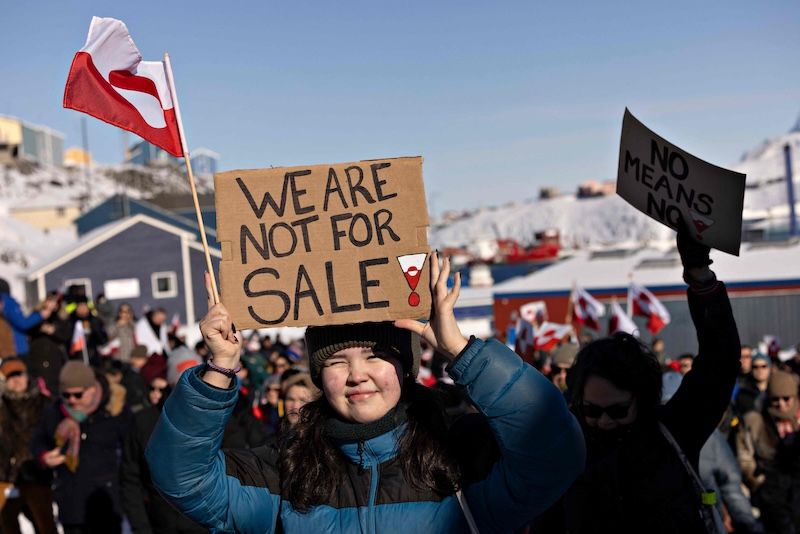
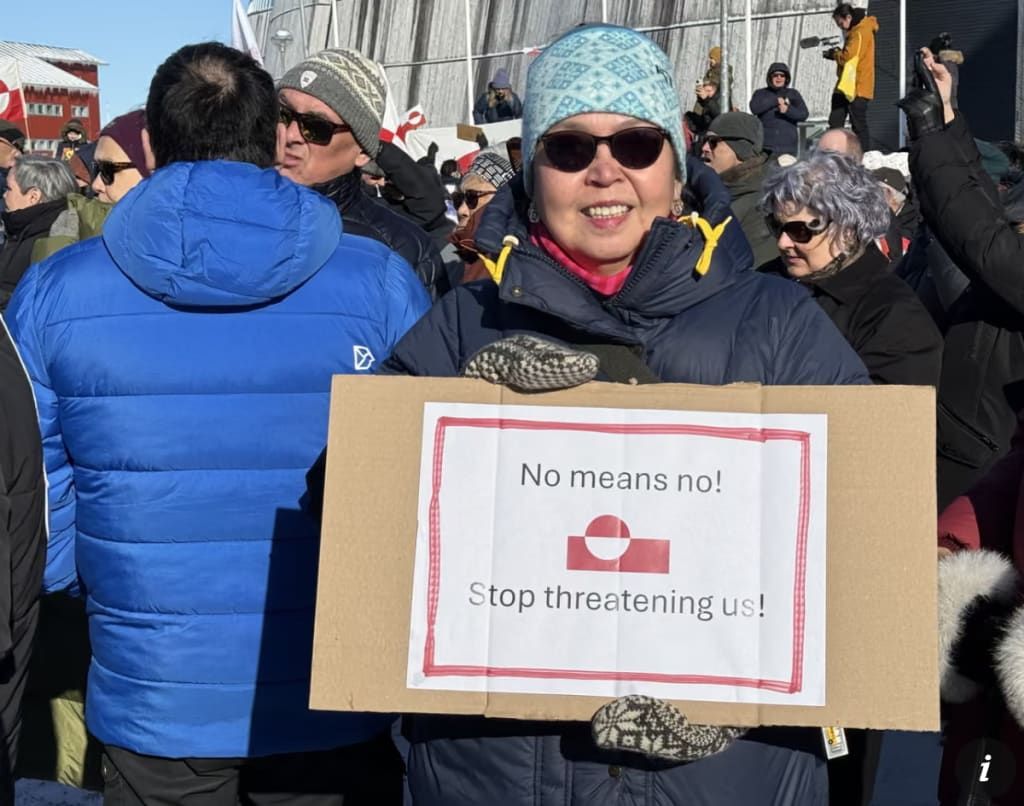
“Greenland is not for sale, and Greenland will never be for sale,” says Aaja Chemnitz of the Inuit Ataqatigiit (IA) party, speaking to Al Jazeera as her assistant helps a Finnish newspaper settle into the office.
“People seem to think they can buy the Greenlandic soul. It is our identity, our language, our culture – and it would look completely different if you became an American citizen. That is not something a majority in Greenland want.”
The other Greenlandic MP, Aki-Matilda Hoegh-Dam of the Naleraq party, describes the period as a difficult one for Greenland’s 56,000 residents.
“It has been a very turbulent time for many Greenlanders,” Hoegh-Dam tells Al Jazeera. “In many ways, we have been isolated from the rest of the world for almost 300 years, with limited contact with major powers, especially when it comes to foreign relations. But now we feel cornered, and that is making a lot of people anxious.”

As Greenland is thrust into an uneasy global spotlight, both MPs are dividing their time between Copenhagen and Nuuk.
“All Greenlandic parties have made it clear: we do not want to be Americans – and we do not want to be Danish. We want to be Greenlanders,” says Aki-Matilda Hoegh-Dam. “We already have one colonizer; we do not need a new one.”
Since December, U.S. President Donald Trump has repeatedly expressed his desire to acquire Greenland, a proposal he first floated during his first term in office in 2017. This time, the administration has suggested that military force remains an option, sending waves of concern through both Nuuk and Copenhagen.
Although Greenland is self-governing within the Kingdom of Denmark, Copenhagen retains control over defence and foreign policy.

“This is the worst foreign-relations crisis for the Danish kingdom since World War II,” says political commentator Hans Engell, a former Danish defence minister, speaking to Al Jazeera on a cold January day in Copenhagen. “Even at the height of the Cold War, I can’t think of anything worse than the current situation with America and Greenland. The problem is, there may not be a good solution.”
Trump argues that the U.S. needs Greenland for national security.
Geographically part of North America, Greenland has long been historically tied to Europe, particularly Denmark, which colonised the island some 300 years ago.
Since 2009, Greenland has enjoyed home rule, though it remains heavily dependent on Denmark for defence and finance. That balance of power could shift: beneath its ice lie rare minerals and oil.

Some analysts suggest these resources are the real reason for Trump’s interest. Others argue he is pursuing a legacy: acquiring Greenland would mark the most significant U.S. territorial expansion in decades, cementing his place in history. In a recent interview with The New York Times, he emphasized that “ownership” matters, not just control.
To be sure, Trump has said he would prefer a negotiated “real‑estate deal” to acquire Greenland rather than resorting to military action. But his renewed push to secure the Arctic territory — an idea he first raised publicly years ago — has rattled Copenhagen and Nuuk and rekindled debate about U.S. intentions.
People.
It would not be the first time Washington has shown interest in buying Greenland. In the aftermath of the 1867 purchase of Alaska, U.S. officials discussed acquiring Greenland and Iceland, though no formal offer materialised. More formally, in 1946, the administration of President Harry S. Truman offered Denmark $100 million in gold — roughly $1.6 billion in today’s terms — reflecting Greenland’s strategic importance at the dawn of the Cold War. Denmark rejected the proposal.
But talk of “buying” Greenland — reportedly under active consideration in Washington — is far more complicated than it sounds. Any such move would require lengthy negotiations and the consent of Greenland’s government and people; Denmark cannot simply sell the autonomous territory.

“I would like to make a deal, you know, the easy way. But if we don’t do it the easy way, we’re going to do it the hard way,” Trump said on Friday, underscoring his willingness to pursue the issue assertively.
That rhetoric has stoked unease in Greenland. “It is deeply unsettling to be on the receiving end of this pressure — whether you are an ordinary citizen or an elected politician,” Masaana Egede, editor‑in‑chief of the Greenlandic news outlet Sermitsiaq, told Danish TV 2.
Concerns have also grown amid wider U.S. military actions in the region. In early January, U.S. forces captured Venezuelan President Nicolás Maduro in a high‑profile operation, and Maduro is now facing charges in New York, including on drug‑trafficking allegations. Critics argue that these moves reflect a more assertive U.S. posture aimed at securing strategic resources, underscoring fears in Europe and the Arctic about Washington’s intentions.
The Danish foreign minister announced that Denmark and Greenland, including Greenland’s foreign affairs minister, have formally requested a meeting with U.S. Secretary of State Marco Rubio. Scheduled for Wednesday, the meeting could prove pivotal in the ongoing dispute over Greenland.

“The meeting could have major consequences for Greenland,” Aki-Matilda Hoegh-Dam told Al Jazeera.
“I hope our foreign minister, beyond firmly rejecting any notion of being ‘bought,’ can also gain a clearer picture of what the U.S. actually wants.”
“Greenlanders are a very proud and rock-steady people. We have a deep belief in our nation and our culture. We will hold on to that belief no matter who is trying to colonise us,” she added.
Greenland finds itself at a historic crossroads, and MP Aaja Chemnitz said the U.S. threat should be taken seriously.
“There are two threats to Greenland.
There is an internal threat — the structural challenges we face at home — and then there is the external threat, which is coming from the U.S. right now,” Chemnitz told Al Jazeera, just before the door to her office closed for the next press interview about her homeland’s future.
Invest or Donate towards HICGI New Agency Global Media Establishment – Watch video here
Email: editorial@hicginewsagency.com TalkBusiness@hicginewsagency.com WhatsApp +256713137566
Follow us on all social media, type “HICGI News Agency” .
 HICGI News Agency