
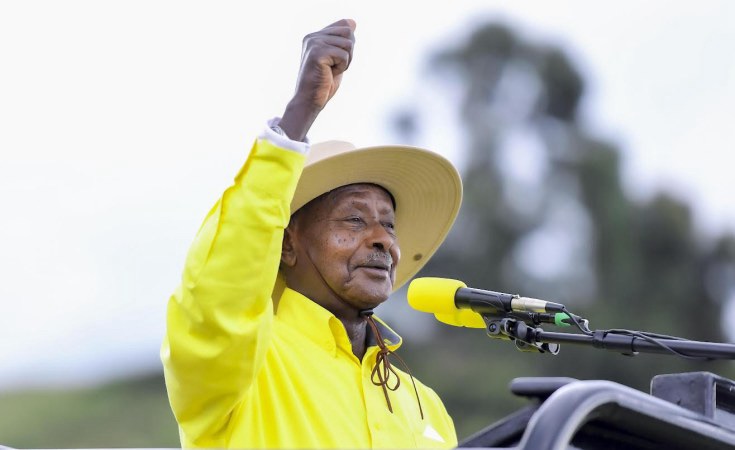
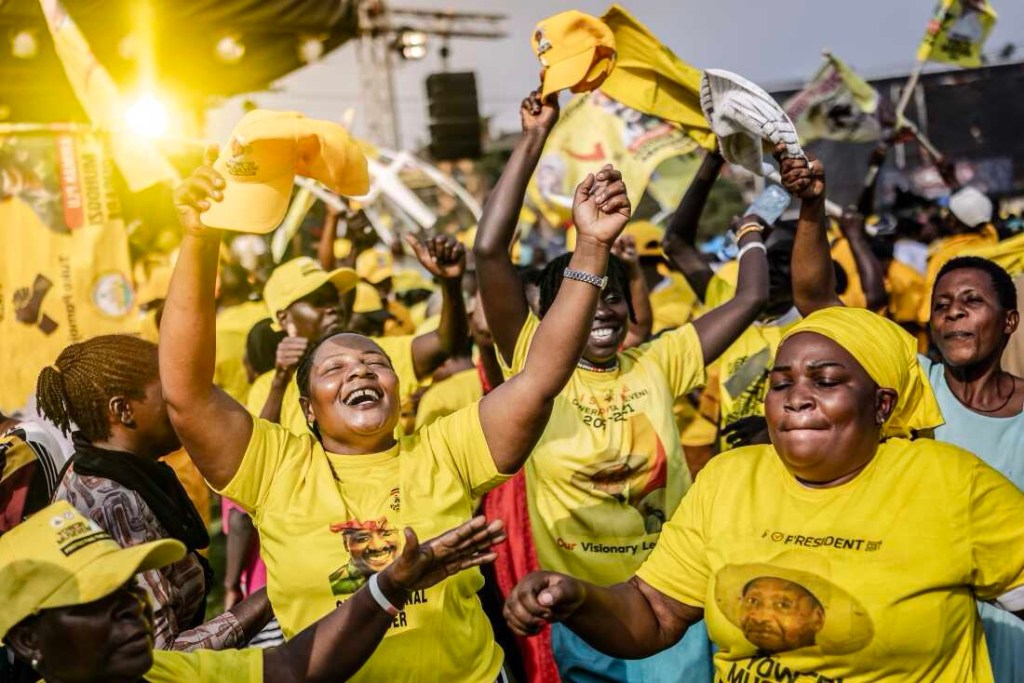
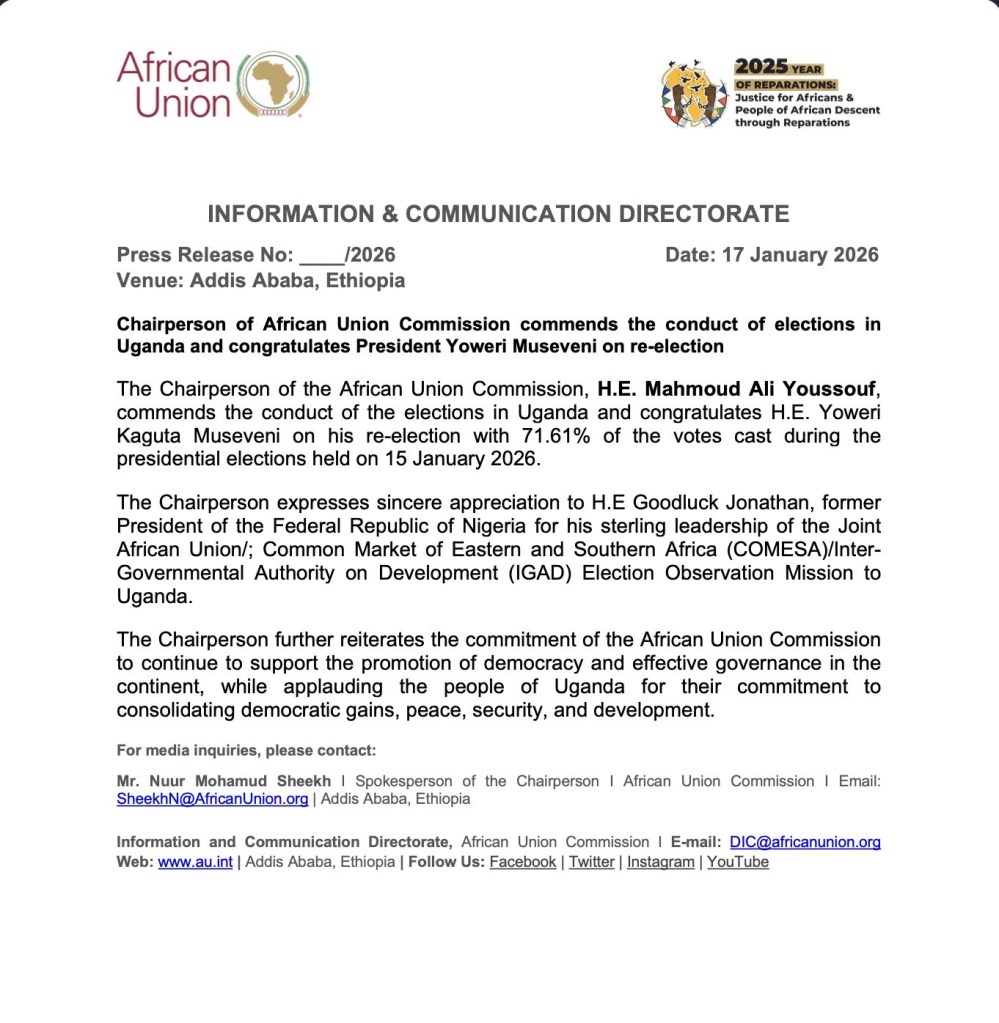
KAMPALA, Uganda — Veteran leader President Yoweri Kaguta Museveni has been officially declared the winner of Uganda’s 2026 presidential election, extending his rule into a seventh five-year term, the country’s Electoral Commission announced Saturday, January 17, 2026.
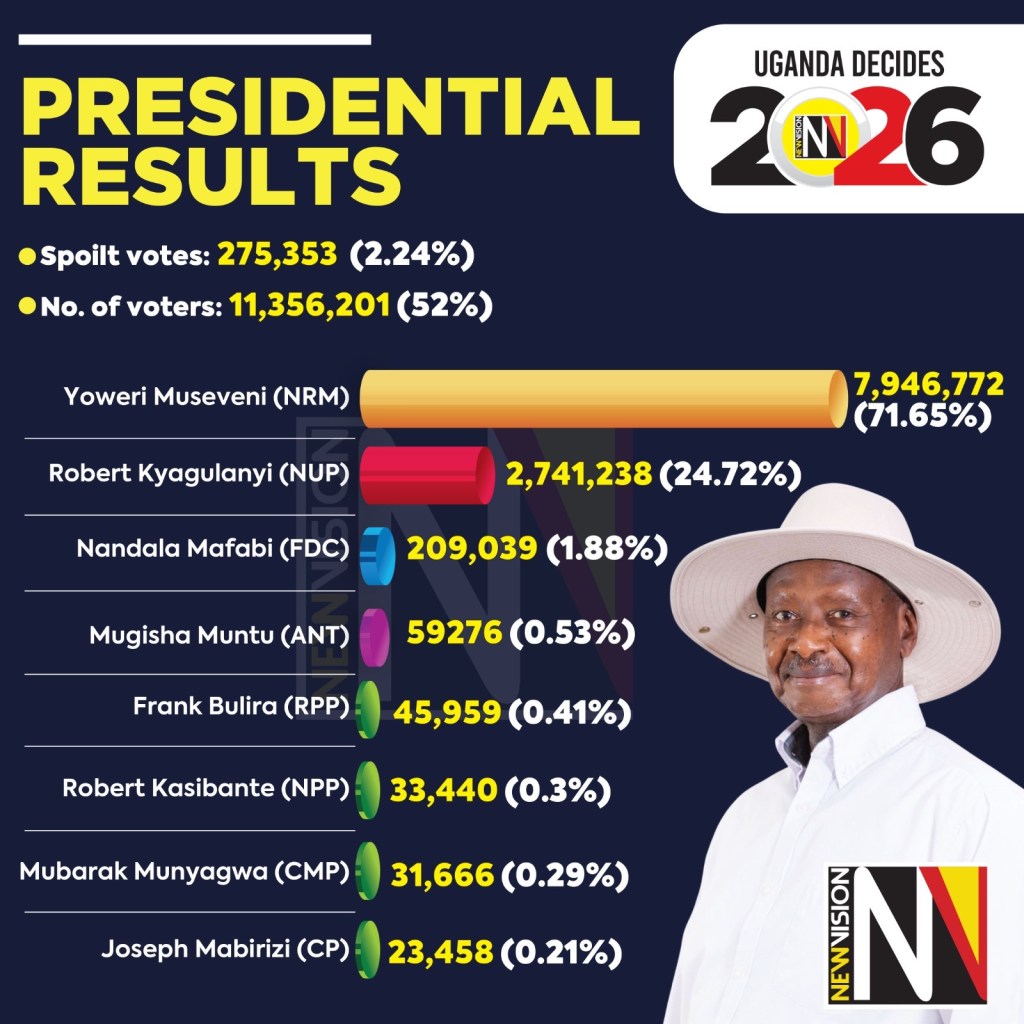
According to the official results, Museveni secured approximately 71.65 % of the vote, defeating his main challenger Robert Kyagulanyi Ssentamu, popularly known as Bobi Wine, who garnered about 24.72 %.
The veteran president, now 81 years old, has led Uganda since 1986, making him one of the longest-serving leaders in Africa. This victory extends his influence into a fifth decade of leadership.
Election Controversy and Opposition Response
The election took place amid heightened tensions, with widespread reports of:
Internet and communications blackout imposed ahead of voting. Allegations of crackdowns on opposition rallies and supporters. Security operations around opposition leader Bobi Wine’s residence, which his camp described as a house raid. Police, however, denied arresting him, despite controlled access to the property.

Opposition figures have rejected the official results, labeling them “fake” and calling into question the integrity of the vote count. Bobi Wine has urged his supporters to resist injustice peacefully and hinted at legal and civic responses.
Election Violence and Observer Reactions
Observers and rights groups reported incidents that have further clouded the election’s credibility:

African election observer missions noted arrests, intimidation and abductions of opposition activists and civil society members that they say “instilled fear” among voters and observers. Independent sources indicate multiple deaths linked to electoral tensions and security operations nationwide.
While some international observers noted that ballot stuffing was not independently verified, they criticized the internet shutdown and restrictions on movement that limited effective monitoring of the process.
Political and Historical Context
Museveni’s tenure has seen significant changes in Uganda’s political landscape:
Constitutional amendments removed presidential age and term limits, enabling Museveni to remain eligible for re-election. This election continues a pattern of dominant incumbency, with Uganda yet to experience a peaceful transfer of presidential power since independence in 1962.

Supporters credit Museveni with stability and economic development, while critics argue that his rule has been marked by suppression of dissent, restricted media freedom, and institutional control.
Looking Ahead
As Uganda enters another five-year term under Museveni’s leadership, reactions remain sharply divided:

Government supporters praise the victory as a continuation of stability and national progress. Opposition parties and civil society warn of further erosion of democratic freedoms and call for peaceful resistance and legal challenges to the results.
International observers will likely continue scrutinizing Uganda’s political environment, particularly regarding future electoral reforms and human rights practices.

 HICGI News Agency