
Updated by Faith Barbara N Ruhinda at 1829 EAT on Wednesday 28 January 2026
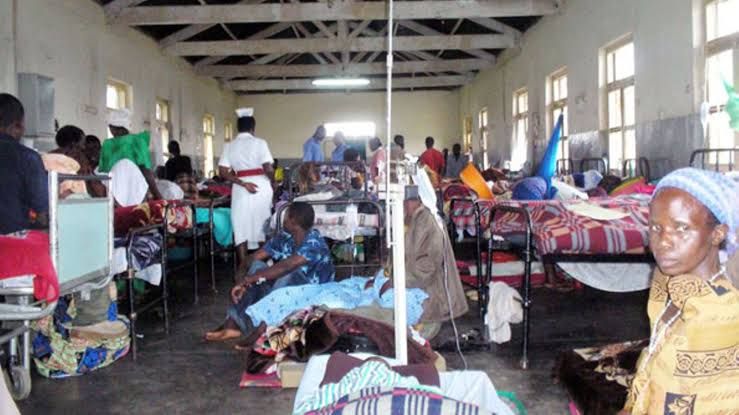
History shows that little good comes from pursuing short-term gains by mortgaging a nation’s future—especially when that future is tied to the health and data of its own people.
This cautionary lesson is reflected in a memorandum of understanding signed between the Government of Uganda, through the Ministry of Health, and the United States of America. Under the agreement, Uganda committed to sharing health data with the United States over a five-year period.
In exchange, the United States pledged to invest USD 1.7 billion in Uganda’s health sector. The Ugandan government, acting on behalf of its citizens, committed an additional USD 500 million, bringing the total value of the programme to USD 2.3 billion.

In exchange for the funding, the government agreed to share sensitive health data without the informed consent of the individuals to whom the data pertains. The information transferred includes biospecimens, pathogen samples, diagnostic results, and outbreak response findings—assets whose long-term value arguably exceeds the financial compensation received.
Biospecimens include human biological materials such as hair, nails, skin, plasma, and DNA. Pathogen samples consist of clinical materials collected from patients, including blood, urine, stool, saliva, and swabs containing disease-causing microorganisms.
Diagnostic data encompasses test results used to identify patient conditions, including infections and drug-related health issues such as blood pressure levels. According to the America First Global Health strategy, such data is shared with donor governments to support outbreak surveillance and to guide the management of Western foreign assistance programmes.

In practice, donor-funded initiatives—most notably the President’s Emergency Plan for AIDS Relief (PEPFAR)—establish parallel data systems that operate alongside national health platforms. Reports and analytics generated within Uganda’s health system are routinely duplicated into donor-controlled databases.
This arrangement undermines national integration of health data and analytics and weakens the autonomy of Uganda’s health sector from external influence.
Donor governments—including the United States, the United Kingdom, and the European Union—exercise this control through their respective agencies: the United States through USAID (prior to its dissolution), the UK through the Foreign, Commonwealth & Development Office (FCDO), and the EU through partnerships with the Africa Centres for Disease Control and Prevention (Africa CDC).

Donor governments collect and process the data and, over time, share it with pharmaceutical companies—entities that wield considerable political influence as major contributors to the global economy and to political campaigns. The pharmaceutical industry has also become a frequent destination for former politicians, further entrenching its leverage over public policy.
In the United States alone, pharmaceutical companies channel tens of millions of dollars into politics each year through direct donations and Political Action Committees. According to The Economic Impact of the Global Pharmaceutical Industry, the sector contributed an estimated USD 2.2 trillion to global GDP and employed approximately 75 million people worldwide in 2022.
With such financial clout, governments often feel compelled to share harvested health data with pharmaceutical sponsors, who then use the information to develop medicines and related technologies. By transferring large raw datasets and biospecimens to Western partners at minimal cost, Uganda is effectively relinquishing its potential to develop its own vaccines, medicines, and biotechnological innovations.

Health data, like biological samples, is a raw material. When exported in its unprocessed form, it denies the country the opportunity for value addition. The result is long-term dependence: Uganda remains a consumer of high-cost pharmaceutical and biotechnology products—including medicines, vaccines, enzymes, insulin, and biofuels—across health, agriculture, and manufacturing sectors.
Conversely, retaining, cleaning, and analysing this data domestically—while enacting robust legal protections for national health repositories—would enable Uganda to build the capacity to develop its own medical products and technologies.
The failure to host critical health information systems independently of donors has also excluded local researchers from accessing data they helped generate, much of which now resides on platforms controlled by external partners.
This dynamic helps explain why countries such as South Africa, which rejected agreements similar to the America First Global Health strategy, have developed relatively stronger pharmaceutical sectors. Of the world’s 751 largest publicly traded pharmaceutical companies listed across major stock exchanges, only two—Clicks Group SA and Aspen Pharmacare—are based in Africa.
Both companies are listed on the Johannesburg Stock Exchange. When donors acquire raw health data, they quietly undermine the long-term development of the health sector. Easy access to externally funded data reduces the incentive for governments to invest in local capacity building, technological advancement, and strong regulatory frameworks.

Instead, governments are relegated to passive recipients of donor aid—often in the form of short-shelf-life medical supplies. This was evident during the COVID-19 pandemic, when more than 12 million expired vaccine doses had to be destroyed in Uganda.
RUSH TO STAY ON TRUMP’S GOOD SIDE
Moreover, by cheaply trading pathogen sequences and biospecimens to the highest bidder, the government denies highly skilled local scientists—many with decades of experience managing diseases such as HIV/AIDS—the opportunity to make groundbreaking contributions to medical research.
Had local virologists been involved in the pre-production phase of Lenacapavir, for example, they would have raised concerns about monotherapy. Long-term use of a single-drug regimen in HIV treatment is widely known to promote drug resistance.
To be effective, an injectable formulation would require a combination of three or four drugs to prevent viral mutation and resistance—knowledge Ugandan scientists have acquired through prolonged engagement with HIV surveillance and treatment.
Producing a monotherapy injectable is, however, more commercially attractive to Gilead Sciences. Once resistance develops, the pharmaceutical company can introduce a follow-up polytherapy treatment, extending the product lifecycle and maximising profits.
The Observer sought comment from senior Ministry of Health officials on issues of data sovereignty and the resistance risks associated with Lenacapavir, but received no response by the time of publication.
Ultimately, policymakers face complex trade-offs when negotiating with global powers such as the United States under President Donald Trump. The Trump administration has historically framed resistance to its proposals as defiance, often responding with diplomatic or economic pressure. In that context, Uganda’s decision to sign the controversial health agreement in order to avoid political fallout may attract some sympathy.
Nonetheless, the reality remains that Uganda’s health sector requires substantial and sustained financing to remain functional. While unconventional, exchanging health data with donors in return for funding has emerged as a feasible—if deeply contested—revenue stream for the government.
Invest or Donate towards HICGI New Agency Global Media Establishment – Watch video here
Email: editorial@hicginewsagency.com TalkBusiness@hicginewsagency.com WhatsApp +256713137566
Follow us on all social media, type “HICGI News Agency” .
 HICGI News Agency