
Updated by Faith Barbara N Ruhinda at 1408 EAT on Wednesday 4 February 2026
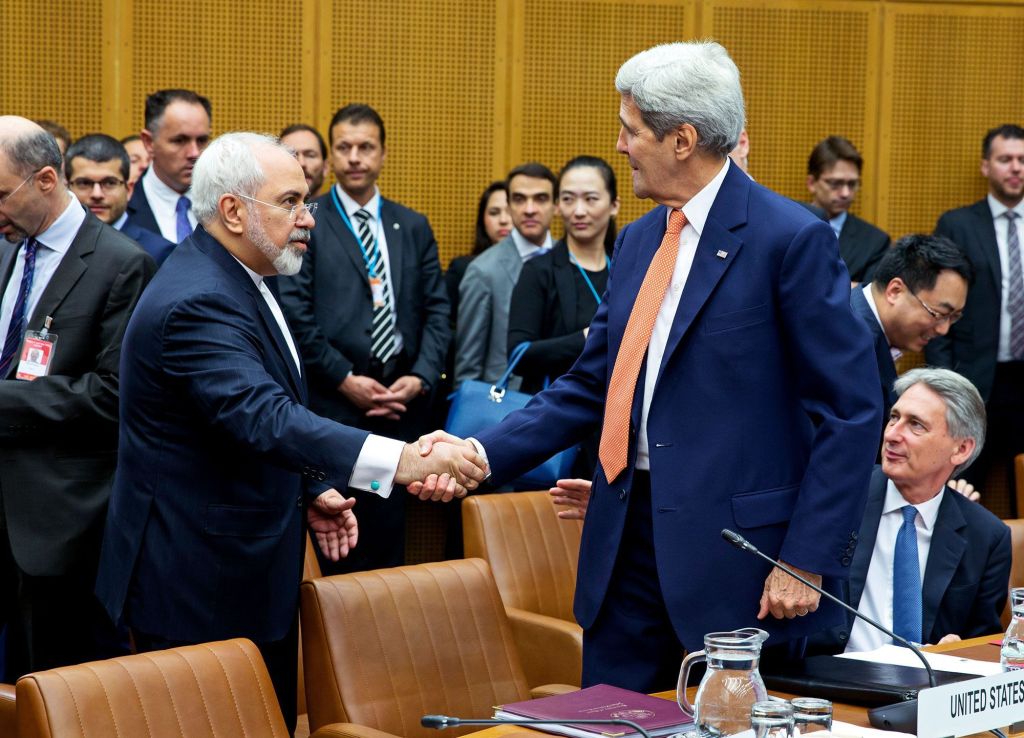
Tehran, Iran — In Tehran, the focus is no longer on whether diplomacy has begun, but on whether it can move fast enough to prevent further escalation.
An Iranian official told Al Jazeera that Oman will host the next round of Iran–United States talks, scheduled for later this week.

But the official confirmed that other regional countries would not be involved in the talks for now, despite proposals to expand the negotiations to include them.
Iran’s reluctance to broaden the format does not reflect a desire to exclude regional actors, the official said, but rather concerns that adding more participants could “risk turning the process into a political display instead of a focused negotiation”.

For the moment, Tehran wants the bilateral talks with the United States to stabilise before considering any wider framework, the official added.
Regional mediators involved in the process take a different view. They see their role not as facilitators at this stage, but as potential guarantors of any future agreement — a position shaped by the fact that their own security and stability are directly affected by tensions between the US and Iran.
The divergence marks a clear break from the 2015 nuclear agreement, which was rooted in a transactional arms-control framework. In 2026, officials and analysts say, the tensions are overtly military in nature. Regional actors are no longer peripheral observers but stakeholders with a direct strategic interest in containment, de-escalation and preventing spillover.

Recent diplomatic activity reflects that shift. Over the past several days, Iran and regional capitals have intensified engagement. Ali Larijani, head of Iran’s Supreme National Security Council, travelled to Moscow on June 30 to meet Russian President Vladimir Putin, while Iranian Foreign Minister Abbas Araghchi held consultations in Istanbul last Friday.
Building on those discussions, Qatar’s Prime Minister Sheikh Mohammed bin Abdulrahman bin Jassim Al Thani travelled to Tehran over the weekend. Soon after, Larijani said that elements of a structured negotiating framework were beginning to emerge.

Multiple sources said the effort is aimed not at an interim or limited deal, but at developing a roadmap toward a comprehensive agreement.
Washington, however, is keeping ambiguity in play. US President Donald Trump told Fox News this week: “Iran is talking to us, and we’ll see whether we can do something, otherwise we’ll see what happens.” The remark paired diplomatic engagement with pressure, preserving uncertainty as leverage.
Does that mean the risk of war has disappeared? No. But it has receded — at least for now.

Even potential confidence-building measures, such as transferring or downblending Iran’s stockpile of highly enriched uranium, would not resolve the core disputes. Major issues remain, most notably Iran’s ballistic missile programme and the broader question of its regional deterrence posture.
This is where the real negotiation lies. The United States no longer appears interested in an agreement that merely manages risk. Iran, for its part, is wary of a deal tied to a single US presidency or vulnerable to reversal. What both sides are now testing is whether structural concessions can be exchanged for structural guarantees. Everything else — formats, venues and participation — is secondary.
For now, diplomacy is advancing, war has been deferred, and the window remains open. Whether it stays that way will depend on whether substance follows structure.
Source: Aljazeera
Invest or Donate towards HICGI New Agency Global Media Establishment – Watch video here
Email: editorial@hicginewsagency.com TalkBusiness@hicginewsagency.com WhatsApp +256713137566
Follow us on all social media, type “HICGI News Agency” .
 HICGI News Agency