
Updated by Faith Barbara N Ruhinda at 1358 EAT on Thursday 5 February 2026
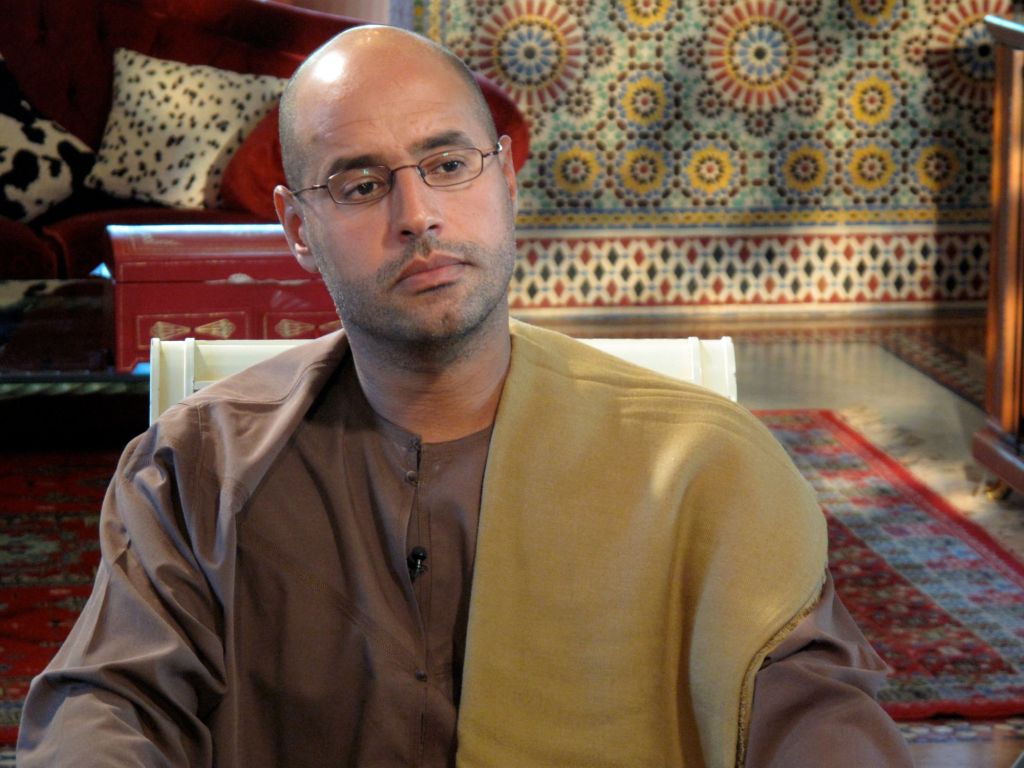
Saif al-Islam Gaddafi, the most prominent son of former Libyan leader Muammar Gaddafi, has been killed in Libya, according to officials and local media reports.
The 53-year-old’s death was announced on Tuesday by his lawyer, Khaled al-Zaidi, and his political adviser, Abdulla Othman, in separate posts on Facebook. Neither provided further details regarding the circumstances of his death.

Saif al-Islam Gaddafi, the most prominent son of former Libyan leader Muammar Gaddafi, was killed in his home in the town of Zintan, about 136 km (85 miles) southwest of the capital, Tripoli, Libyan news outlet Fawasel Media reported, citing his political adviser, Abdulla Othman.
Gaddafi’s political team later described the killing as a “cowardly and treacherous assassination,” saying that “four masked men” stormed his home. The statement said he confronted the assailants, who had disabled the security cameras in an apparent attempt to conceal evidence of the attack.

Khaled al-Mishri, former head of the Tripoli-based High State Council—an internationally recognized government body—called for an “urgent and transparent investigation” into the killing in a post on social media.
Although Saif al-Islam Gaddafi never held an official government position, he was considered his father’s second-in-command from 2000 until 2011, when Muammar Gaddafi was killed by Libyan opposition forces, ending his decades-long rule.
Following the 2011 uprising, Saif al-Islam was captured and imprisoned in Zintan after attempting to flee the country. He was released in 2017 under a general pardon and had resided in Zintan since.

Western‑educated and articulate, Saif al‑Islam Gaddafi once presented a reformist face of the authoritarian government led by his father, Muammar Gaddafi. In the early 2000s, he played a central role in efforts to mend Libya’s strained relations with Western nations.
He led negotiations on Libya’s decision to abandon its weapons of mass destruction program and was involved in talks over compensation for the families of victims of the 1988 bombing of Pan Am Flight 103 over Lockerbie, Scotland.
Educated at the London School of Economics and fluent in English, Saif al‑Islam portrayed himself as a reformer, calling for a constitution and respect for human rights. His doctoral dissertation focused on the role of civil society in reforming global governance.

That image shifted dramatically with the outbreak of the 2011 uprising against his father’s four‑decade rule. Saif al‑Islam aligned himself firmly with the regime, becoming a key figure in the violent crackdown on protesters, whom he publicly derided as “rats.”
In an interview with the Reuters news agency at the height of the uprising, he declared: “We fight here in Libya, we die here in Libya.”
He warned that “rivers of blood” would flow and that the government would fight “to the last man, woman and bullet.”
“All of Libya will be destroyed,” he said. “We will need 40 years to reach an agreement on how to run the country, because today, everyone will want to be president or emir, and everybody will want to run the country.”

Saif al-Islam Gaddafi faced accusations of torture and extreme violence against opponents of his father’s rule. By February 2011, he had been placed on a United Nations sanctions list and barred from international travel. He was also wanted by the International Criminal Court (ICC) for alleged crimes against humanity committed during the 2011 uprising.
After rebels seized the capital, Tripoli, Gaddafi attempted to flee to neighboring Niger disguised as a Bedouin tribesman. He was captured by the Abu Bakr Sadik Brigade on a desert road and flown to Zintan.
Following extended negotiations with the ICC, Libyan authorities were granted jurisdiction to try him for alleged war crimes. In 2015, a Tripoli court sentenced him to death in absentia.
After his release from detention in 2017, Gaddafi remained largely underground in Zintan to avoid assassination attempts.
In November 2021, he announced his candidacy for Libya’s presidential election, a move that provoked strong opposition from anti-Gaddafi political forces in both western and eastern Libya.
As the election process progressed amid unresolved disputes over the rules, Gaddafi’s candidacy became a major point of contention. He was disqualified due to his 2015 conviction, and when he sought to appeal the ruling, armed fighters blocked access to the court.
The resulting disputes contributed to the collapse of the election process and a return to political deadlock in Libya.
Source: Aljazeera
Invest or Donate towards HICGI New Agency Global Media Establishment – Watch video here
Email: editorial@hicginewsagency.com TalkBusiness@hicginewsagency.com WhatsApp +256713137566
Follow us on all social media, type “HICGI News Agency” .
 HICGI News Agency