
Updated by Faith Barbara N Ruhinda at 1149 EAT on Tuesday 24 February 2026
Islamabad, Pakistan — In the weeks leading up to the Pakistani military’s air raids inside Afghanistan over the weekend, violence had shown little sign of easing.
On February 6, a suicide bomber detonated explosives during Friday prayers at a Shia mosque in the capital, Islamabad, killing at least 36 worshippers and wounding 170 others.

Days later, an explosives-laden vehicle slammed into a security post in Bajaur, in the northwestern province of Khyber Pakhtunkhwa, killing 11 soldiers and a child. Pakistani authorities later identified the attacker as an Afghan national.
In the aftermath of the Bajaur assault, Pakistan’s Ministry of Foreign Affairs issued a demarche to the Taliban authorities on February 19 and summoned the Afghan deputy head of mission in Islamabad.
However, the violence continued. In the early hours of Saturday, another suicide bomber targeted a security convoy in Bannu, also in Khyber Pakhtunkhwa, killing two soldiers, including a lieutenant colonel.
Pakistan’s patience appeared to have snapped. Early on Sunday, the military launched retaliatory strikes, targeting what it described as “camps and hideouts” in Afghanistan’s border regions.
Pakistani officials said the air raids in Afghanistan’s Nangarhar and Paktika provinces struck sanctuaries belonging to the Tehreek-e-Taliban Pakistan (TTP) and allied groups, killing at least 80 fighters in intelligence-based operations against seven camps along the Pakistan-Afghanistan border.

Kabul has strongly rejected the claims. Afghanistan’s Ministry of Defence said the strikes hit a religious seminary and civilian homes, leaving dozens dead or wounded, including women and children. Afghan sources told Al Jazeera that at least 17 people were killed in Nangarhar alone. Kabul has vowed a “measured and appropriate response.”
Later on Sunday, India entered the fray, condemning the Pakistani military action and voicing support for Afghanistan’s sovereignty and territorial integrity.
“India strongly condemns Pakistan’s airstrikes on Afghan territory that have resulted in civilian casualties, including women and children, during the holy month of Ramadan,” said Randhir Jaiswal, spokesperson for India’s Ministry of External Affairs.
“It is another attempt by Pakistan to externalise its internal failures,” he said.
The remarks from New Delhi highlighted Islamabad’s growing unease over India’s expanding engagement with Taliban-ruled Afghanistan — a developing dynamic that Pakistan has repeatedly linked to its worsening domestic security situation in recent months.
In a statement issued Sunday, Pakistan’s Ministry of Information and Broadcasting said it possessed “conclusive evidence” that the recent attacks inside the country were carried out by fighters and suicide bombers acting on the “behest of their Afghanistan-based leadership and handlers.”

The ministry said Islamabad had repeatedly urged Kabul to take verifiable action to prevent armed groups from using Afghan territory, but that no meaningful steps had followed.
“Pakistan has always strived to maintain peace and stability in the region,” the statement said, “but the safety and security of Pakistani citizens remain its top priority.”
Pakistan’s strikes effectively ruptured a fragile ceasefire brokered by Qatar and Turkiye after talks in October and November, following earlier bouts of deadly border violence. Those discussions failed to yield a formal peace accord, leaving calm along the frontier precarious.
The Taliban government in Afghanistan has consistently denied supporting armed groups that target Pakistan.
However, as early as October last year, Pakistan military spokesperson Ahmed Sharif Chaudhry had warned that Islamabad’s patience was waning.

“Afghanistan is being used as a base of operations against Pakistan, and there is proof and evidence of that. The necessary measures that should be taken to protect the lives and property of the people of Pakistan will be taken and will continue to be taken,” he said at the time, without publicly presenting the evidence.
Prime Minister Shehbaz Sharif, speaking after a suicide bombing outside a district court in Islamabad in November, similarly stressed the need for cooperation from Kabul.
“Afghanistan must understand that lasting peace can only be realised by reining in TTP and other terrorist groups operating from Afghan territory,” he said.
The Tehreek-e-Taliban Pakistan (TTP), which emerged in 2007, is distinct from Afghanistan’s Taliban but shares deep ideological, social and linguistic ties with the group. Pakistan accuses the Taliban of providing sanctuary to the TTP on Afghan soil — a charge Kabul denies.
Abdul Basit, a scholar at the International Centre for Political Violence and Terrorism Research at Singapore’s S Rajaratnam School of International Studies, said Pakistan’s latest strikes confirm the collapse of the temporary ceasefire that followed talks late last year.
Basit questioned the logic behind Pakistan’s bombings.
“The more Pakistan strikes in Afghanistan, the closer Kabul and the TTP will become,” he told Al Jazeera.
At the same time, Basit said he understood Islamabad’s dilemma. “They have to retaliate after losing so many security personnel,” he said, describing Pakistan as being “left between bad and worse options.”

Pakistan’s losses in recent months have been steep. Last year was among the deadliest in nearly a decade, with 699 attacks recorded nationwide — a 34 percent increase from the previous year — according to the Pak Institute for Peace Studies.
Its 2025 security report said at least 1,034 people were killed in the renewed wave of violence, marking a 21 percent rise in terrorism-related fatalities. “In addition, 1,366 people were injured over the course of the year, underscoring the growing human cost of terrorism,” the report said.
Cross-border air raids are not new. A similar operation in December 2024 killed at least 46 people, most of them civilians.
That episode prompted sharp warnings from Kabul, but attacks on Pakistani soil — blamed by Islamabad on the TTP — continued.
Some experts say Pakistan’s strategy must extend beyond military pressure on the Taliban.
Islamabad-based research consultancy Geopolitical Insights, said Pakistan also needs to build goodwill among Afghans.
“Reopening the border and resuming bilateral trade are two possible measures Pakistan can adopt. Pakistan also needs to share actionable intelligence with allied countries like China, Qatar, Saudi Arabia and Turkiye to increase pressure on the Afghan Taliban to act against anti-Pakistan militant groups,” he told Al Jazeera.
India, Pakistan’s nuclear-armed rival, condemned the air raids and drew attention to civilian casualties in Afghanistan, while making no reference to the attacks inside Pakistan that preceded them.
In Islamabad, the statement was seen as further evidence that India and the Taliban authorities are moving closer — a trend Pakistani officials say is complicating the country’s security calculus.
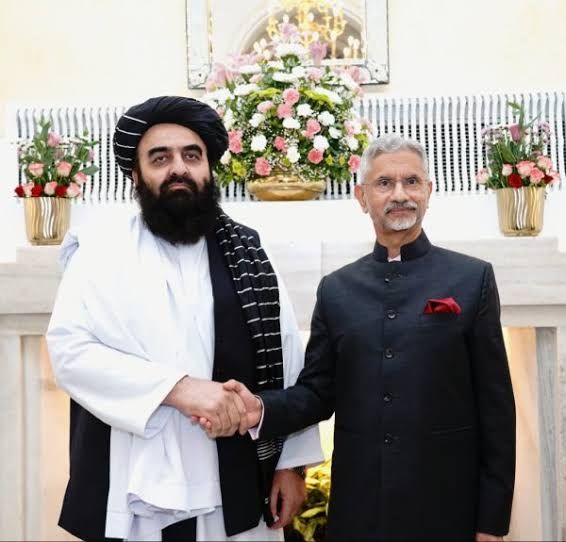
The shift has accelerated over the past year. Afghan Foreign Minister Amir Khan Muttaqi’s six-day visit to India last October marked the first known trip by a senior Taliban official since the group’s return to power in 2021. India also moved to reopen its embassy in Kabul around the same time.
Source: Aljazeera
Invest or Donate towards HICGI New Agency Global Media Establishment – Watch video here
Email: editorial@hicginewsagency.com TalkBusiness@hicginewsagency.com WhatsApp +256713137566
Follow us on all social media, type “HICGI News Agency” .
 HICGI News Agency