
Updated by Faith Barbara N Ruhinda at 1224 EAT on Thursday 26 February 2026
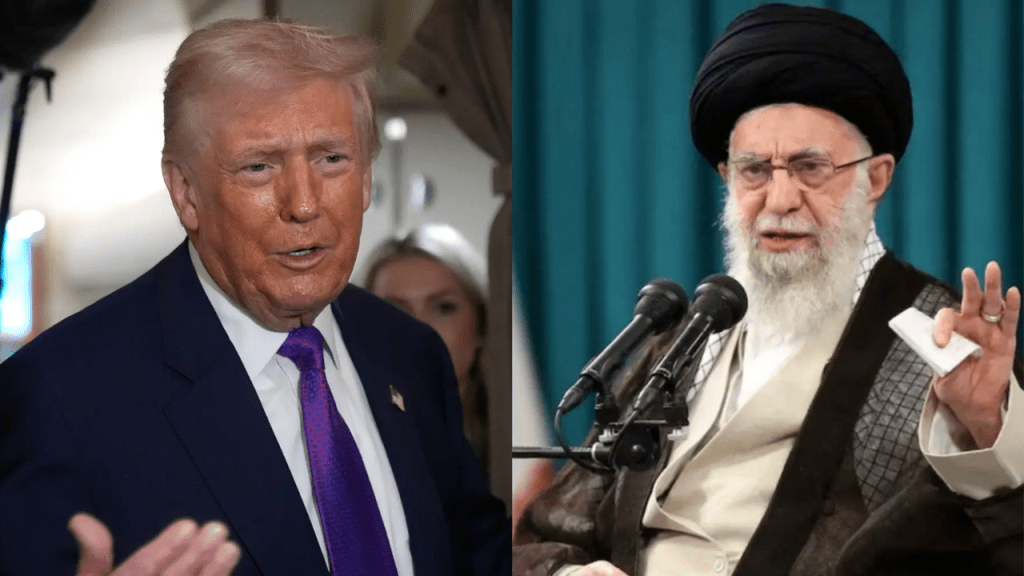
US and Iranian officials are set to meet in Geneva on Thursday for a third round of indirect talks, as US President Donald Trump warns he could strike Iran if a nuclear agreement is not reached.
The discussions come amid the largest US military build-up in the Middle East since the US-led invasion of Iraq in 2003, with Iran vowing to respond forcefully to any attack.
The talks are widely viewed as a last-ditch effort to avert open conflict, though prospects for a breakthrough remain uncertain.

While Trump has said he prefers a diplomatic resolution, he has also indicated he is considering a limited strike on Iran to pressure its leadership into accepting a deal.
The president has provided limited clarity on what, specifically, Washington is seeking in the negotiations or why military action might be warranted now, eight months after the United States bombed Iranian nuclear facilities during the conflict between Israel and Iran.
Iran has firmly rejected US calls to halt uranium enrichment on its soil but has signalled it may be open to certain concessions related to its nuclear programme.
As in the previous two rounds of talks — mediated by Oman earlier this month — the Iranian delegation will be led by Foreign Minister Abbas Araghchi, while the United States will be represented by special envoy Steve Witkoff and Jared Kushner, the son-in-law of US President Donald Trump.

In recent weeks, the United States has deployed thousands of additional troops to the region, along with what Trump described as an “armada,” including two aircraft carriers, accompanying warships, fighter jets and refuelling aircraft.
Trump first threatened to bomb Iran last month as security forces violently suppressed anti-government protests that reportedly left thousands dead. Since then, however, his focus has shifted back to Iran’s nuclear programme, the centrepiece of a long-running dispute with Western powers.
For decades, the United States and Israel have accused Iran of covertly pursuing nuclear weapons. Tehran maintains its programme is strictly for peaceful purposes, although it remains the only non-nuclear-armed state to have enriched uranium to near weapons-grade levels.

In his State of the Union address to Congress on Tuesday, US President Donald Trump briefly touched on rising tensions with Iran but stopped short of clearly outlining a case for military strikes.
Trump said Iran was working to build missiles that would “soon” be capable of reaching the United States, without providing supporting details. He also accused Tehran of trying to “start all over again” with a nuclear weapons programme following last year’s strikes and said he could not allow the “world’s number one sponsor of terror… to have a nuclear weapon”.
The United States struck three nuclear sites in Iran last June after joining Israel in its bombing campaign. At the time, Trump said the facilities had been “obliterated”.
Iran says its enrichment activity stopped after the attacks, although it has not allowed inspectors from the International Atomic Energy Agency to access the damaged sites.

“They want to make a deal,” Trump said, “but we haven’t heard those secret words: ‘We will never have a nuclear weapon.’”
Hours before the speech, Iranian Foreign Minister Abbas Araghchi wrote on social media that Iran would “under no circumstances ever develop a nuclear weapon”. Araghchi added there was an “historic opportunity to strike an unprecedented agreement that addresses mutual concerns and achieves mutual interests”.
Reacting to Trump’s address, an Iranian foreign ministry spokesman accused Washington of repeating “big lies” about Iran’s nuclear programme, ballistic missile activities and the number of protesters killed in the crackdown.
Iran’s proposals have not been made public, but the Geneva discussions could include the creation of a regional consortium for uranium enrichment — an idea raised in previous negotiations — as well as options for handling Iran’s roughly 400kg (880lb) stockpile of highly enriched uranium.

In return, Tehran is seeking the lifting of sanctions that have severely strained its economy. Critics of the government argue that any sanctions relief would provide the clerical leadership with a crucial economic lifeline.
It remains unclear which conditions US President Donald Trump would accept in a potential deal. Iran has already rejected discussions on curbing its ballistic missile programme or ending support for regional allies — an alliance Tehran refers to as the “Axis of Resistance”, which includes Hamas in Gaza, Hezbollah in Lebanon, Iran-backed militias in Iraq, and the Houthis in Yemen.
US media reports citing unnamed administration officials say Trump has considered an initial strike in the coming days targeting Iran’s Revolutionary Guards or nuclear facilities to pressure Tehran’s leadership. If negotiations were to fail, the reports suggest, the president could contemplate a broader campaign aimed at toppling Iran’s Supreme Leader, Ali Khamenei.
The Chairman of the Joint Chiefs of Staff, Dan Caine, has also reportedly warned that military action against Iran could carry significant risks, potentially drawing the United States into a prolonged conflict. Trump, however, has insisted the general believes such a confrontation could be “easily won”.
Iran has meanwhile warned it would retaliate against any attack by targeting American military assets in the Middle East and Israel.
Source:BBC
Invest or Donate towards HICGI New Agency Global Media Establishment – Watch video here
Email: editorial@hicginewsagency.com TalkBusiness@hicginewsagency.com WhatsApp +256713137566
Follow us on all social media, type “HICGI News Agency” .
 HICGI News Agency