
Updated by Faith Barbara N Ruhinda at 1628 EAT on Friday 27 February 2026
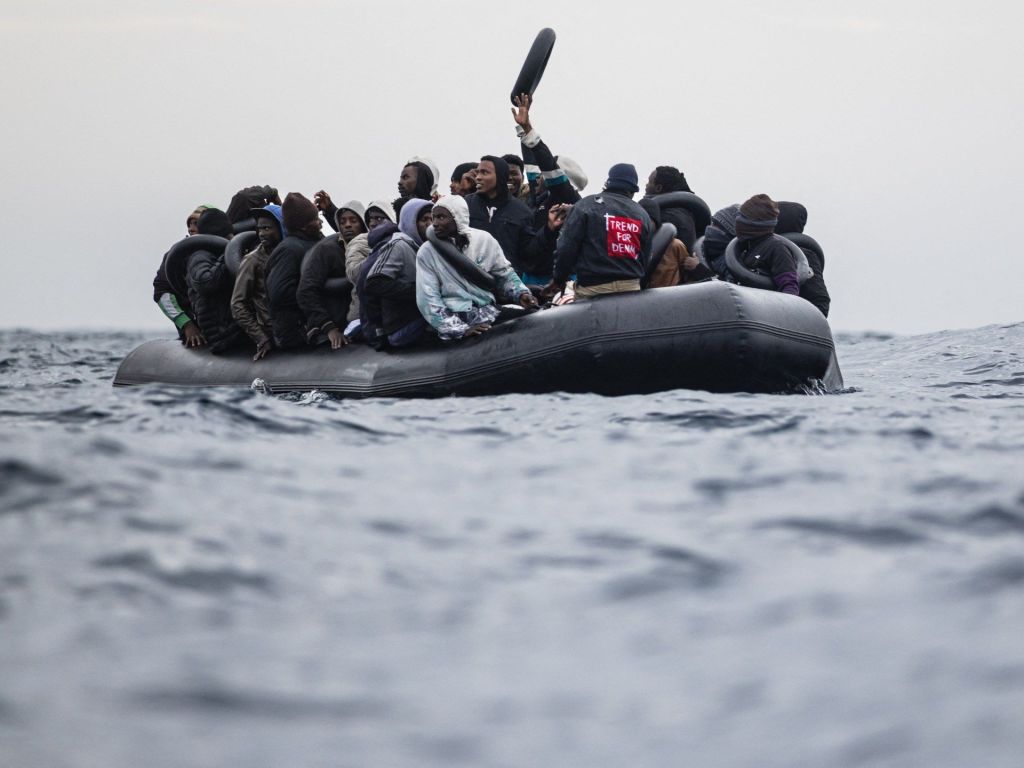
Less than two months into the new year, more than 560 people have already gone missing in the Mediterranean Sea while attempting to reach Europe, putting 2026 on course to become one of the deadliest years on record. At least 500 of those disappeared while trying to cross from Libya, Tunisia and Algeria toward a Europe that continues efforts to push arrivals back.
The stories of those lost at sea — many travelling in fragile boats offering little protection from the waves — lay bare the scale of the suffering endured on these perilous journeys.

Earlier in February, 53 people — including two infants — were reported dead or missing after their boat capsized off the coast of the Libyan town of Zuwara. Only two survivors, both Nigerian women, were rescued.
Weeks earlier, as an unseasonal cyclone swept across the Mediterranean Sea, hundreds — and possibly as many as 1,000 — migrants attempting the crossing to Europe were feared to have perished.
The dangers of travelling to and through Libya are well known among migrants and refugees. Still, many continue to make the journey.

According to the International Organization for Migration (IOM), between August and October 2025 at least 928,000 migrants were identified in Libya many hoping either to remain in the North African state or to attempt the perilous crossing to Europe in search of better prospects.
But as they wait to raise funds for the journey or for an opportunity to depart, many find themselves vulnerable to militias that have controlled large parts of Libya since civil war left the country without a stable, unified government.
A report issued in February by the Office of the United Nations High Commissioner for Human Rights painted a bleak picture of life for refugees and irregular migrants in Libya. Researchers described an environment in which traffickers and armed groups are able to carry out widespread, systematic abuses with near-total impunity. These “grave violations and abuses have evolved into deliberate, profit-driven practices that together form a ruthless and violent business model,” the report said.

Ola, a 25-year-old from Freetown in Sierra Leone, is among the thousands who say they have fallen victim to Libyan militias. Speaking from the capital, Tripoli, he recounted being beaten and held captive by a militia in Zuwara, western Libya.
He said his hand has still not healed after he was struck with an iron bar before being detained in mid-2024. Ola spent three months in captivity — enduring forced labour and repeated beatings — until his parents managed to borrow the $700 demanded for his release.
“Conditions were very bad,” he said, rubbing his injured hand. “There was a lot of suffering. We had bread to eat, and sometimes we had to drink the same water we used for washing. It was very bad — it was salty.”
“I did not have a bad reputation in my country,” Ola added. “I did not associate with criminals. I never did anything illegal. I know this is dangerous, but it is better than where I come from.”
Mubarak, 31, from Sudan, shared a similar story. He fled fighting near his village outside Nyala in 2023, travelling overland through Chad into Libya. Like Ola, he said he was detained by a militia, beaten and forced into labour before eventually securing his release.

Despite the risks, Mubarak said he still hopes to continue to Europe.
“I know the crossing is dangerous,” he said with a bitter laugh. “It is only the money stopping me. I know in my soul that Libya is just as dangerous as Sudan — but where will I go?”
For those prepared to risk everything on what the International Organization for Migration (IOM) describes as the world’s most dangerous migration route, European deterrence measures appear to carry little weight.
Nevertheless, the European countries most directly affected by departures from Tunisia and Libya — particularly Italy — have moved to tighten restrictions. Under a new Italian bill approved earlier this month, authorities may indefinitely bar vessels from entering national waters in cases deemed to pose “grave threats to public order or national security.”
Moreover, the bill empowers Italy to intercept boats and transfer passengers to third countries with which it has outsourcing agreements, including Albania, without clear guarantees that authorities will assess protection needs, vulnerabilities or physical and mental health conditions. The European Parliament has also approved revisions to EU asylum rules allowing member states to transfer asylum seekers to designated “safe third countries.”

How effective these measures will be in reducing migrant arrivals remains uncertain. Despite an Italian government elected partly on an anti-migration platform in 2022, arrival numbers have remained stubbornly high. More than 63,000 people made the crossing in 2025 — almost identical to the previous year.
“Why people take these extreme risks is one of the big questions,” said Ahlam Chemlali, a migration expert at Aalborg University in Denmark who has conducted extensive fieldwork among irregular migrants along Tunisia’s border with Libya.
Chemlali said many women she interviewed in the border region were fully aware of — and in many cases had personally experienced — the dangers of migration.
“They told me they were already dead there [on the border], and they’re right. It’s a social death, where people have no future,” she said. “Everything is denied to them, so taking these risks is one way they can regain some control over their lives.
They understand what they’re doing. The EU has poured millions into information campaigns, but the prospect of being stuck in limbo with no future feels worse. This is especially true for women with children. The presence of children can be a huge motivator, but of course it also increases the risks.”
In Ola’s case, the determination to reach Europe remains unshaken. He said he longs for the protection of the rule of law and accountability for those who commit violence against migrants.
“Life in Europe would be amazing,” he said, his voice lifting. “I would be safe. There is no violence there. If there is violence, it is punished by the law.
“I will educate myself and then get a job.”
Source: Aljazeera
Invest or Donate towards HICGI New Agency Global Media Establishment – Watch video here
Email: editorial@hicginewsagency.com TalkBusiness@hicginewsagency.com WhatsApp +256713137566
Follow us on all social media, type “HICGI News Agency” .
 HICGI News Agency