
By Dr. Kivumbi Earnest Benjamin, L. H. D (Hon)
Tensions in the Middle East have sharply escalated after Iran launched coordinated missile strikes targeting United States military assets across the region, marking one of the most serious confrontations between Tehran and Washington in recent years.
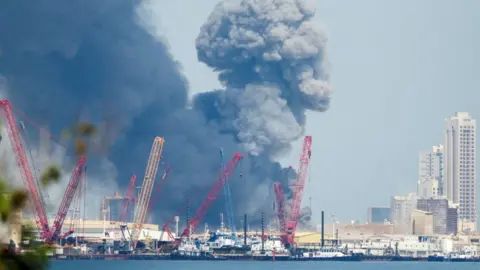
Widespread Missile Attacks Across the Gulf
Iranian forces fired missiles at several countries hosting U.S. military bases, including Qatar, Kuwait, Bahrain, the United Arab Emirates, Jordan, Iraq, and Saudi Arabia. The operation—described by Iranian officials as a retaliatory campaign—reportedly targeted airbases and naval facilities linked to U.S. forces.
Explosions were reported in multiple cities, including Abu Dhabi and Manama, with air defence systems activated across the Gulf to intercept incoming missiles. One civilian death was confirmed in the UAE capital after debris from intercepted missiles fell into a residential area.
Bahrain confirmed that a missile struck near facilities linked to the U.S. Navy’s Fifth Fleet, while Qatar and Kuwait said they intercepted most of the projectiles before impact.
Retaliation for Earlier U.S.–Israel Strikes
The Iranian attacks come in response to earlier joint U.S.–Israeli strikes on Iranian territory, which Tehran described as an act of aggression and a violation of its sovereignty. Iranian authorities said the missile barrage was part of a military operation aimed at defending national security and deterring further attacks.

60 students have reportedly been killed in Iran.
Iran’s Revolutionary Guard Corps warned that all U.S. and Israeli interests in the region are now “legitimate targets,” signaling the possibility of continued strikes if hostilities persist.
Regional and Global Reactions
The attacks have triggered widespread concern across the international community:
Gulf states condemned the strikes as violations of their sovereignty.
Russia described the earlier U.S.–Israel actions as “armed aggression” and warned of wider regional consequences.
Airlines have suspended or rerouted flights, avoiding Middle Eastern airspace amid security fears.
The escalation has also raised concerns about global energy markets and regional stability, as several of the targeted countries are key oil producers and transit hubs.

Risk of Wider War
Security analysts warn that the exchange of direct strikes between Iran and U.S.-linked targets risks triggering a broader regional conflict, potentially drawing in multiple state and non-state actors.
Iranian officials have indicated the operation will continue “until the enemy is decisively defeated,” while the United States has vowed to protect its personnel and interests in the region.
What This Means for the Region
The latest developments mark a dangerous turning point in Middle East geopolitics:
Direct confrontation between Iran and U.S. forces is no longer limited to proxy conflicts.
Strategic military bases across the Gulf are now exposed to retaliatory strikes.
Diplomatic efforts, including nuclear talks, face severe disruption.
With tensions at their highest level in years, the international community is urging restraint as fears grow that the crisis could spiral into a full-scale regional war.

 HICGI News Agency
How does this affect Africa in your perception
LikeLike