
Updated by Faith Barbara N Ruhinda at 1124 EAT on Wednesday 4 March 2026
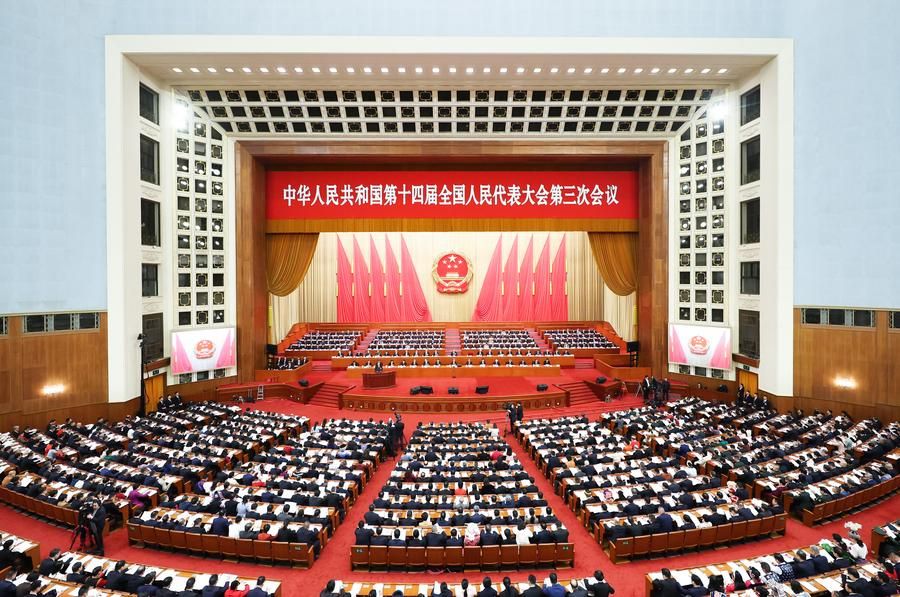
China is set to unveil a sweeping economic agenda for the next five years during the National People’s Congress (NPC), which opens this week at the Great Hall of the People in Beijing.
The 15th Five-Year Plan, covering 2026 to 2030, will be released during the NPC — one of the country’s most important annual political gatherings. The meeting begins on Thursday in Beijing and typically runs for about a week, drawing roughly 3,000 delegates from across the country.

The previous five-year plan was unveiled in March 2021, as Beijing worked to contain the economic damage caused by the COVID-19 pandemic.
This time, analysts say Chinese leaders will be under pressure to clarify how they intend to tackle a fresh wave of challenges — from the economic aftershocks of United States President Donald Trump’s trade war to sluggish consumer confidence at home.
The NPC is being held alongside the Chinese People’s Political Consultative Conference (CPPCC), which opened on Wednesday. Together, the two meetings are collectively known as the “Two Sessions”.
Although the CPPCC does not have legislative authority, it serves as an advisory body, offering policy proposals and channeling feedback to China’s leadership.

The NPC, meanwhile, is widely described as China’s “supreme organ of state power” the country’s highest state institution. While formally distinct from the Chinese Communist Party (CCP), the congress in practice follows the party’s policy direction.
Changhao Wei, founder of NPC Observer, an independent site that tracks the legislature, said this week’s session is expected to formalise the NPC’s relationship with the CCP in the drafting of five-year plans through a forthcoming “Law on National Development Plan.”
Chinese Premier Li Qiang is also expected to deliver the latest Government Work Report this week, outlining the state of China’s economy over the past 12 months and setting out key growth targets for the year ahead.
China is projected to set a gross domestic product (GDP) growth target of between 4.5 and 5 percent for 2026, according to the International Monetary Fund, alongside potential adjustments to interest rates in response to inflation, unemployment and the fiscal deficit.

This year’s delegate list for both gatherings is notable for the absence of at least 19 members whose credentials were revoked last week, signalling they are under disciplinary investigation. The roster of those disciplined, published by state media, includes nine senior military officials.
They are among more than 100 military officers dismissed in recent years under Chinese President Xi Jinping’s sweeping anti-corruption drive.
The removals have been widely interpreted by analysts as part of Xi’s broader effort to consolidate authority after he scrapped presidential term limits in 2018, tightening his grip over China’s vast governance apparatus.
“Xi is trying to ensure the Chinese Communist Party’s governance system is run with absolute loyalty to him and that no one else has an independent power base strong enough to challenge his authority,” said William Yang, senior Northeast Asia analyst at the International Crisis Group.
Although China no longer relies on Soviet-style central planning, its tradition of five-year plans continues to provide a medium-term roadmap for economic reform, government spending, fiscal policy, and key industrial and energy targets.
Yang told Al Jazeera he believes “industrial self-reliance” will rank high on the policy agenda as Beijing presses ahead in its technological rivalry with the United States.
“The Chinese government is likely to roll out a slate of science and technology initiatives targeting key sectors, including next-generation AI, advanced semiconductor manufacturing, industrial modernisation and the continued expansion of renewable energy,” he said.
The upcoming five-year plan is also expected to outline measures to curb “involution” — a Chinese term for excessive, counterproductive competition — according to Fred Gao, author of the Inside China newsletter based in Beijing.
The phenomenon has pushed Chinese firms into what Gao described as “relentless price wars”, with companies slashing prices to capture market share while sidelining product quality and service upgrades.

“The result is a destructive cycle of low pricing, poor quality and shrinking margins that ultimately erodes the competitiveness of entire industries,” he told Al Jazeera.
Another term likely to feature at this week’s NPC is China’s “low-altitude economy” — a strategy centred on deploying drones and other low-altitude aircraft to strengthen the country’s delivery and logistics networks.
A key challenge for Chinese officials this week will be outlining how they intend to pivot the world’s second-largest economy toward consumption-driven growth.
China has long relied on manufacturing, construction and real estate as its main growth engines, making any shift toward consumer-led expansion a gradual and complex process. Household confidence and spending were also dented by the COVID-19 pandemic and the subsequent economic slowdown.
Lynn Song, chief economist for Greater China at the ING Group, told Al Jazeera he expects fresh policy support aimed at stimulating domestic demand and accelerating growth in the services sector.
Gao said his focus will be on whether Beijing rolls out stronger consumption-oriented policies and meaningful steps to narrow the urban–rural income gap, including possible minimum wage rises and increased pension payouts.
In addition to economic priorities, the NPC will also deliberate on social and environmental policy.
Among the most closely watched proposals is the draft “Law on Promoting Ethnic Unity and Progress”, which would formalise Beijing’s framework for managing China’s 56 recognised ethnic groups.
More than 90 percent of the population is ethnic Han and primarily speaks Standard Chinese, yet the country remains home to a wide array of ethnic communities, languages and dialects.
Changhao Wei, founder of NPC Observer, said the legislation would mandate “the abandonment of ethnic privilege and distinction, and the proactive forging of a common culture, consciousness and identity” — a move that could further deepen ethnic, social and political assimilation.
Source: Aljazeera
Invest or Donate towards HICGI New Agency Global Media Establishment – Watch video here
Email: editorial@hicginewsagency.com TalkBusiness@hicginewsagency.com WhatsApp +256713137566
Follow us on all social media, type “HICGI News Agency” .
 HICGI News Agency