
Updated by Faith Barbara N Ruhinda at 1534 EAT on Monday 9 March 2026
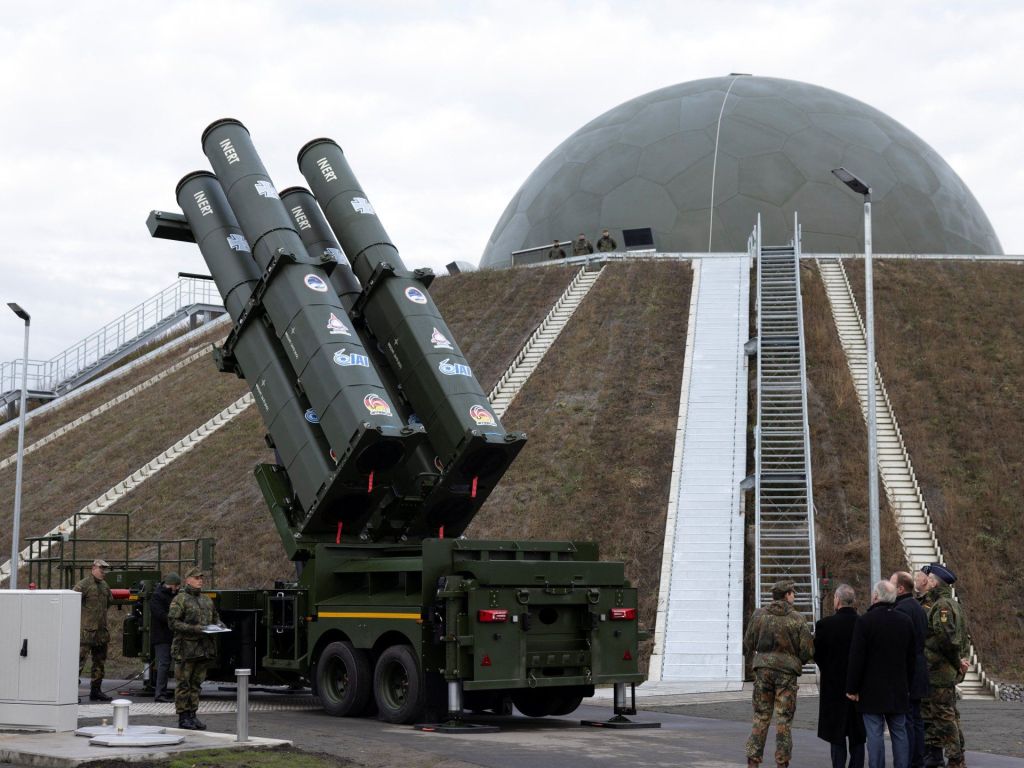
The war in Ukraine has increased Europe’s reliance on arms imports over the past five years, but it may also be helping to transform the region into a growing arms manufacturer and exporter, according to new research.
Imports of major weapons by European states more than tripled between 2021 and 2025—during the period when the war in Ukraine has been raging—compared with the previous five years from 2016 to 2020, the Stockholm International Peace Research Institute said in its annual Arms Transfers Report released on Monday.

Ukrainian arms imports over the past five years accounted for 43% of the overall increase in Europe’s weapons imports, according to Katarina Djokic, a leading researcher at the Stockholm International Peace Research Institute.
Djokic noted that the figure reflects only direct arms transfers from the United States to Ukraine. It does not include weapons purchased by other European countries on Ukraine’s behalf. In reality, she said, Ukraine’s military needs likely accounted for an even larger share of Europe’s overall imports.
However, beneath the headline surge in European arms imports lies another trend: Europe’s growing role as an arms exporter.
According to the SIPRI report, the combined arms exports of the 27 member states of the European Union rose by 36% over the same five-year period.
That growth outpaced the 27% increase recorded by the United States and the 11% rise by China.

Overall, the European Union’s combined arms exports accounted for 28% of global arms exports in the past five years—approaching the scale of its imports, which made up about one-third of the world’s total arms imports.
At the same time, Russia—widely seen as Europe’s main security threat—has experienced a sharp decline in arms exports. Its share of global arms exports fell by 64% over the past five years compared with the previous five-year period.
“Their exports have dropped partly because they urgently need much of what they produce for their own military,” said Ben Hodges, a former commander of United States Army Europe.
“But many countries are also reluctant to buy Russian equipment because it has been shown to be less effective … their technology has been defeated by Ukrainian technology,” he told Al Jazeera.
According to Katarina Djokic of the Stockholm International Peace Research Institute, Russia is also losing key customers.
“China has strengthened its own defence industry and become largely independent in arms production. For some time it imported components such as Russian-made aircraft engines for Chinese aircraft, but it now has its own designs and no longer needs them,” she said.
Will the US continue to dominate Europe?
Despite Europe’s growing defence industry, the region still relies heavily on the United States for several key military systems, Djokic said.
Some equipment—such as multiple-launch rocket systems—is not widely produced in Europe, leaving countries dependent on American suppliers.
There is also a preference for what many governments see as best-in-class technology.

“States often choose what they perceive as superior technology,” Djokic said. “That’s why many air forces want the F-35 Lightning II, even though some of them may not be able to fully use all the capabilities the aircraft offers.”
However, the desire to strengthen security ties with the United States may be the most significant factor, according to Katarina Djokic. Washington has long been viewed as Europe’s primary security partner, particularly by countries in the eastern part of the European Union, she said.
For instance, Poland—which says it is building Europe’s largest land army—has been equipping its armed forces almost exclusively with US-made weapons systems.
However, this trend may be beginning to shift.
Unlike previous military assistance packages, the European Union is now urging Ukraine to give preference to weapons purchased from European manufacturers, signalling a push by Brussels to strengthen the continent’s own defence industry.
The shift comes after the United States scaled back aid to Ukraine under Donald Trump, leaving the European Union as Kyiv’s largest donor and supporter.
The EU has so far provided 195 billion euros ($230bn) in assistance to Ukraine and has approved plans to lend the country another 90 billion euros ($106bn) over the next two years. A significant portion of that funding is expected to be spent on weapons produced within the EU, effectively channeling much of the money back into Europe’s own defence industry.
According to Ben Hodges, the shift could also affect how European countries view the United States as a long-term security partner.

Ben Hodges was referring to actions by Donald Trump that have raised concerns among European leaders, including his decision to reduce support for Ukraine during Russia’s invasion, his uncertain commitment to the North Atlantic Treaty Organization (NATO), and his threat earlier this year to invade Greenland, a territory belonging to NATO ally Denmark.
“Given Russia’s war in Ukraine and the fighting in the Middle East, the dangers are not going to go away,” Hodges said. “Most European countries now have a more sober and realistic view of the threats and the need for stronger deterrence capabilities—especially if they sense the US is not as present, capable or reliable as it once was.”
He added that defence spending in Europe is likely to continue rising.
“You’ll continue to see growth, and investors are now more willing to put money into defence—pension funds and insurance companies, for example—who have traditionally shied away from the sector,” Hodges said.
The European Union has already committed 150 billion euros ($175bn) to its Security Action for Europe (SAFE) programme, a low-interest loan scheme designed to help member states purchase weapons from other EU countries. More than 113 billion euros has already been allocated to member states.
However, many of these shifts in spending and procurement patterns are not yet reflected in the latest data from the Stockholm International Peace Research Institute (SIPRI).
“What we are seeing now are new orders being placed for European weapons systems,” said Katarina Djokic. She pointed to systems such as Germany’s Aristide air defence systems and France’s Caesar howitzers as examples.
“These developments show that EU-backed support programmes are beginning to play a role in encouraging member states to procure more weapons from within the European Union,” she said.
-Aljazeera
Invest or Donate towards HICGI New Agency Global Media Establishment – Watch video here
Email: editorial@hicginewsagency.com TalkBusiness@hicginewsagency.com WhatsApp +256713137566
Follow us on all social media, type “HICGI News Agency” .
 HICGI News Agency