
Updated by Faith Barbara N Ruhinda at 1604 EAT on Monday 9 March 2026
Emmanuel Macron, the president of France, is visiting Cyprus on Monday to meet with Greek and Cypriot leaders in a show of “solidarity”, a week after a drone strike hit a United Kingdom air base on the island’s southern coast.
France has already deployed a frigate to the eastern Mediterranean, while an aircraft carrier is also en route. Greece, Spain and Italy have also sent warships to help protect their fellow European Union member.
The UK says it has strengthened air defences both before and after a drone strike punched a hole in a hangar reportedly used to house American Lockheed U-2 spy planes.

However, the arrival of other European leaders and naval deployments in Cyprus ahead of Britain’s response is likely to fuel criticism that the UK government has moved too slowly to send HMS Dragon, a Type 45 destroyer that has yet to set sail.
The Turkish Ministry of National Defence said a second ballistic munition launched from Iran has been intercepted by North Atlantic Treaty Organization (NATO) air and missile defence systems after entering Turkish airspace.
In a statement, the ministry said debris from the intercepted munition fell on unoccupied land in the southern Turkish city of Gaziantep, adding that no injuries or casualties were reported.
Last week, the ministry also reported that another Iranian missile heading toward Turkish airspace was destroyed by NATO defence systems.
The UAE Ministry of Defence reported that it detected 15 ballistic missiles today, successfully destroying 12, while the remaining three fell into the sea.
The ministry also said it detected 18 drones, intercepting 17, with one crashing on UAE territory.

Since the start of Iran’s attacks, the ministry says it has detected a total of 253 ballistic missiles, eight cruise missiles, and 1,440 drones. Of these, two ballistic missiles and 81 UAVs struck the country, while the rest were intercepted or fell into the sea.
The attacks have so far resulted in four deaths and 117 injuries, the ministry added.
Beyond the immediate danger to civilians from aerial bombardments, residents in Iran are now facing potentially serious health risks from pollution caused by damaged oil infrastructure.
Over the past week, oil depots, refineries, and fields across Iran and the wider Middle East have been hit, releasing hazardous substances into the air. In Tehran, thick black smoke has been observed after an oil depot was struck.
The smoke results from incomplete combustion of oil, which occurs when there is insufficient oxygen. Instead of producing only carbon dioxide and water, the fire releases a dangerous mix of carbon monoxide, soot particles, and—depending on the fuel—sulphur dioxide and trioxide.
These substances are highly toxic. Exposure can cause skin, eye, and respiratory irritation, and prolonged contact may increase the risk of certain cancers. Children are particularly vulnerable, according to the World Health Organization, because they are closer to the ground where heavier particles settle and have smaller airways that can become more easily blocked.

There is also concern that oil and heavy metals could contaminate surrounding soil and water sources, creating long-term risks for both the environment and public health.
Thick plumes of black smoke were seen rising over the southern suburbs of Beirut on Monday morning following Israeli airstrikes.
An Israel Defence Forces (IDF) spokesperson, Avichay Adraee, earlier urged residents to evacuate, saying the military was acting “forcefully against the terrorist infrastructure belonging to the Al-Qard Al-Hassan Association.”
Israel claims that AQAH finances Hezbollah’s military activities, a charge the group denies. AQAH maintains that it only provides small, interest-free loans to ordinary Lebanese citizens.
On Sunday, Rakan Nassereddine reported that Israeli strikes on Lebanon had killed 394 people over the past week.
In Iran, the supreme leader is not elected by direct popular vote. Instead, the position is filled by the Assembly of Experts, a body of senior clerics responsible for both electing and overseeing the supreme leader.
The Assembly of Experts is a constitutional body of 88 members, tasked with supervising the supreme leader and, if necessary, dismissing him if he is deemed unable or unfit to perform his duties.
Members of the assembly are elected by direct vote every eight years, but all candidates must first be vetted and approved by the Guardian Council, effectively limiting the pool of eligible candidates. While technically a “direct” election, voters’ choices are restricted.
As previously reported, Mojtaba Khamenei, the son of Ayatollah Ali Khamenei—who was killed nine days ago in entity[“country”,”US”]-Israeli and his predecessor, Ruhollah Khomeini, had previously criticized the idea of hereditary succession.
Vladimir Putin, president of Russia, has congratulated Mojtaba Khamenei on his appointment as Iran’s new supreme leader and reaffirmed Moscow’s support for Tehran.

“Please accept my sincere congratulations on your appointment as supreme leader of the Islamic Republic of Iran,” Putin said in a message published on the Kremlin website.
The Russian president added that he “reaffirms [Russia’s] unwavering support for Tehran and solidarity with our Iranian friends” and pledged that Moscow would “remain a reliable partner.”
“At a time when Iran is confronting armed aggression, your actions in this high position will undoubtedly require great courage and dedication. I am confident that you will honourably continue your father’s work and unite the Iranian people in the face of this severe ordeal,” he said.
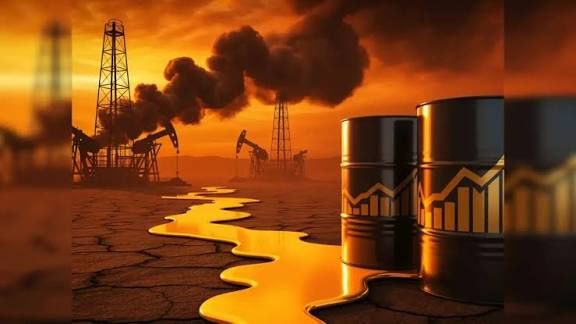
The week has begun with a sharp surge in oil prices and another rise in global gas costs, reigniting concerns over the cost of filling up vehicles and the potential jump in the UK’s domestic energy price cap, which could exceed £2,000 by july
It largely depends on the magnitude and duration of the energy price increases. At current levels, economists warn that the goal of keeping inflation around 2% may be derailed, with rates potentially rising considerably higher. However, a return to the double-digit inflation seen just a few years ago is not expected.
The war in Ukraine previously drove spikes in basic food prices—such as wheat and edible oils—because of the country’s major role in global production. That pressure has eased, but food inflation remains significant.
Food costs don’t just impact households today—they shape expectations of future inflation, influencing behaviour such as demands for larger pay rises, which can, in turn, sustain higher inflation over time.
Shares across Europe fell sharply on Monday morning as investors reacted to a surge in oil prices.
London’s FTSE 100 dropped 1.1%, while Germany’s DAX and France’s CAC 40 each slid by around 2%. Nearly all European stocks were trading lower, although the UK index was cushioned by gains in oil giants BP and Shell, which rose on the London market.
Asian markets also saw steep losses, with Japan’s Nikkei 225 plummeting more than 5% earlier in the session.
Susannah Streeter, chief investment strategist at Wealth Club, said the oil price spike could create a “toxic combination of shocks to economies.”
Rising energy costs are expected to push up inflation, potentially forcing central banks to keep interest rates higher for longer. The combination of soaring energy prices and elevated borrowing costs, Streeter warned, could act as a drag on economic growth.
-BBC
Invest or Donate towards HICGI New Agency Global Media Establishment – Watch video here
Email: editorial@hicginewsagency.com TalkBusiness@hicginewsagency.com WhatsApp +256713137566
Follow us on all social media, type “HICGI News Agency” .
 HICGI News Agency